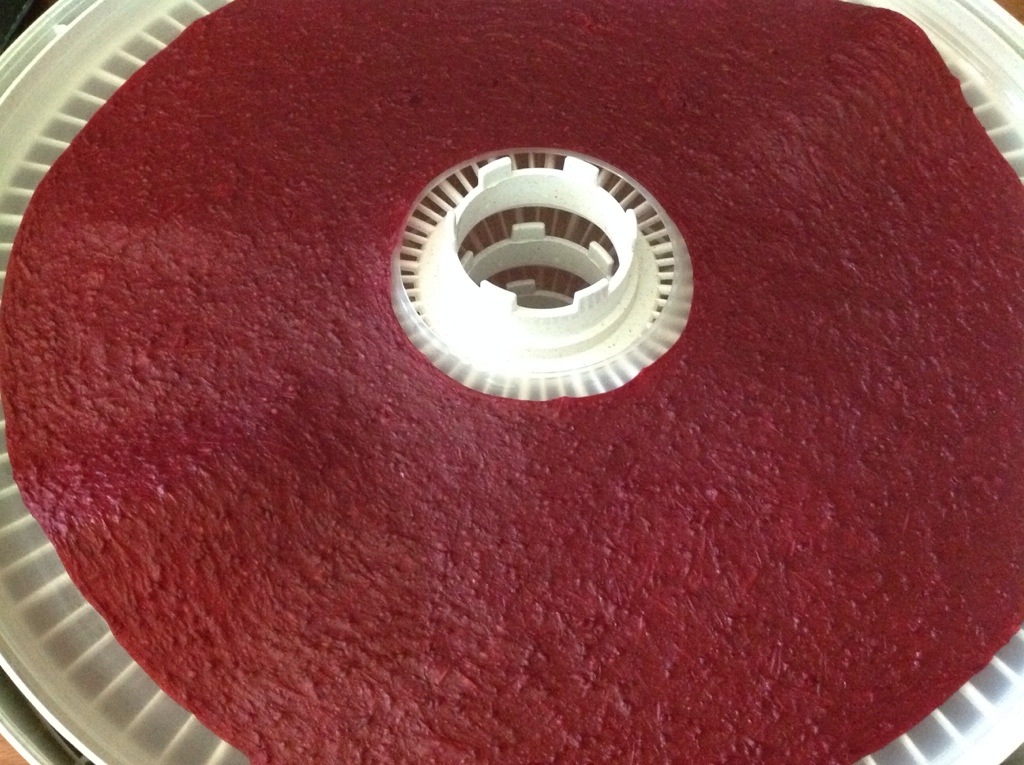
First Brews

What’s an obsessed canner and babbling botanist to do in the winter when canning opportunities are few and far between? Well take up a new hobby of course. Add some drink to all that food in the pantry! So the next skill I decided to add to my repertoire was beer brewing. Spoiler alert, next up with a post coming soon will be wine! This post is coming a few months after the making of our first brew, in fact we only have about five pints left! But what a perfect time to share it, now that I can reflect on the whole process and the deliciousness of the final product! Making beer is maybe not as difficult as you may think, you should try it! We bought our starter kit at the local brew shop, but this kit is basically what you need to get started if you don’t have a local shop. Just add ingredients and bottles! OK, pull up a chair, I included the whole process in this post so it’s gonna be a long one!
20140217-102056.jpg

I don’t intend on making this a full detailed step by step because I’m not an expert (yet), but I’d like to make this a taste test into the brewing world and share the experiences (good and bad) of a first brew. If you really want to get into this, the best two books are How to Brew by John Palmer and The Complete Joy of Home Brewing by Charlie Papazian. I have both, and once I’ve finished this dang master’s degree will get back to reading them ;). The introductory instructions that we followed are from our local brew store, and can be found here

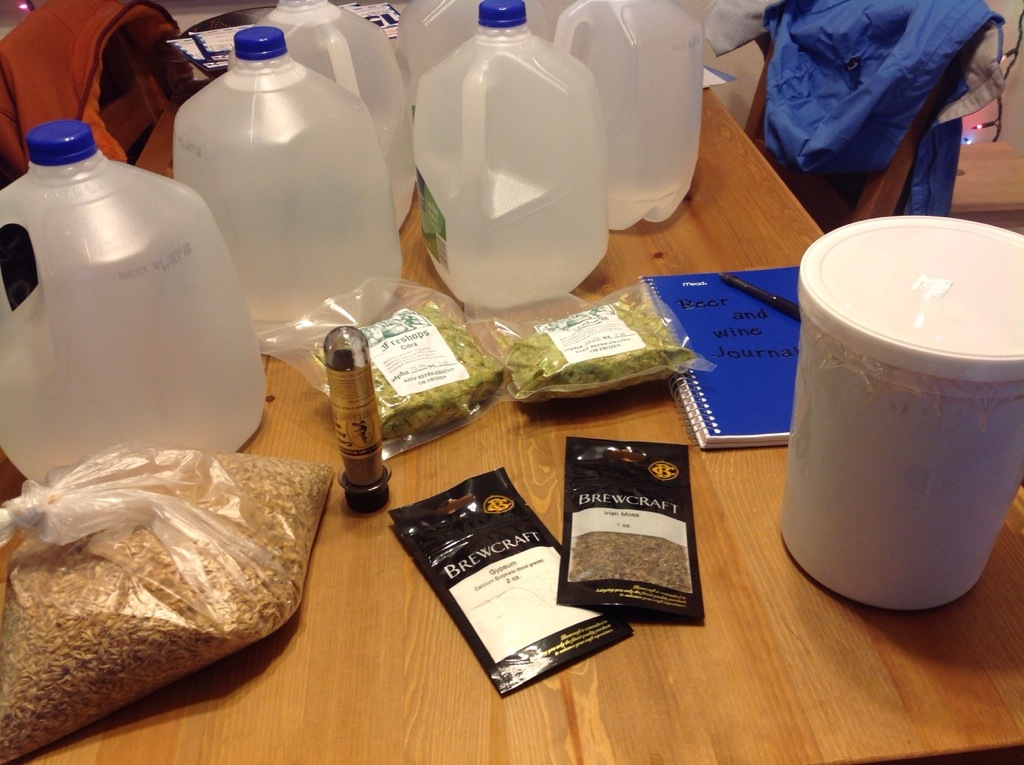
OK let’s dive in. How does one make beer? Everything you need for a first brew is pictured above. We did an IPA so you’ll see above 4 oz. of hops, 8 pounds of pale malt extract in the white tub, caramel steeping malts on the left, yeast, gypsum, and Irish moss (which strangely enough is not moss at all but seaweed) in the middle. And of course water and a notebook to keep track of everything.

Day 1:

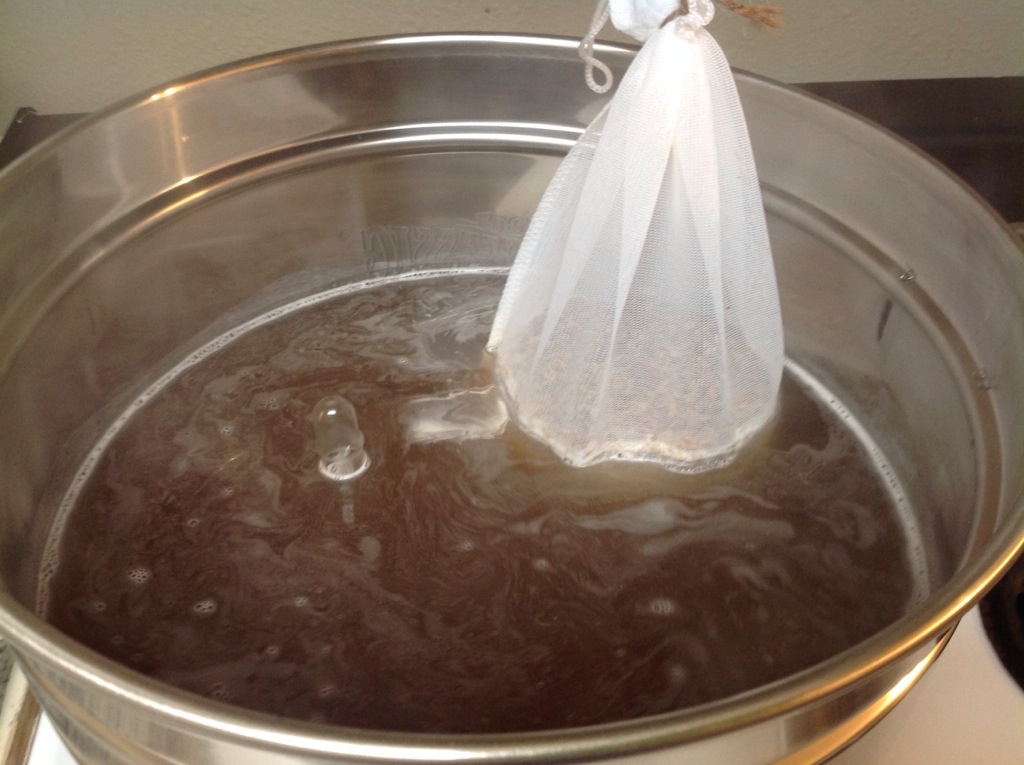
The first step on day one is steeping the grains in a few gallons of water and heating to 170 F.
Day 1, lesson 1: Don’t let the grain bag rest on the bottom, it can melt. We did not have this happen luckily, but had read that it can so our solution was to tie it to the fan assembly thing above the stove with twine. Best solution? Probably not.
Day 1, lesson 2: See that floating thermometer below? Take a good look because that’s the last you’ll see of it. Those babies are fragile. Don’t drop them on the tile floor.
20140217-102122.jpg

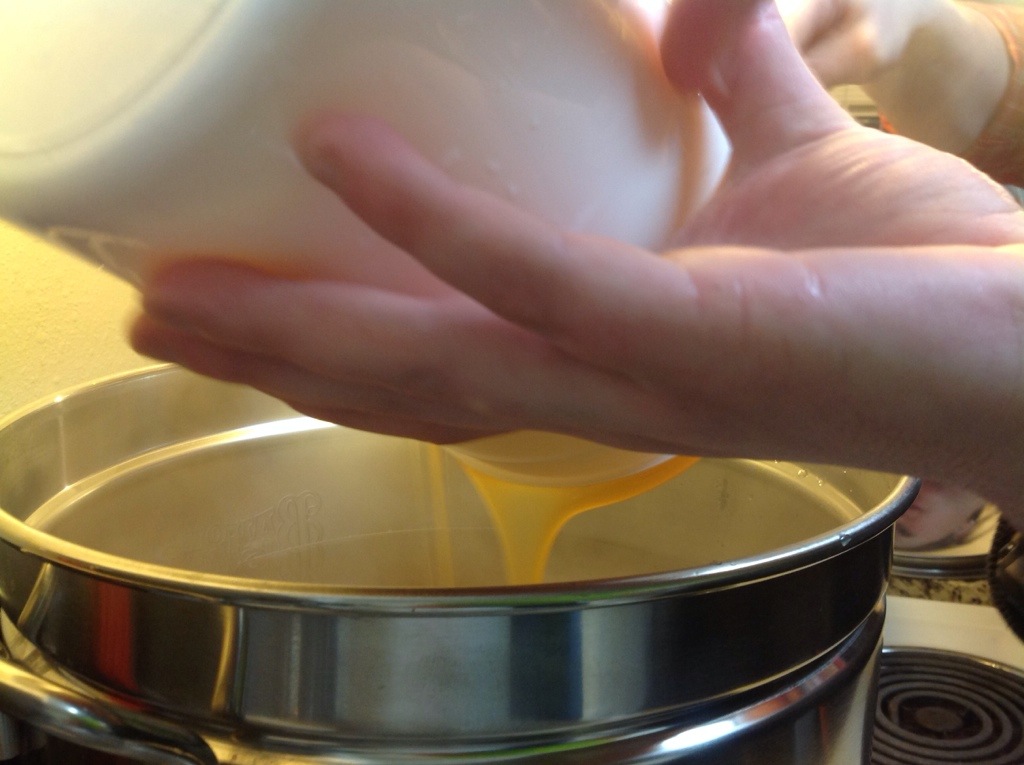
After you’ve reached 170 F and waited 10 more minutes you’ll remove the grain bag, push out as much liquid as you can, turn off the heat, and add the malt extract. Most beginner like us start out with malt extracts. Make sure the heat is off and stir in that gooey deliciousness.
20140217-102155.jpg

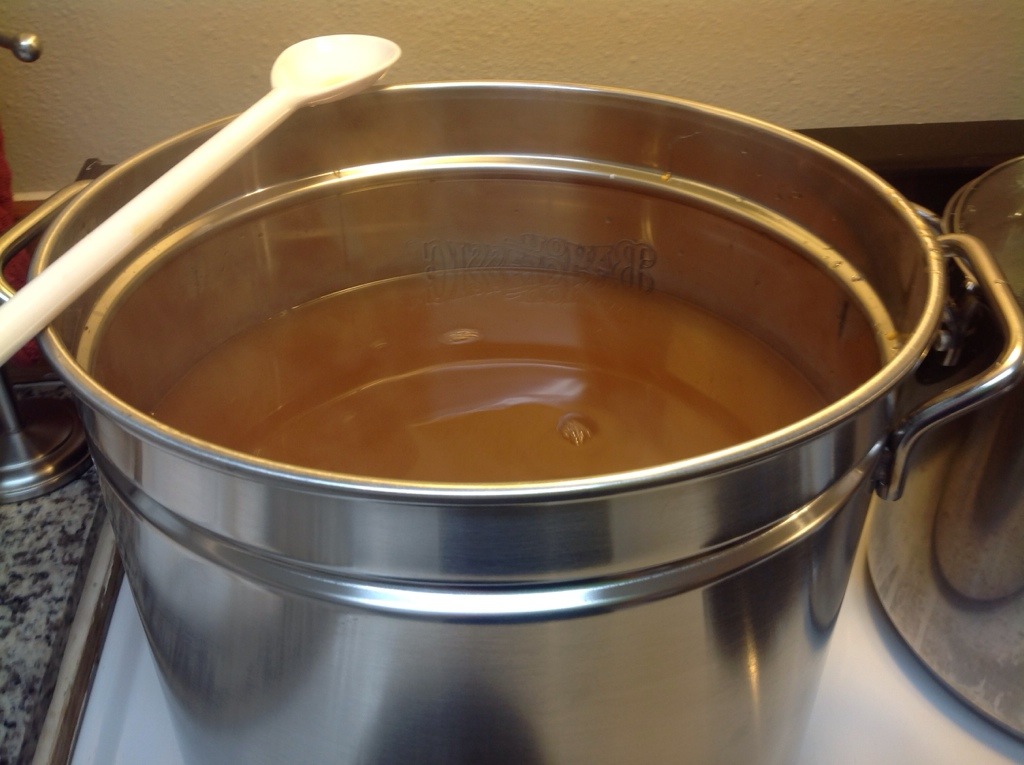
Check it out. Now we have wort! That’s fancy brewspeak for the brown water that will be beer. Turns out brewers like to use a lot of fancy words. Doesn’t look too appetizing just yet. Now we’re going to bring our wort to a boil. A lot of beers boil for an hour, some an hour and a half, and add a few more ingredients along the way.
20140217-102328.jpg

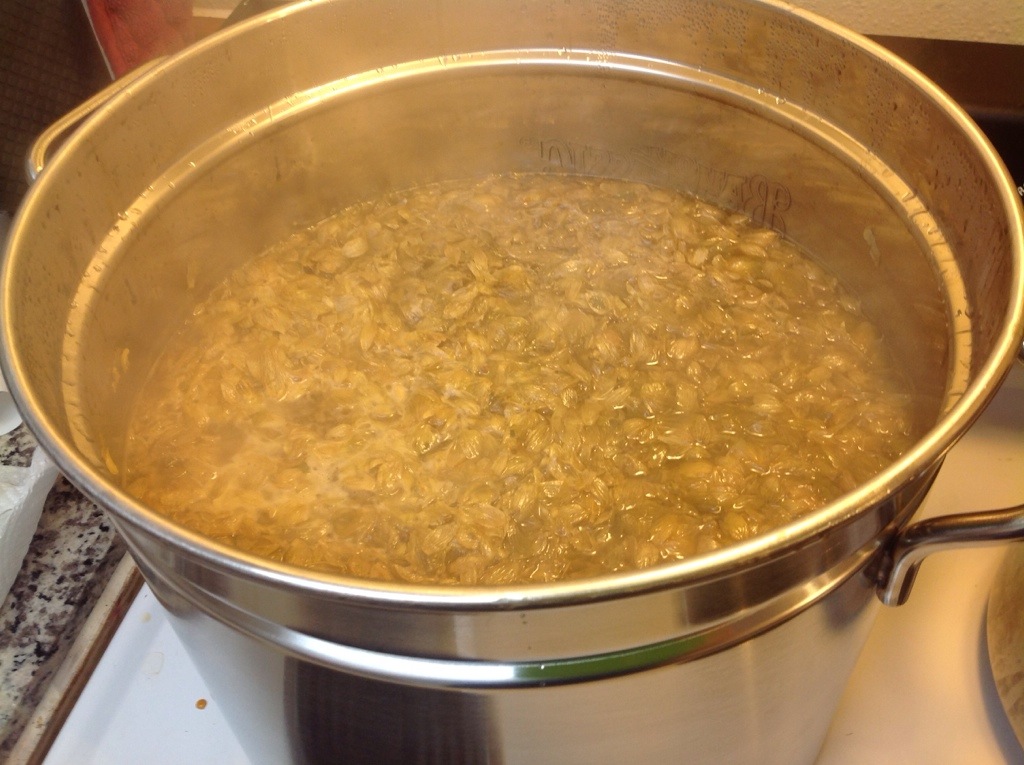
Hops! Once the beer was boiling, it was time for the hops. Hops get added at different times depending on the flavour you are going for. For this recipe, IPA, 2 oz went in a the very beginning. These are the “bittering hops.” Basically, the longer hops boil, the more bitterness is imparted on the beer, and the less flavour and aroma. So to also get the flavour we added an additional half ounce at 20, 15, 5, and 0 minutes (with 60 being your start time and you are counting down). That’s about as tough as it gets! Now you just watch it, make sure it’s not boiling over, and stir so nothing burns to the bottom. Oh, and add some gypsum and Irish moss at about 30 minutes.

Day 1, lesson 3. Have the fan on. If you are brewing on the back burner as we were, watch for condensation on the fan unit that can drip into the wort. Preferably brew on the front larger burner, if yours works, unlike mine….don’t get me started. Anyways, it’s getting boiled so whatever, but it’s gross if steam condenses on there and drips back in your wort. Eww. I don’t even know. Now that’s a solid piece of advice I bet you won’t find in Palmer 😉
20140217-102349.jpg

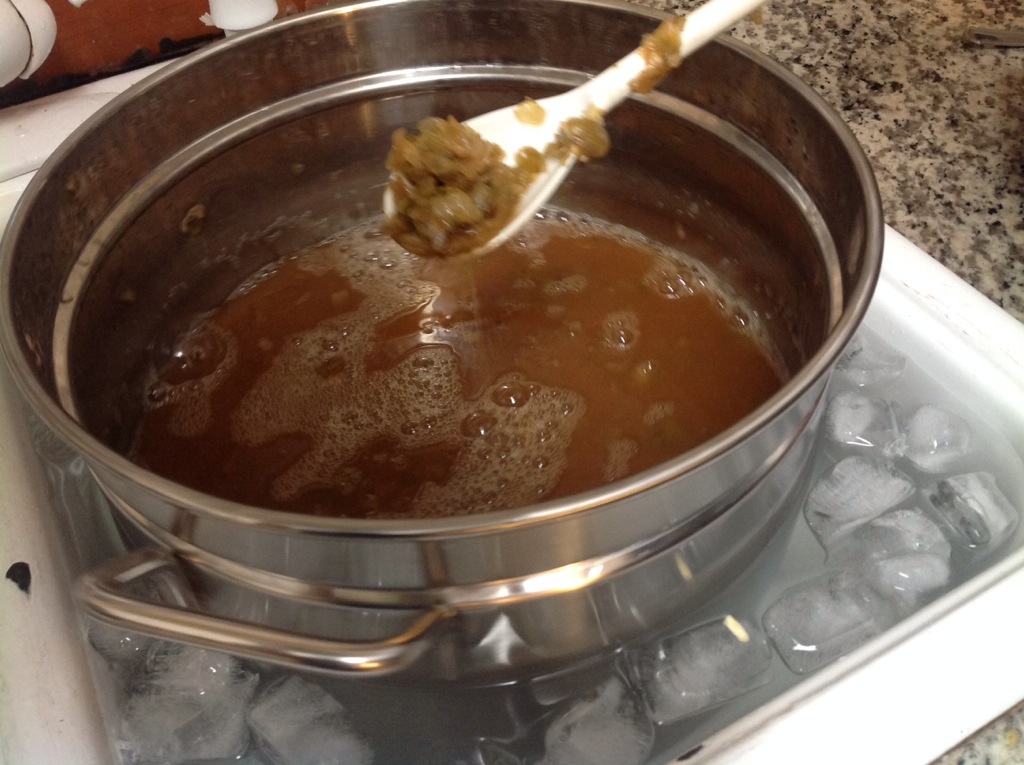
After your hour boil is finished, you need to cool the wort as quickly as possible. The easiest way, without buying extra equipment, is with an ice water bath like this. However, it cools a lot quicker if you send $50 or so on a wort chiller. It seemed silly at first to get one, but we did after a couple more brews and it was well worth it, the beer cools much more quickly. It sucked waiting and waiting and spending a few bucks on ice each time since we only have a couple of trays and it takes a lot of ice.
20140217-102520.jpg

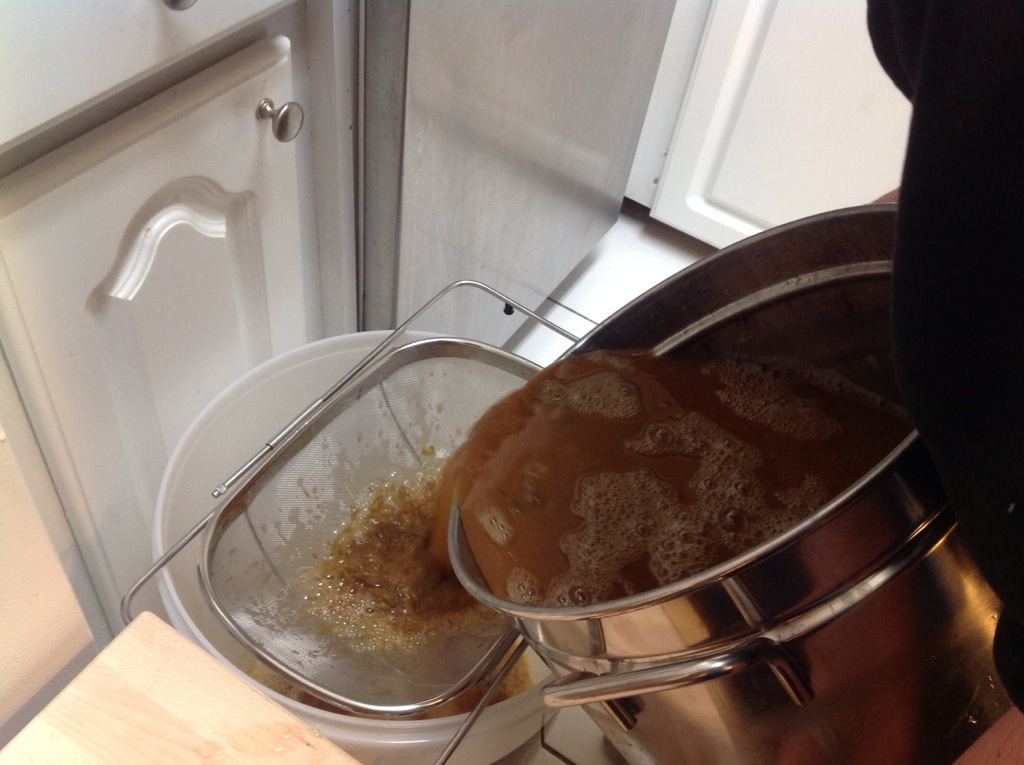
Once it’s cooled to about 70 F, room temp, you’ll dump it into your sanitized primary fermenter. We found this sweet strainer at bed bath and beyond that fits perfectly to catch the hops. You then top it off with water so you have a total 5 gallon volume. It’s ideal to have a huge pot so you don’t have to top it off, but when you first start out this might be how you do it. I can’t say my palette is refined enough to really notice a difference between topping it off and boiling the entire volume. 
20140217-102535.jpg

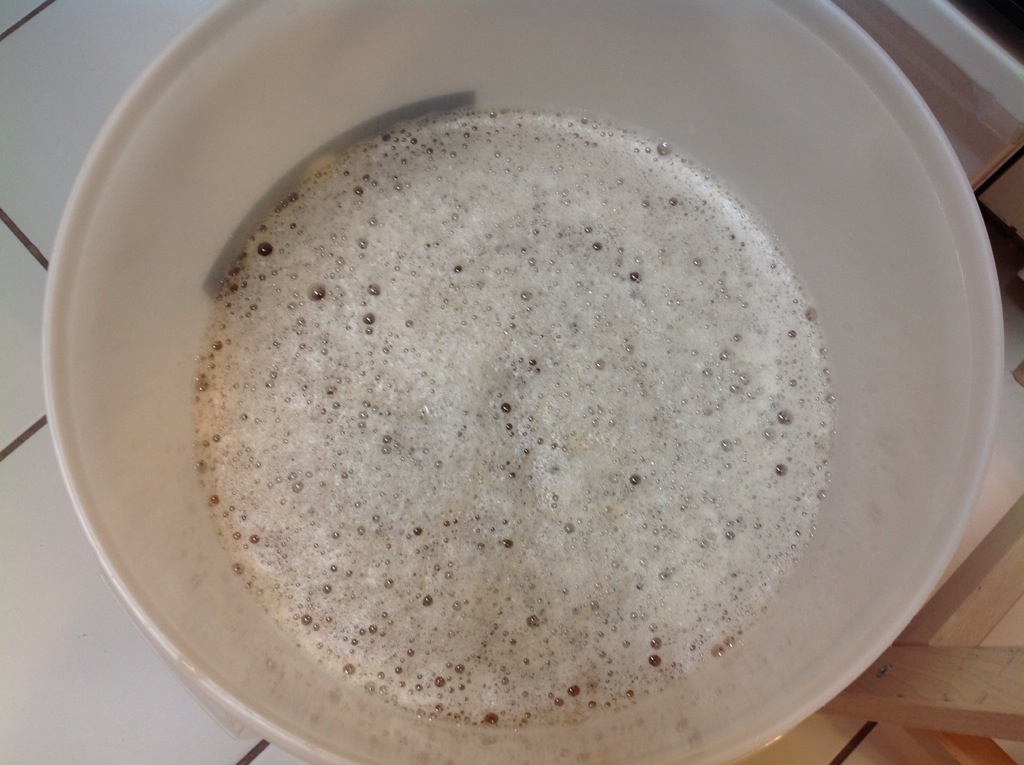
Last thing to do today is take a hydrometer reading. Yay more fancy chemistry terms! Basically a hydrometer is a floaty device that you use to measure how much sugar you have in your wort. The yeast you are about to add will eat the sugar and therefore you need to know how much you have so you can calculate the final alcohol percentage. Lastly, you pitch the yeast! Pitch means, dump that yeast in there. Now we put on the lid and wait.
20140217-102736.jpg

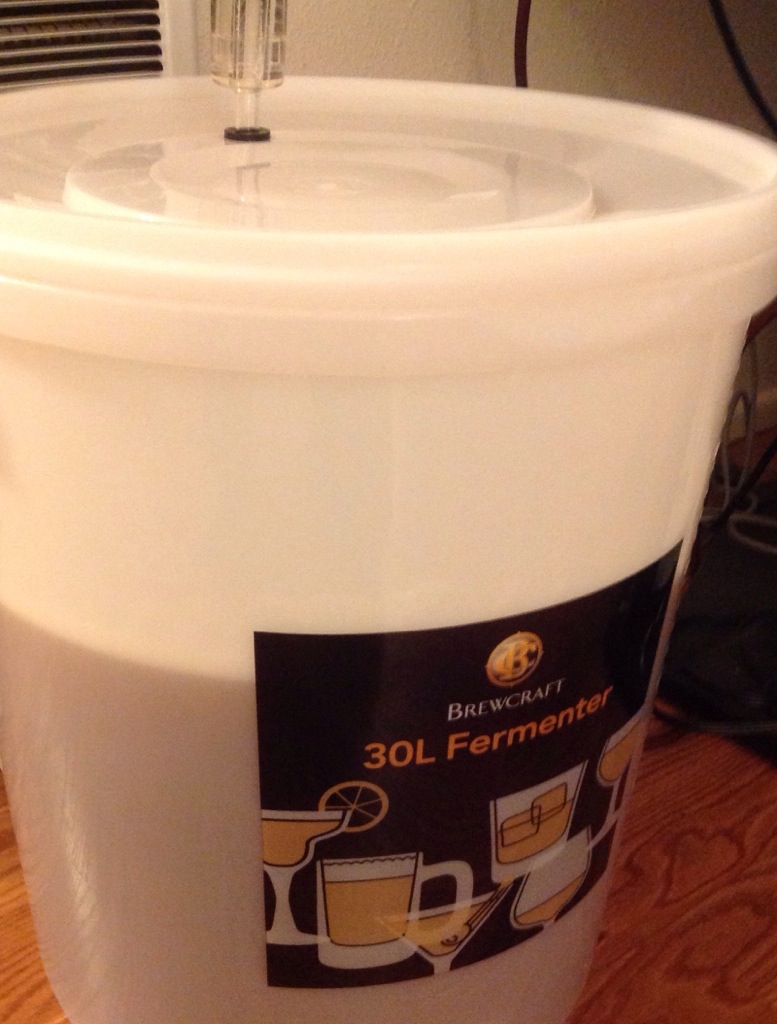
Wooo fermentation! For about 7-10 days it stays in the primary fermenter. After a day or two you see vigorous bubbles in the airlock. That means it’s working! The bubbles are carbon dioxide from the yeast eating up your sugars. nom nom nom.
20140217-102747.jpg

Day 10

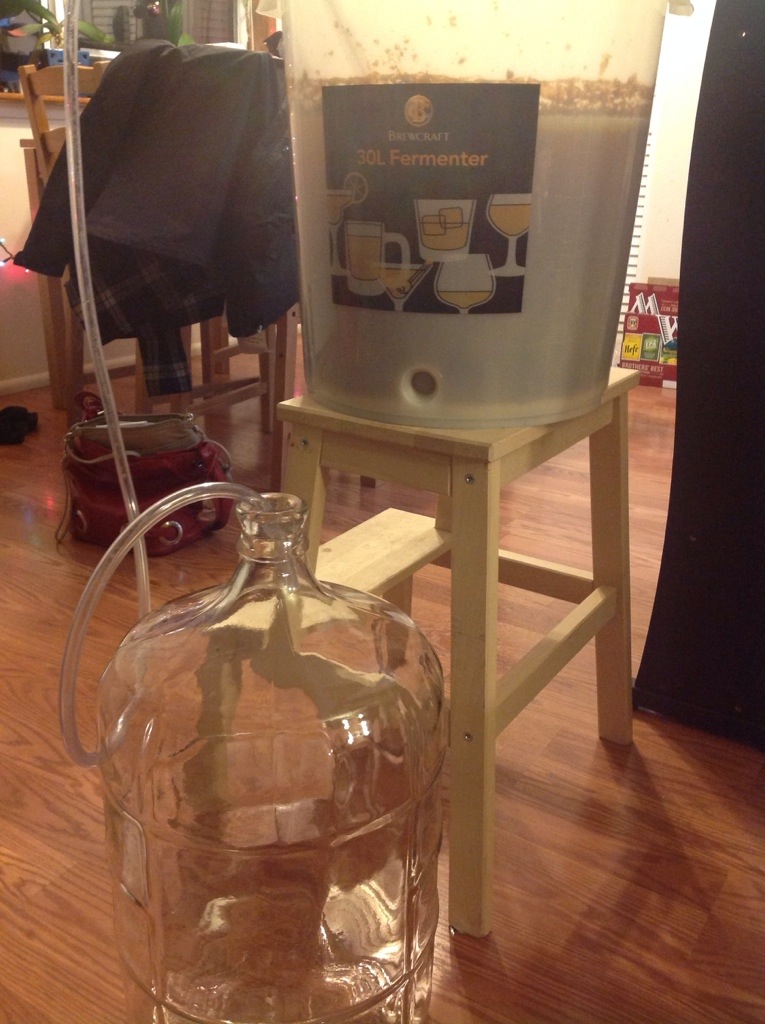
Once you are down to about one bubble every minute, it’s time to transfer containers. Or to use fancy brewspeak, we are racking the beer into the secondary fermenter. Now we’ll take another hydrometer reading to see how much sugar is left.
Day 10, lesson 1. The higher the primary container the better. Gravity people, she can be your friend or your enemy. The table or counter is better than this stool.
20140217-103007.jpg

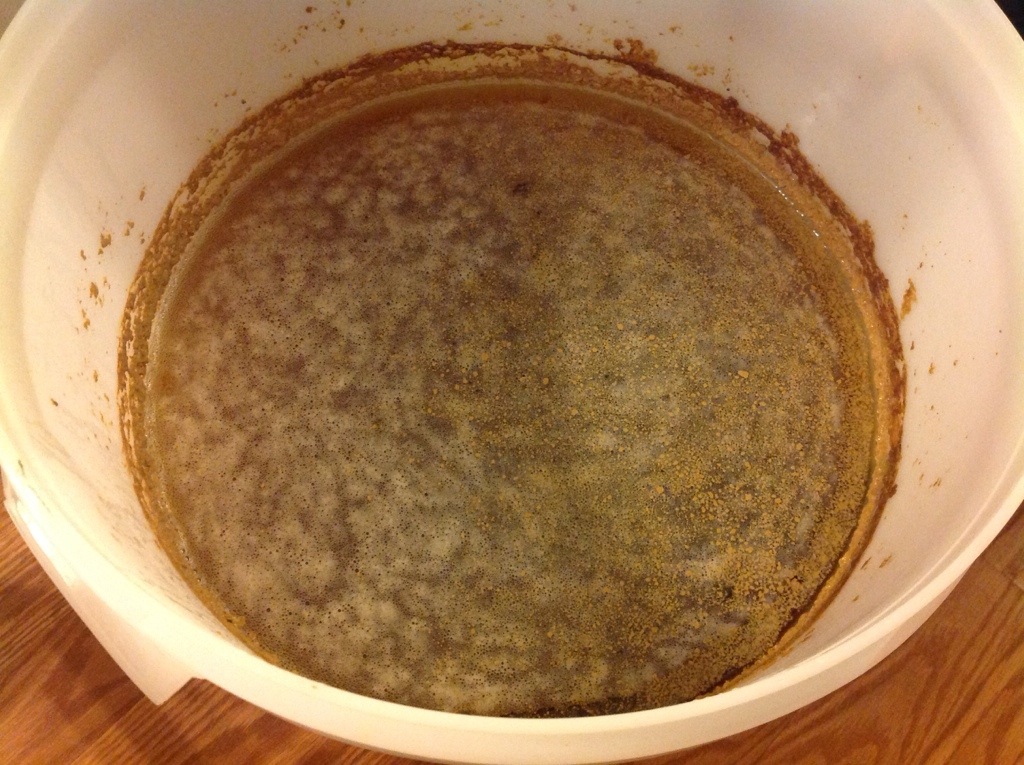
mmm check out that nasty sludge left over.
20140217-102933.jpg

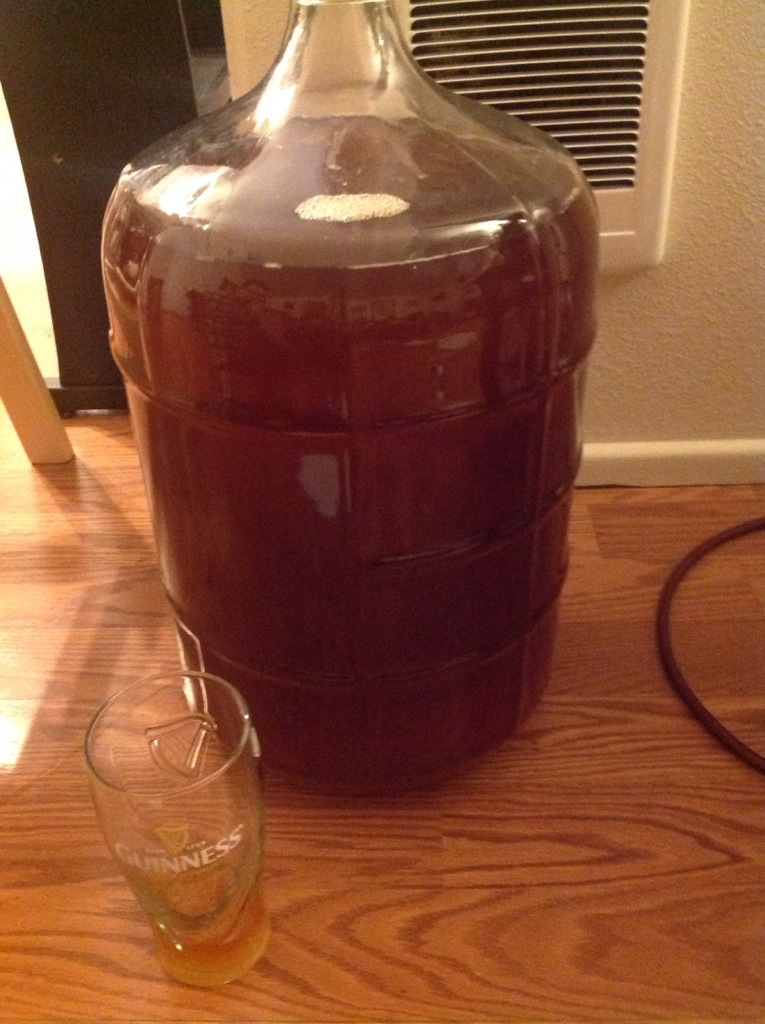
Now we wait some more. 7-10 days again minimum. You basically can bottle once you’ve taken a few hydrometer readings and it hasn’t changed. That means all the yeast food is gone and they will be sad and die. Leaving you with delicious beer though of course. Don’t be sad for them, they lived a very fulfilled life in beer. And a few of them will live on a little longer to carbonate your beer.

Be sure you are giving it a taste test every step of the way! 🙂
20140217-103056.jpg

Day 20 ish

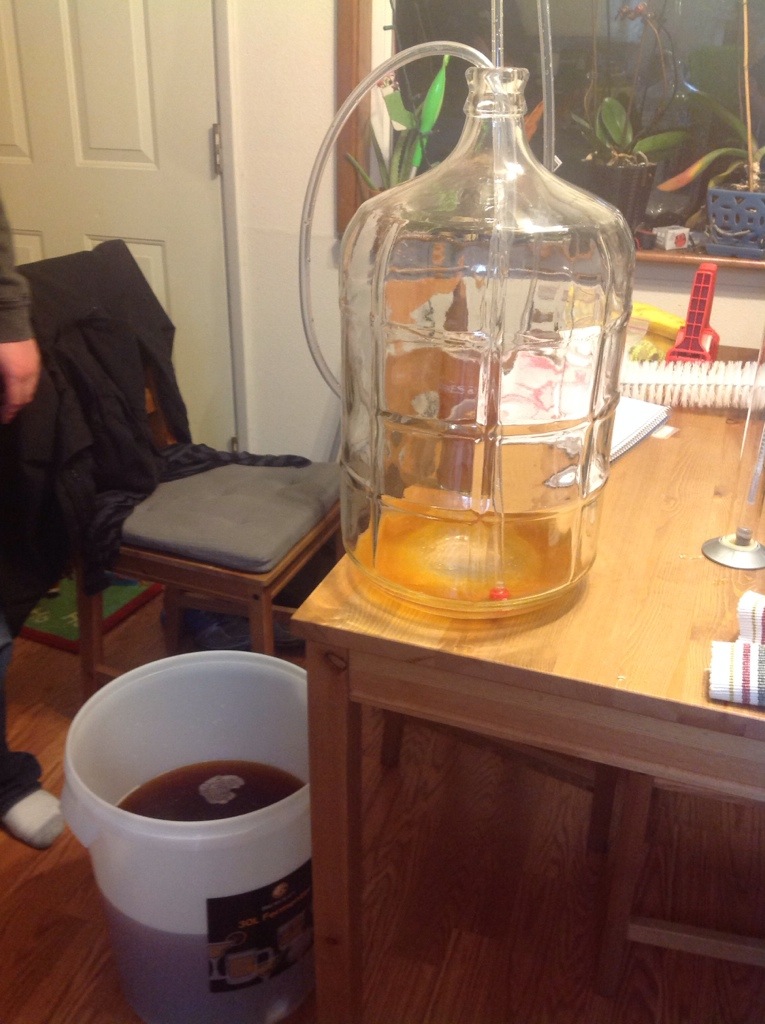
It’s bottling day yipee! The hydrometer readings are now steady and below what is specified in the recipe you followed, so its time to bottle your beer. First you’ll dissolve 3/4 cups of dextrose in water and put that in your sanitized primary bucket. This will be eaten by the yeast to carbonate the beer. Then you will rack the beer into the primary bucket.
20140217-103213.jpg

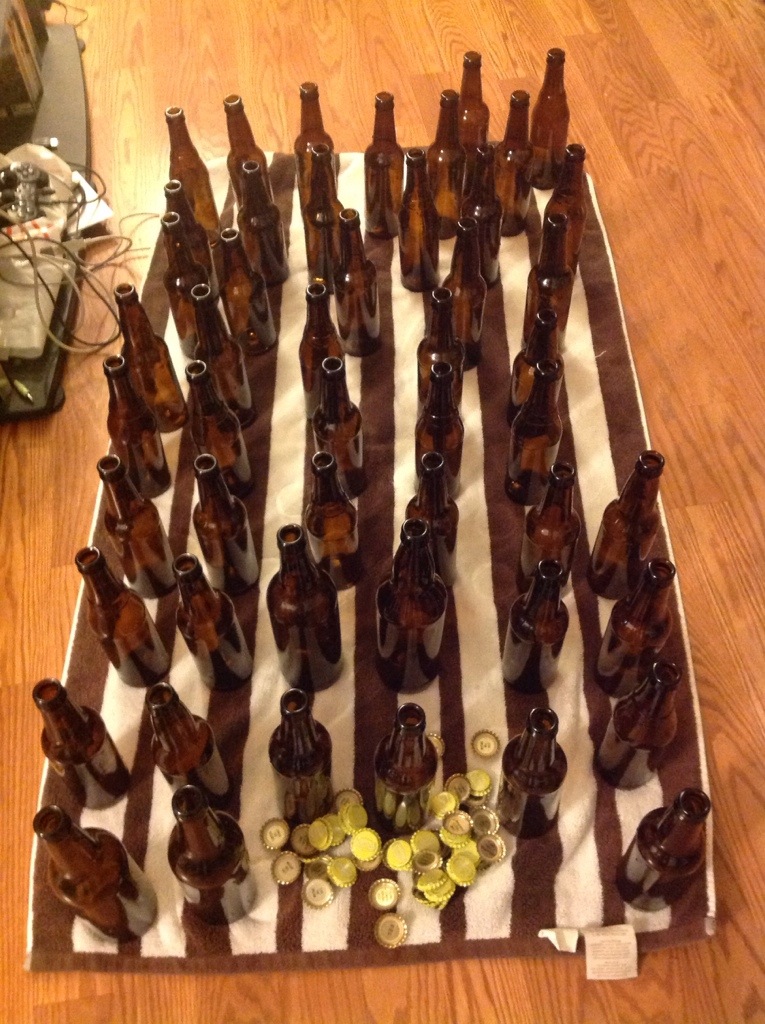
Clean and sanitized bottles ready to be filled. We bought a 12 pack of flip tops for fun but just reused the rest from store-bought beer.
20140217-103554.jpg

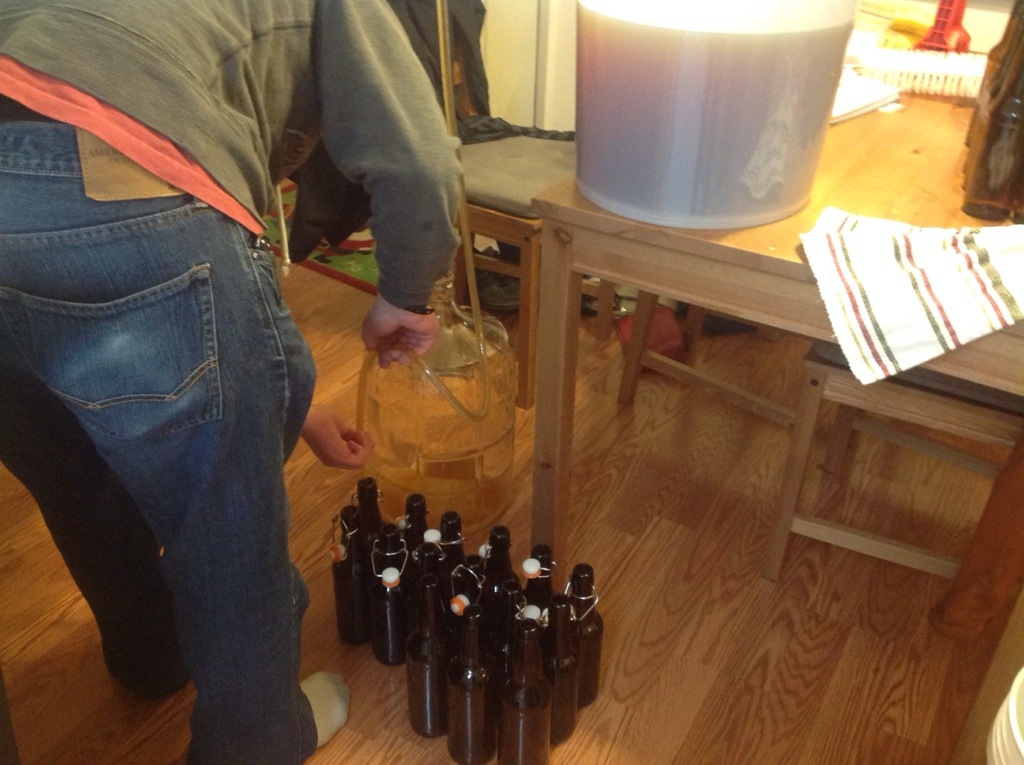
Next the primary bucket goes on the table and you fill up your sanitized bottles with beer!

Today’s tip: the cool little bottle filler is totally worth it. It’s got a little valve on the bottom that’s only open when you press it against the bottom of the bottle, so when you lift up the flow of beer stops.
20140217-103339.jpg

Taking care of a few leftover sips.

20140217-103354.jpg

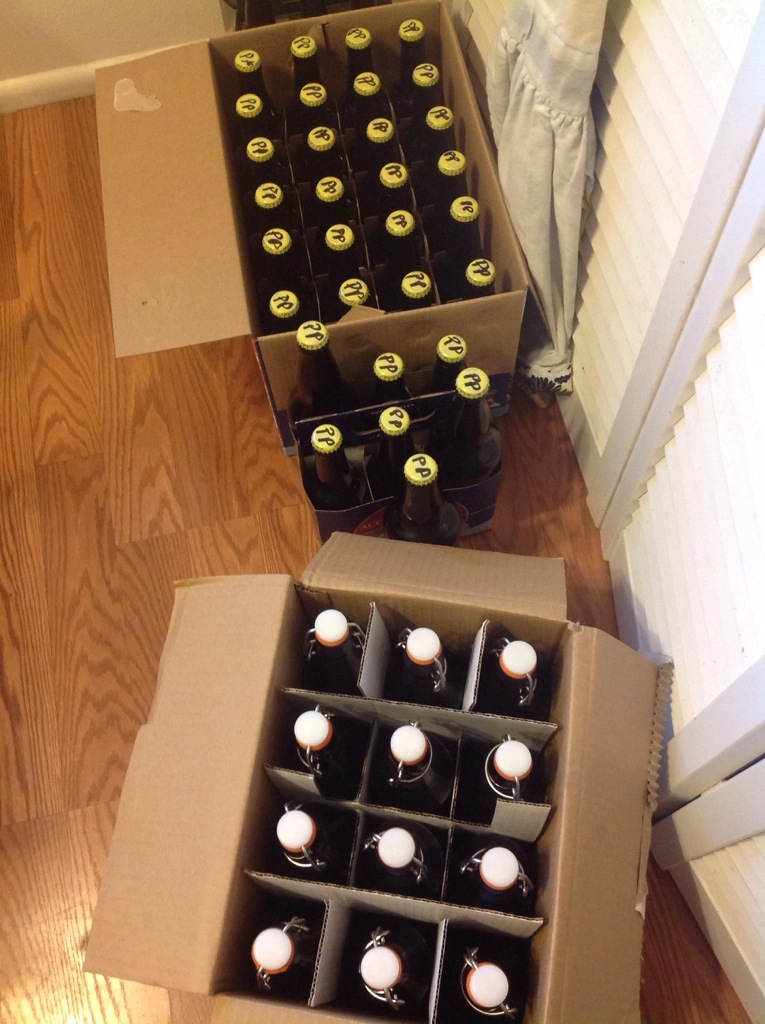
Cap them and ta da! Store at room temperature until they carbonate (2-3 or so weeks) then enjoy!
20140217-103647.jpg

*This post contains affiliate links. Check out the “About the Blogger” page for more information.

First Brews on Punk Domestics

Pickled Carrots

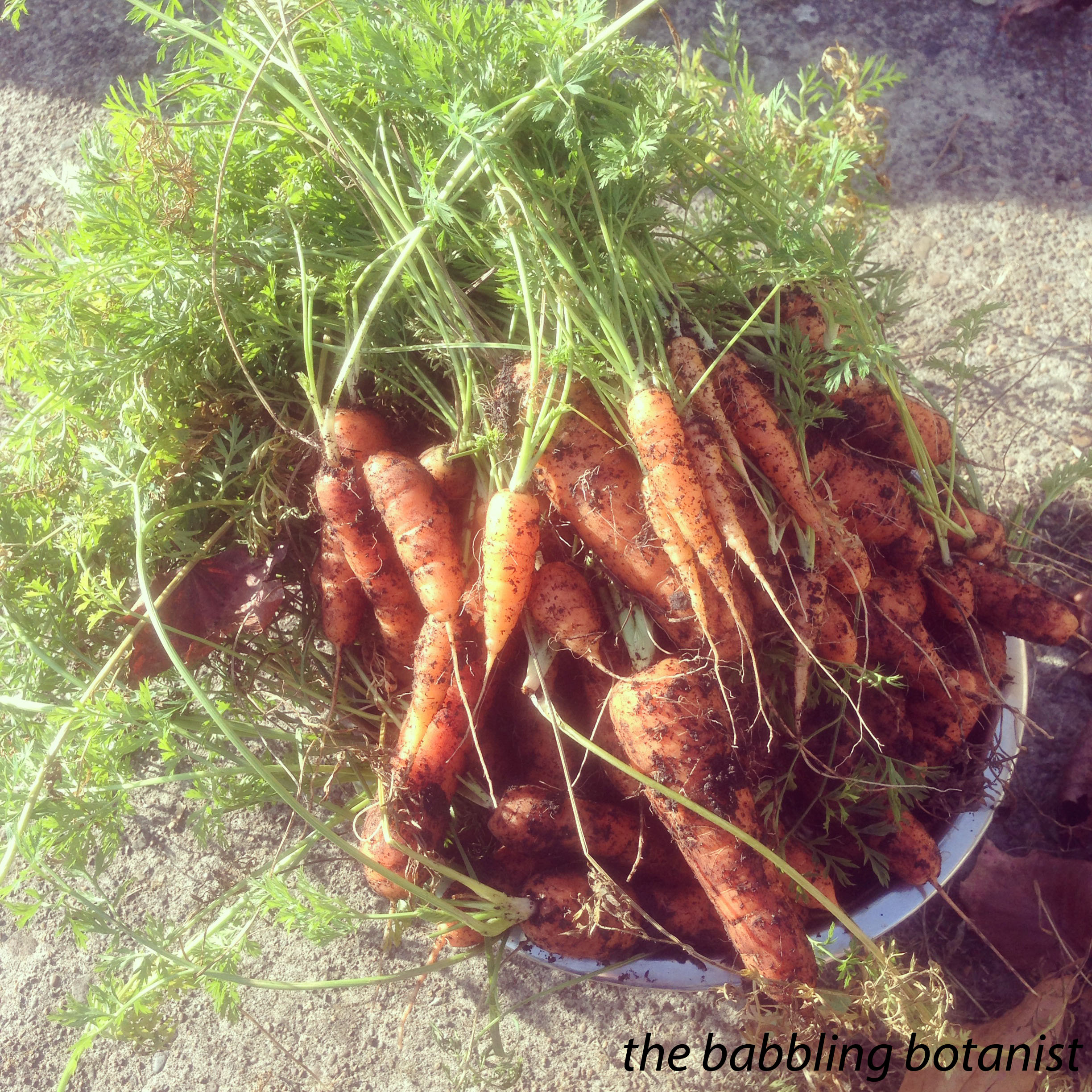
A few months ago I made pickled carrots with my very last garden harvest of the season. Taking these tasty morsels to a ladies night recently reminded me I still haven’t posted the recipe. Pickling is one of the easiest things in canning, yet so satisfying and cost efficient if you love pickled goodies. I highly recommend it. If you have that winter canning itch right now then heck, get some carrots from the grocery store to make these bad boys, ain’t no law against that!

carrot1

This recipe comes from the Ball Complete Book of Home Preservation, with some slight additions to the spices. Remember, you can change the spices to suit your taste, but don’t mess with the vinegar to water ratio of tested recipes.

Ingredients:
5 pounds carrots
6 cups white vinegar
2 cups water
1/2 cup pickling/canning salt
8 cloves garlic
Dill – fresh heads are great if you have it, or seeds
Hot pepper flakes
Mustard seed
Whole Peppercorns

Here’s how it’s done:

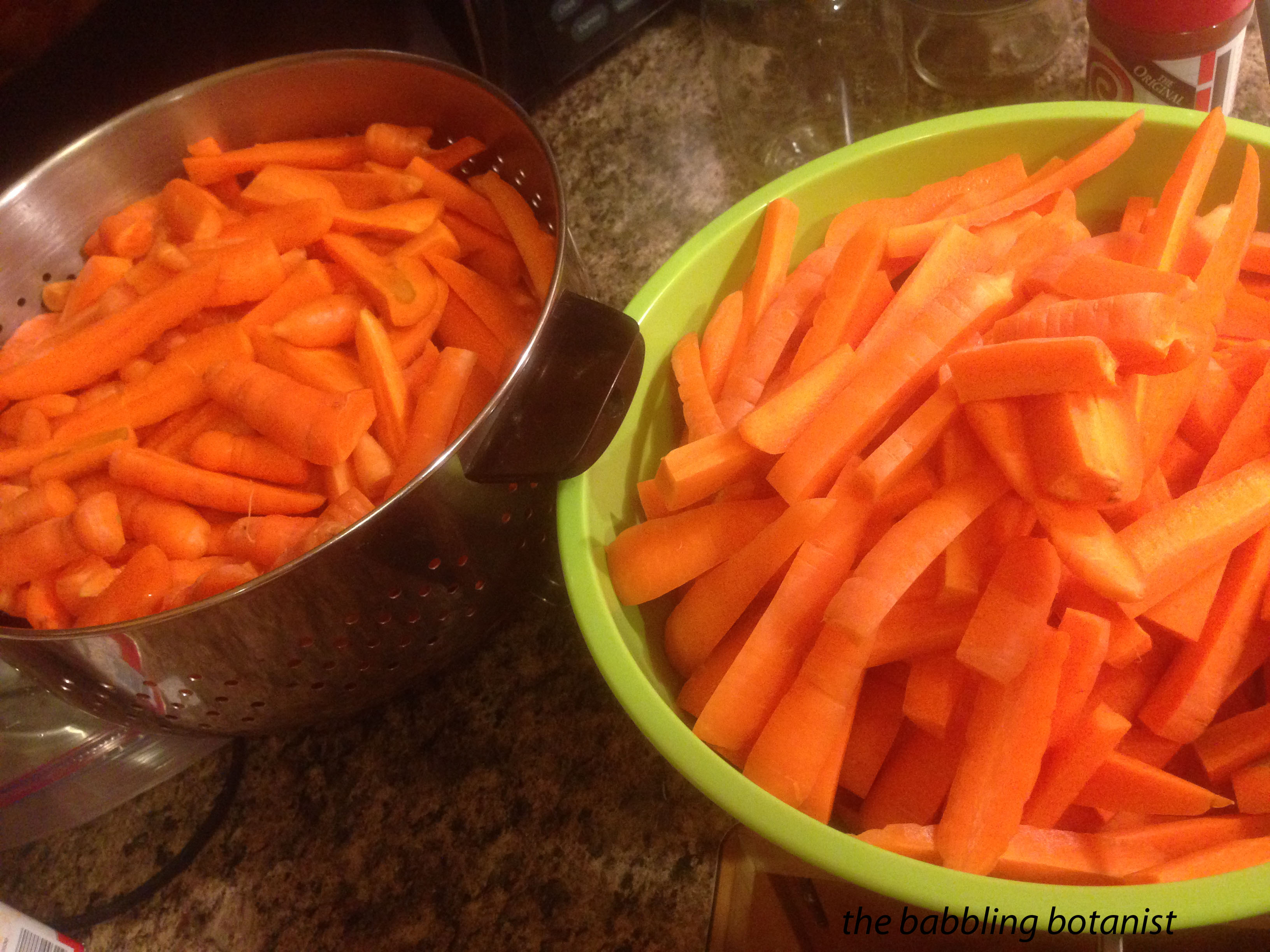
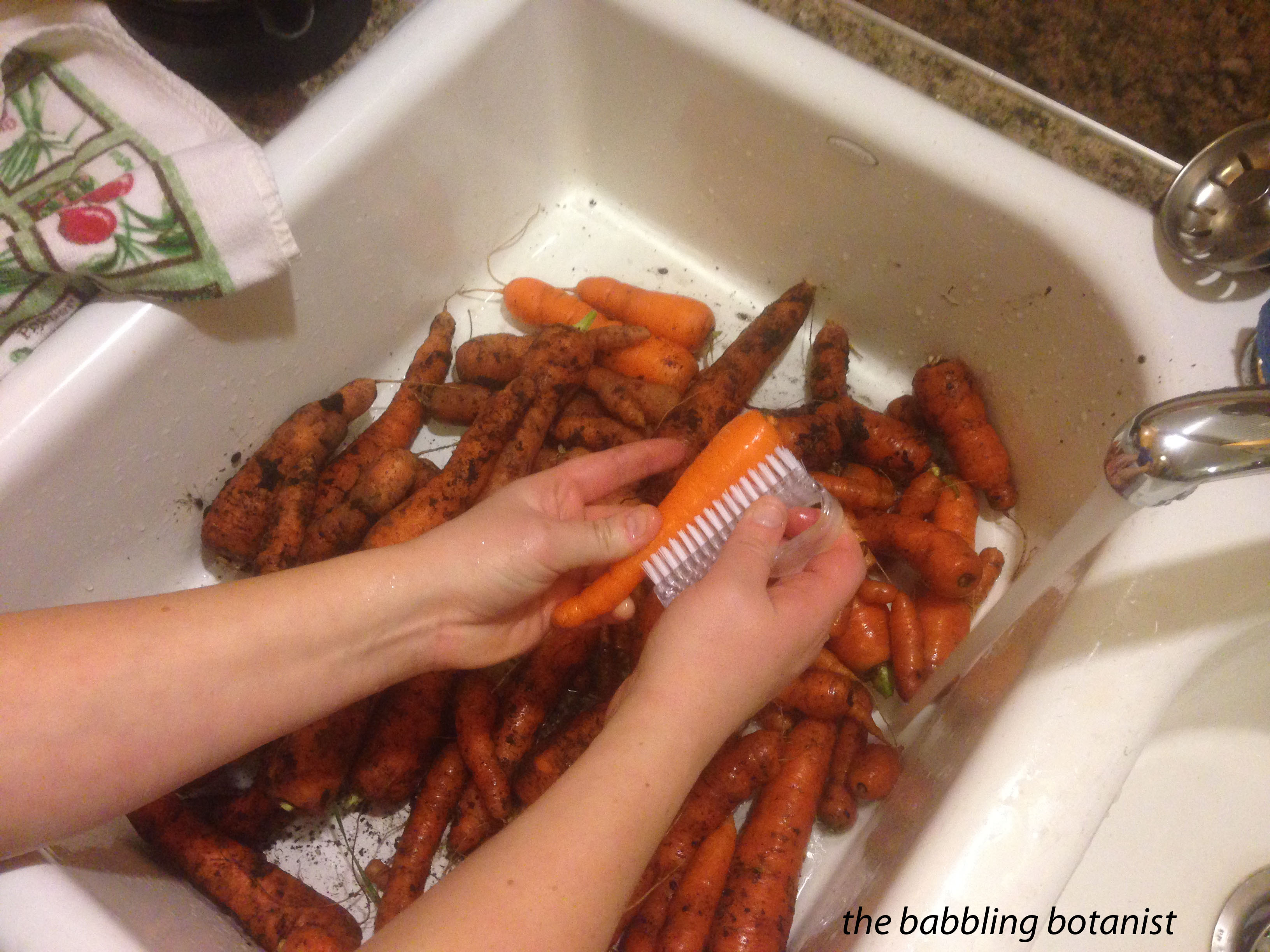
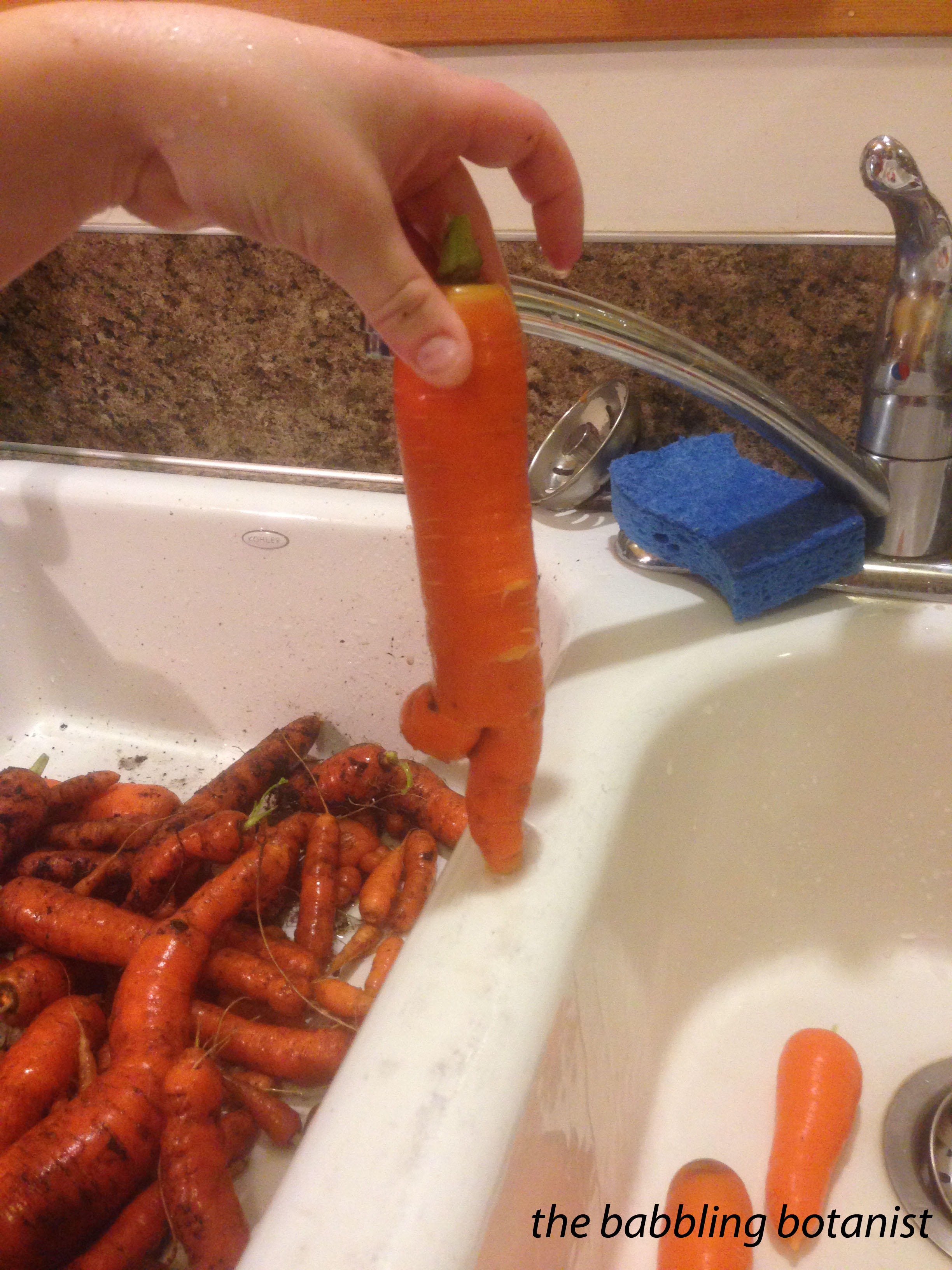
Carrots obviously grow underground, so the hardest step is getting them clean. Buying a cheapo nail brush was definitely worth it! Especially if you grew your own and they are caked with mud.

carrot2 copy

Well hello there good lookin’.

carrot3

Chop them up into the size you prefer. We did sticks but you can certainly do coins if you prefer. Don’t do them too thin or they can get soggy, but this recipe has a pretty short canning time so they don’t get really soft which is nice.

Prepare the canner, and about 7 or 8 pint jars. While that is heating, combine the vinegar, water and salt in a large pot and bring to a boil over medium high heat.

carrt4 copy

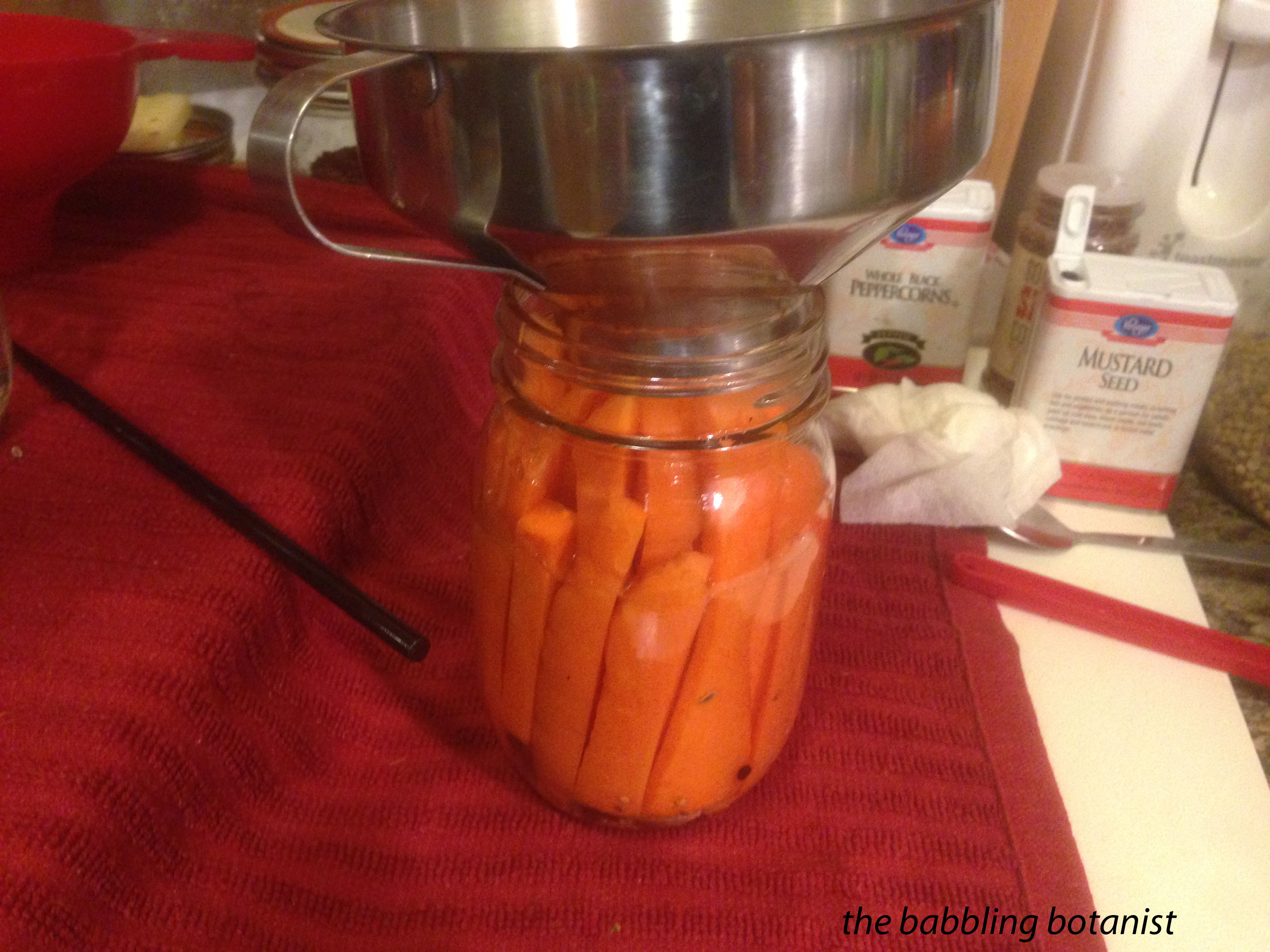
Grab a hot jar, and add whatever spices you like. I didn’t really measure my spices out, but did a clove or two of garlic per jar, along with a few shakes of dill seed, peppercorns, mustard seed and hot pepper flakes (around a half teaspoon of each). Combine whichever flavours you like the best. If you have fresh dill, do two heads per jar. Then pack in the carrots nice and tight, and pour in the hot vinegar mixture, leaving a half inch head space. Remove any bubbles trapped between the carrots. Wipe rims, place lids on the jars and tighten the bands finger tip tight.

carrot5 copy

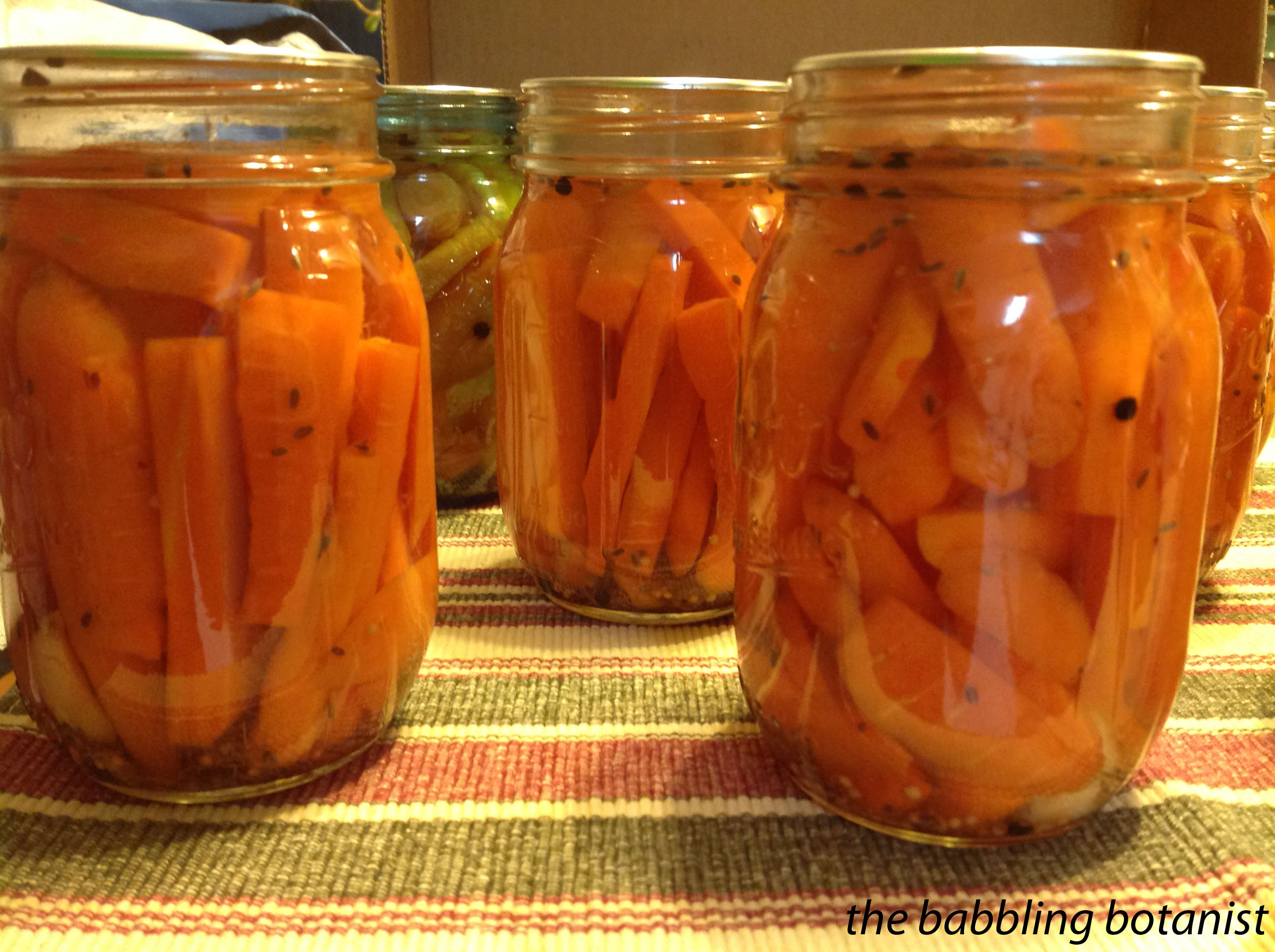
Place the jars in the canner, ensuring they are covered by at least 1-2 inches of water. Bring to a full rolling boil and process for 10 minutes. When the ten minutes in up, turn off the heat, remove the canner lid, wait 5 minutes and remove the jars to a towel or hot pad. mmm mmm pickled carrots. Wait 12-24 hours for them to cool, remove the bands, check the seals, label and store. Wait a few weeks for the full pickled goodness to permeate the carrots, then enjoy.

carrot6 copy

*This post contains affiliate links. Check out the “About the Blogger” page for more information.
Pickled Beets

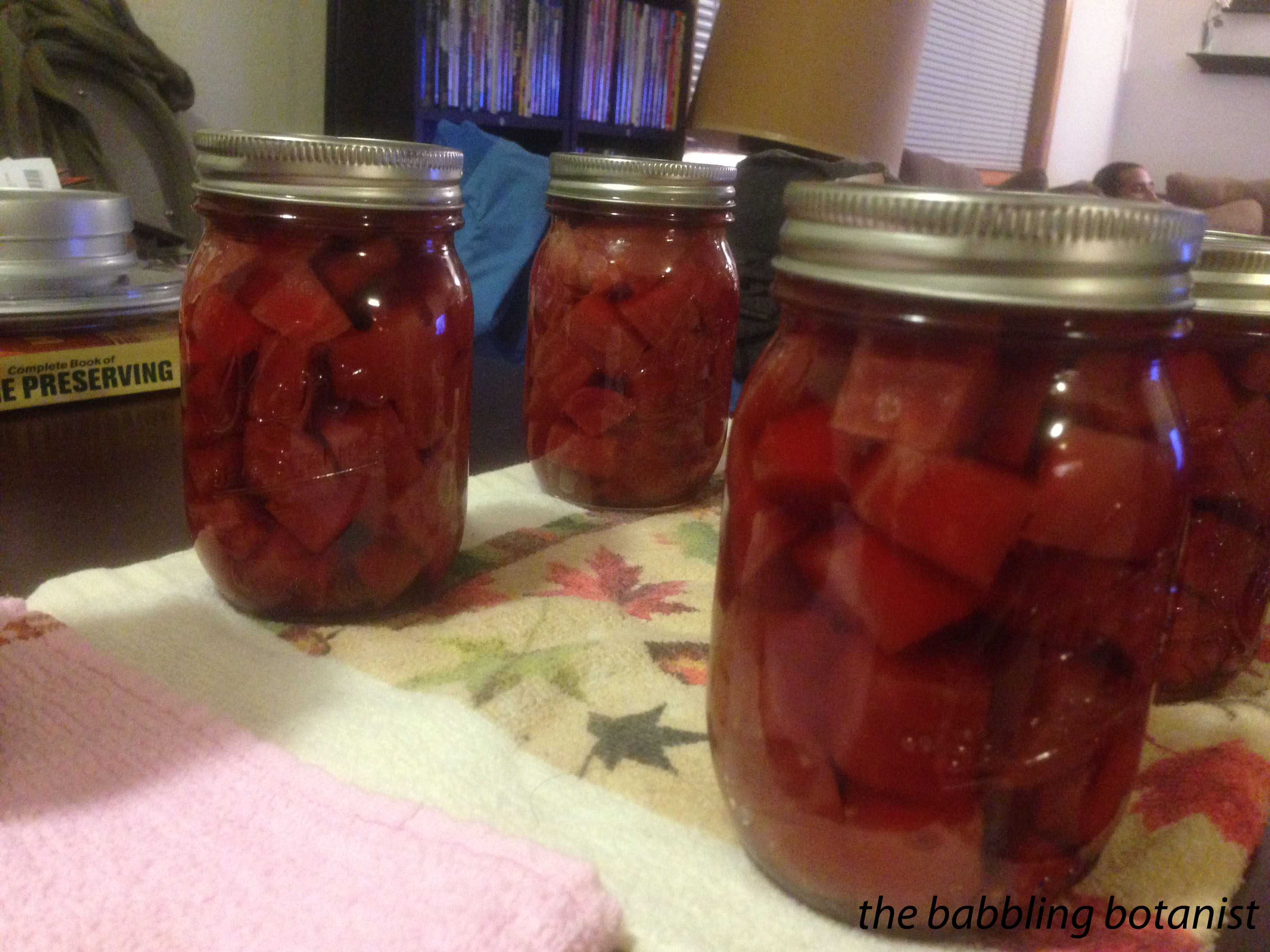
Remember those beets I talked about a while back that were in the pressure canner when the power went out? Well here is finally that follow up post on what I did with them. I thought they would turn to mush if I pressure canned them, so here is a recipe for pickled beets! I needed the help of my dear friends Kiki to battle the task of reprocessing these, so I went to her place for a canning extravaganza. This night, we also made the cranberry jam I posted earlier, and pickled carrots (coming soon to a blog near you). The recipe I used is the basic one from the Ball Complete Book of Home Preserving, but you can feel free to modify the spices to your preference. This recipe makes about 6 pints.

pbeets1 copy

Ingredients:
Beets (about 10 cups prepared)
1 cup water
2.5 cups white vinegar (5%)
1 cup sugar (optional in my opinion)
3 tbsp pickling spice

Here’s what we did:

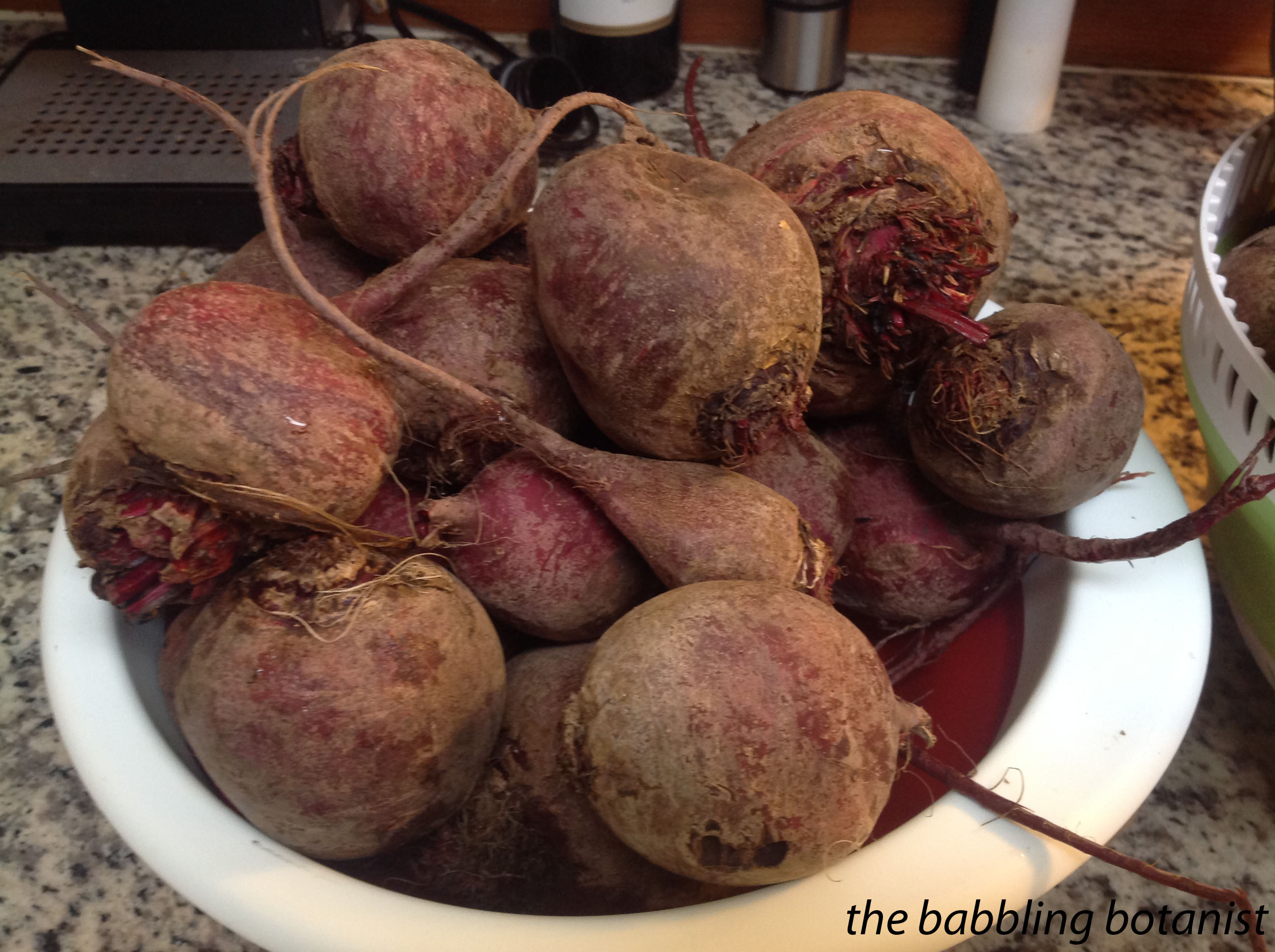
First you want to cook the beets a little to soften them. Mine were pre-pressure canned (grrrr), but what you will want to do is cook them for a little while to soften them up a bit. Wash them well and boil for 20 or so minutes. Rinse with cold water, peel and cut off the roots and stems. Chop to the size you would like.

pbeets3 copy

Combine the vinegar, water and sugar in a large pot. Honestly, I have no recollection of putting sugar in, so either we forgot it or I just forget, but people who have eaten them so far loved them but did agree they were less sweet than usual. Anyways, I leave it up to you, add it, don’t add it, half it, I don’t care. Just don’t mess with the vinegar to water ratio.

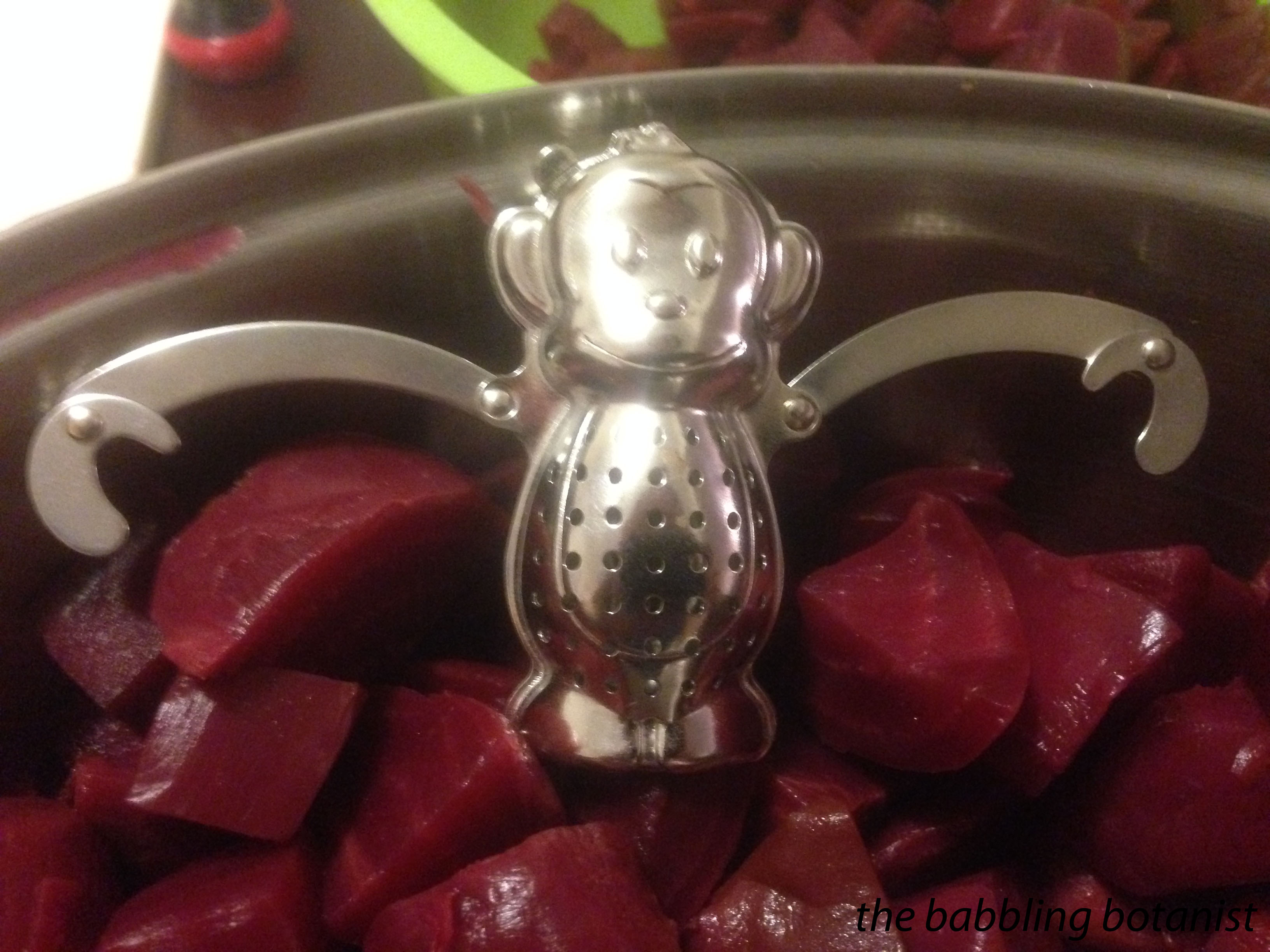
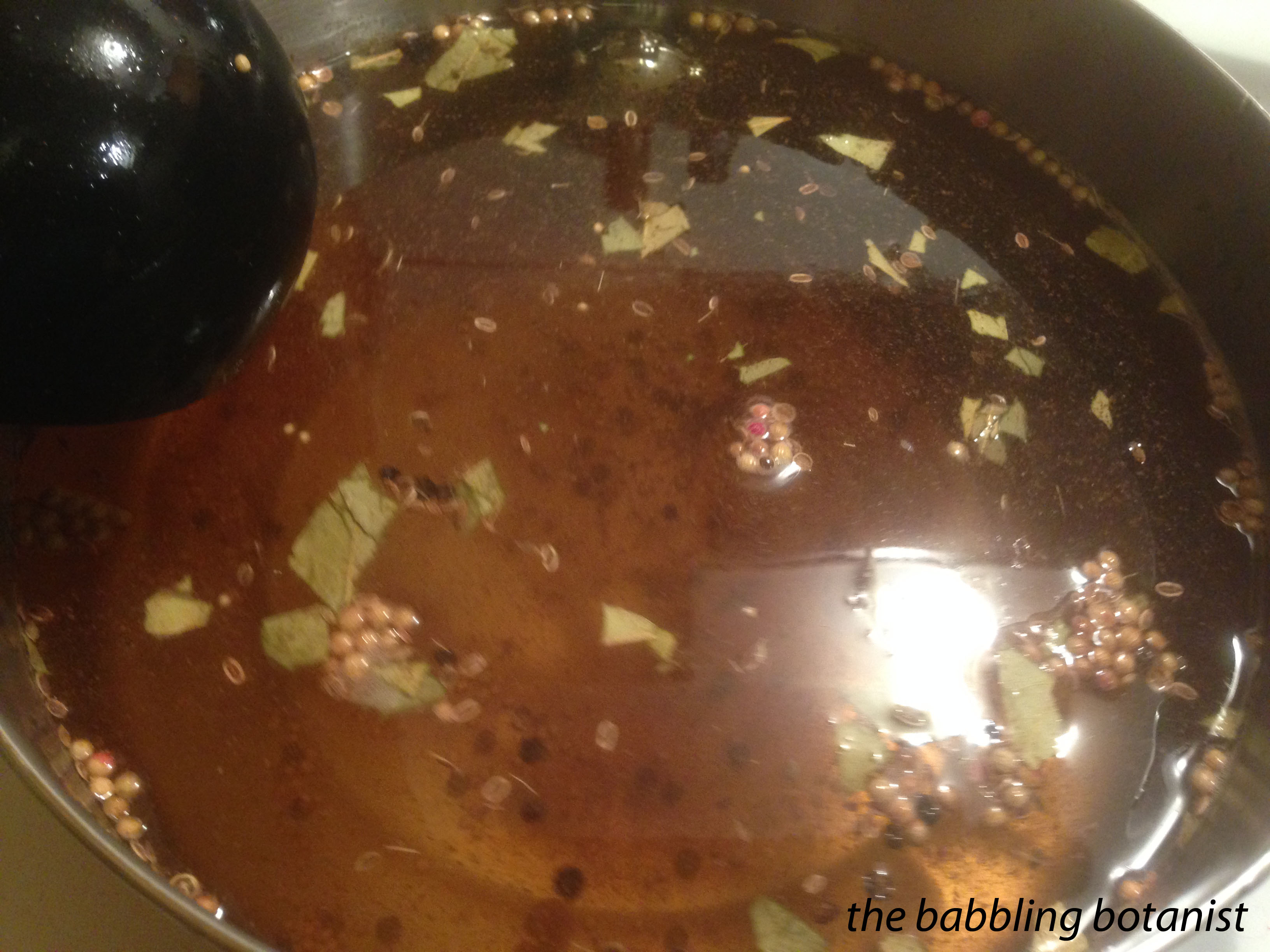
Next, grab your monkey and fill him with spices. OK, you won’t all have an adorable monkey tea infuser, but if you do you can use it, or make a spice bag. Use your favourite mix of pickling spices, either a homemade combo or store bought, whichever flavours you like. We used a combination of cinnamon, bay leaves, allspice, mustard seeds, coriander seeds, black pepper, ginger, dill seeds, and cloves. I think that was it. Place your monkey in the vinegar pot, and bring to a boil over medium high heat. Meanwhile, prepare the canner, jars and lids.

pbeets5 copy

I decided my monkey was too small and I wanted more spice, so tried making an improvised spice bag, which quickly busted. Oh well, all in a day. If some get in the jar its not a big deal. Reduce heat and boil the spices for about 15 minutes. Then discard your spice bag and add the beets. Return to a boil.

pbeets6

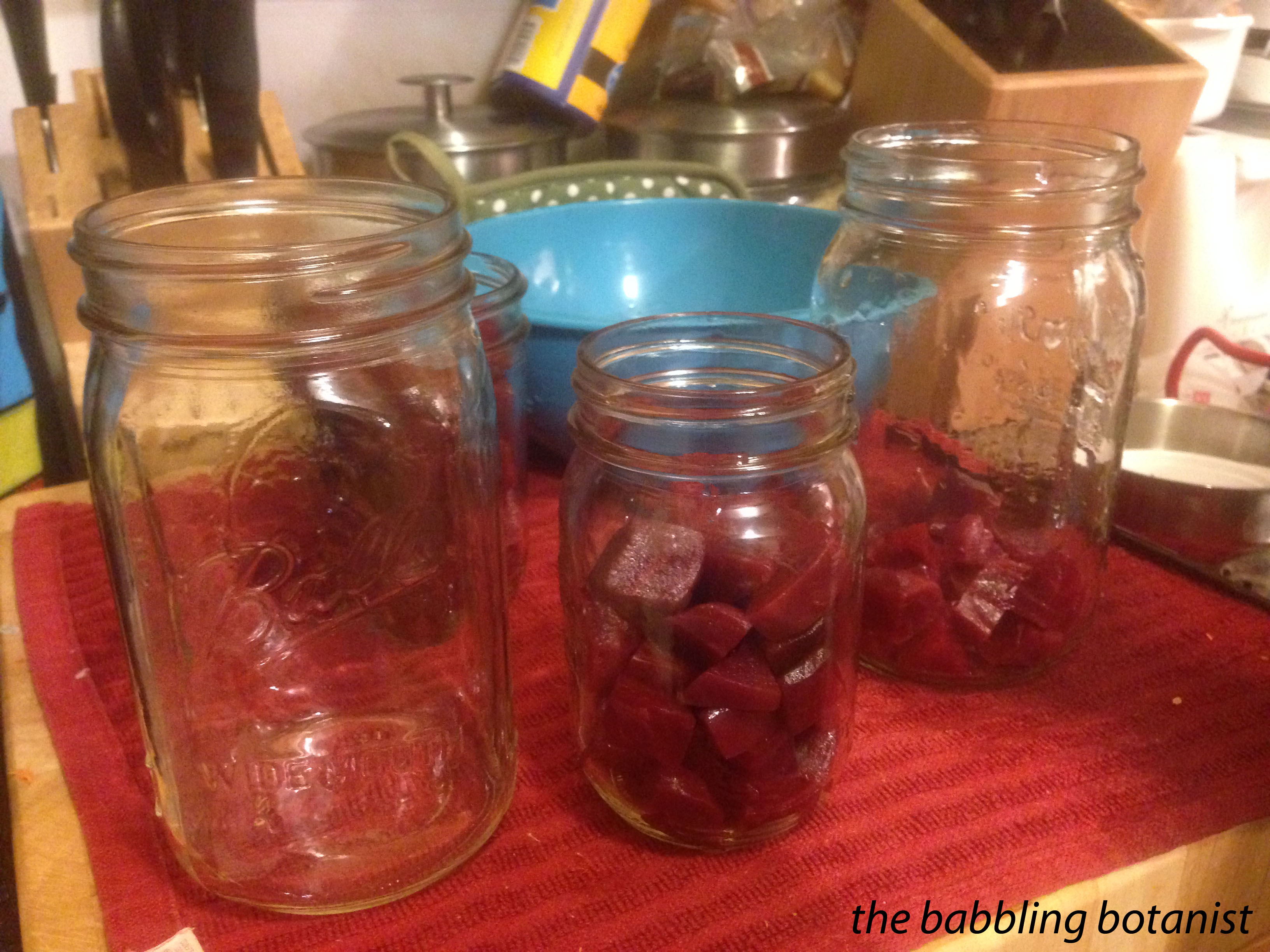
Use a slotted spoon to scoop the hot beets into the hot jars, then fill with the vinegar liquid. Leave a half inch head space. Be sure to remove any bubbles from between the beets with a plastic debubbler. Wipe the rims, place the lids on the jars, and tighten finger tip tight.

pbeets7

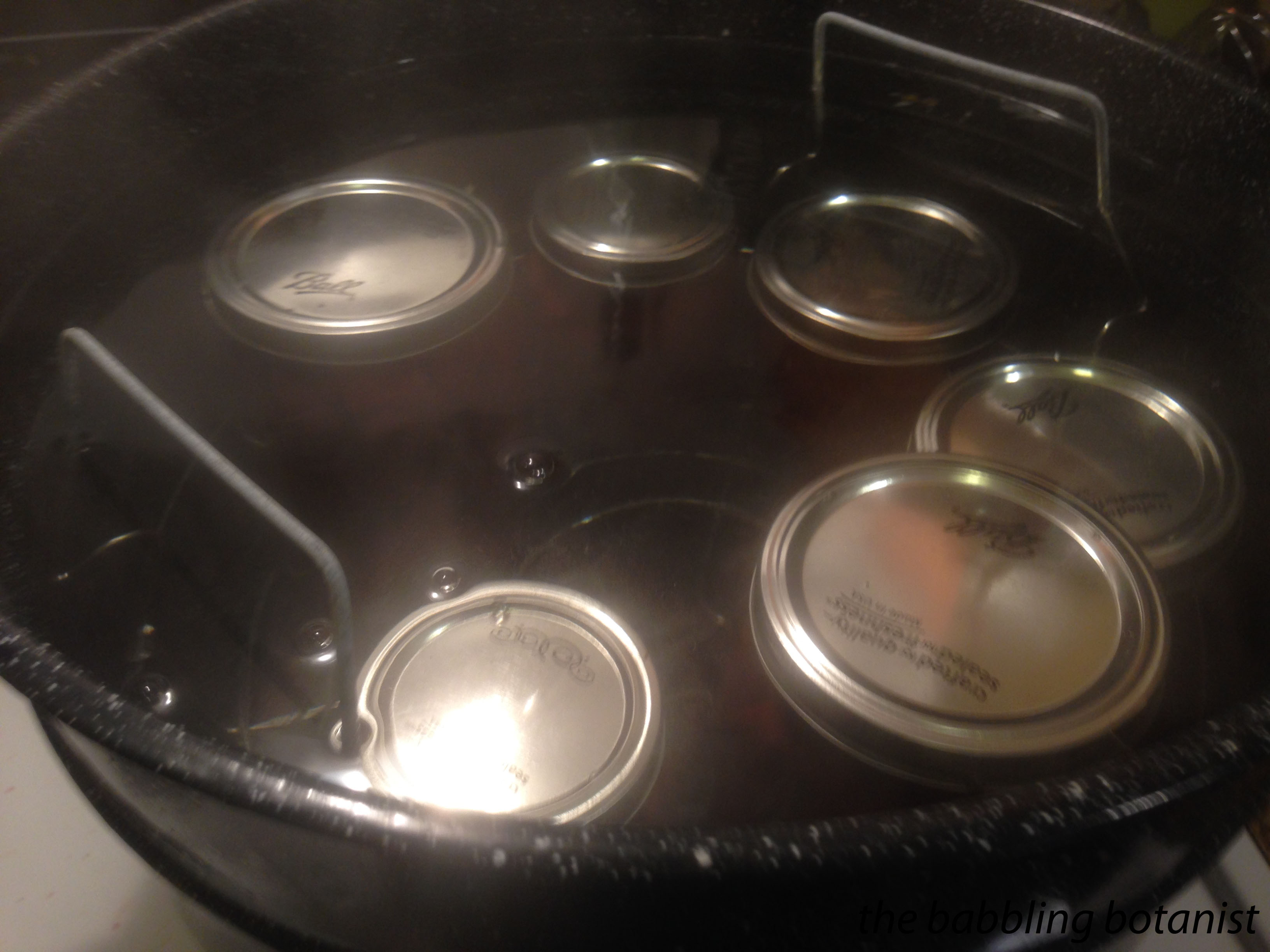
Place the jars in the canner, making sure they are covered by at least 1-2 inches of water. Bring to a boil and process for 30 minutes.

pbeets8

After 30 minutes, remove canner lid , wait 5 minutes, and remove jars. Cool for 12-24 hours, check seals, remove bands, label jars and store. Share delicious beets with all your beet loving friends (I know you all have lots!)

pbeets9

Spiced Cranberry Jam

Christmas time means cranberries! They are on sale and we always end up with too many. So, with all those leftover cranberries we made spiced cranberry jam! If you have leftover cranberry sauce, or leftover cranberries, this is a great way to use them. Thanks to Marisa from food in jars for this recipe.

Ingredients:
3 pounds fresh cranberries
3 cups granulated sugar
3 cups apple cider
1 lemon, zested and juiced
1 orange, zested and juiced
1 tablespoon grated fresh ginger
2 teaspoons cinnamon
1/4 teaspoon ground cloves

Here’s how we made it:

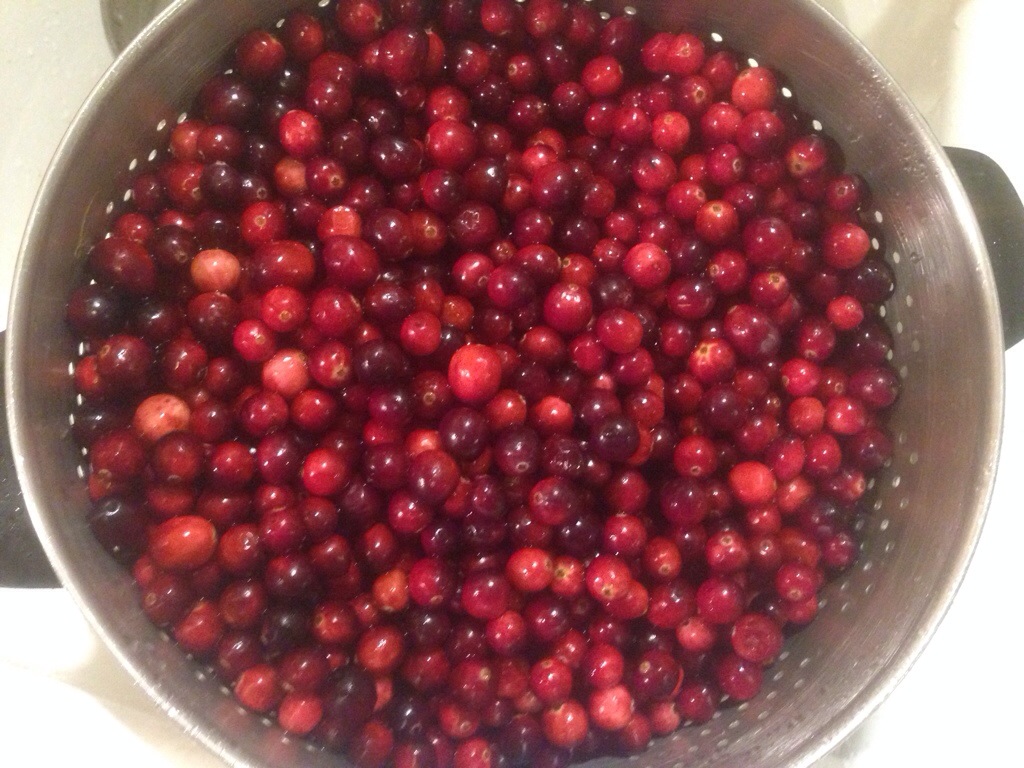
Rinse the cranberries in a colander.

20131228-203939.jpg

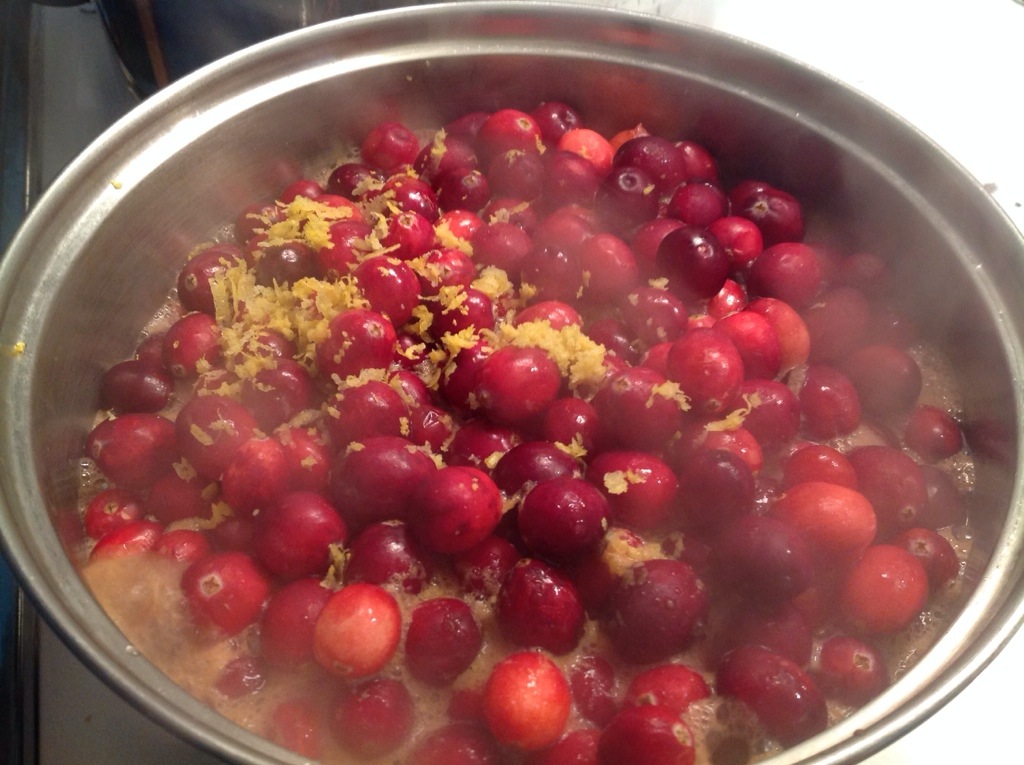
In a large pot combine the cranberries, apple cider, juices, zest and sugar. Heat over high heat, bringing the mixture to a boil. Cook until most of the cranberries have popped and the mixture begins to thicken. Meanwhile prepare the canner, jars and lids with 9 or 10 half pint jars.

20131228-204121.jpg

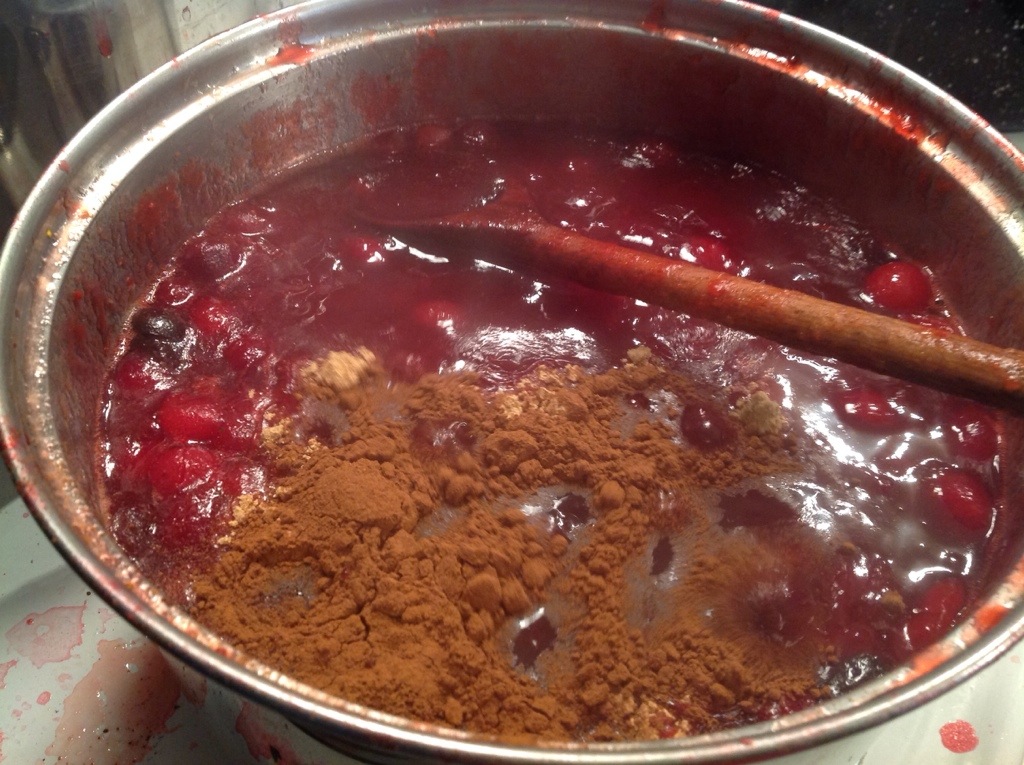
Once most of the cranberries have popped add in the spices and adjust to taste if you desire.

20131228-204302.jpg

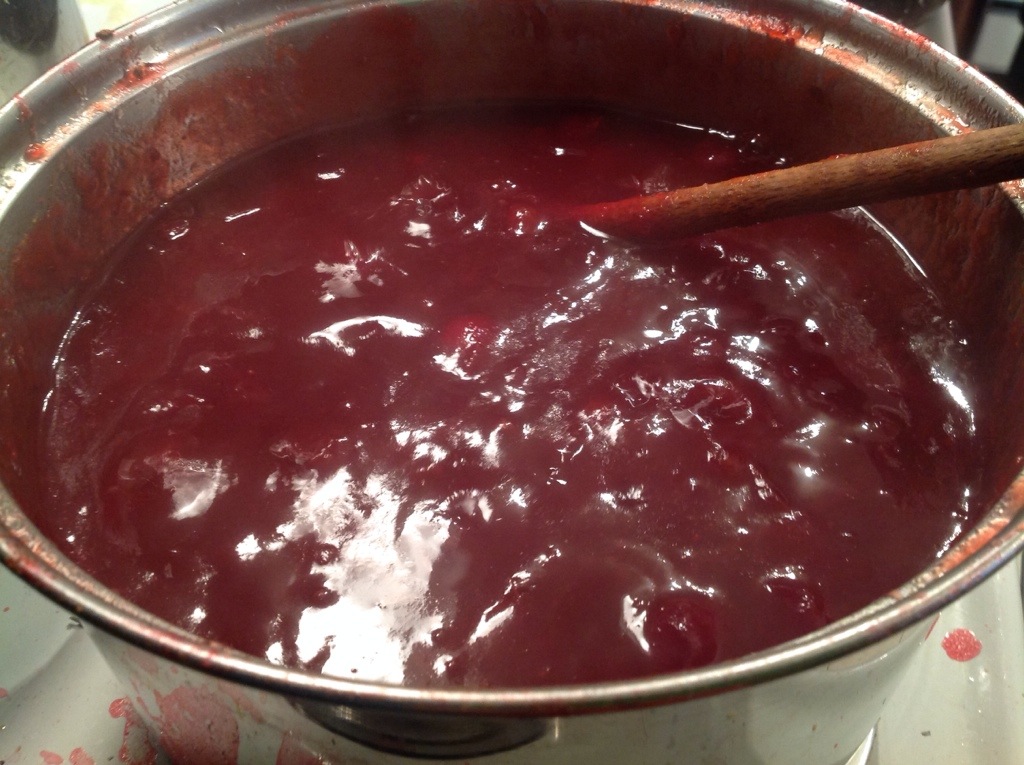
Continue to thicken to the desired consistency.

20131228-204527.jpg

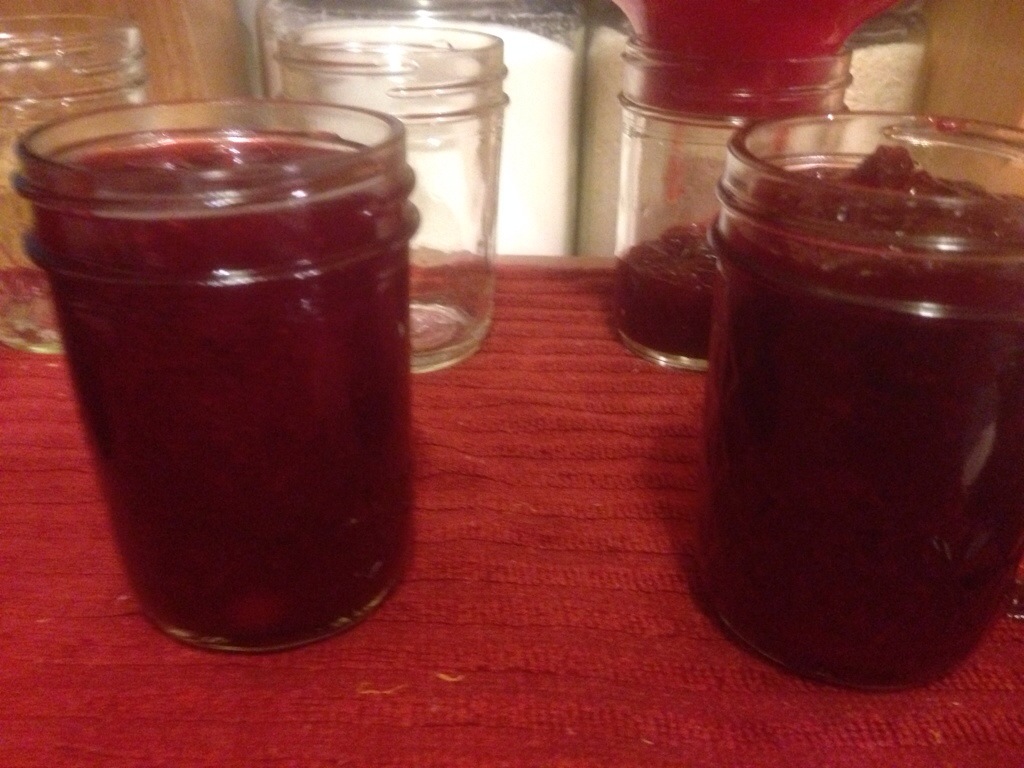
Fill hot jars leaving a quarter inch head space. Wipe rims, place the lids on the jars and tighten finger tip tight. Place jars in canner, ensuring that they are covered by at least an inch of water. Bring to a full rolling boil and process for 10 minutes. After 10 minutes, turn off the heat, wait 5 minutes and remove the jars to a hot pad or towel.

20131228-204726.jpg

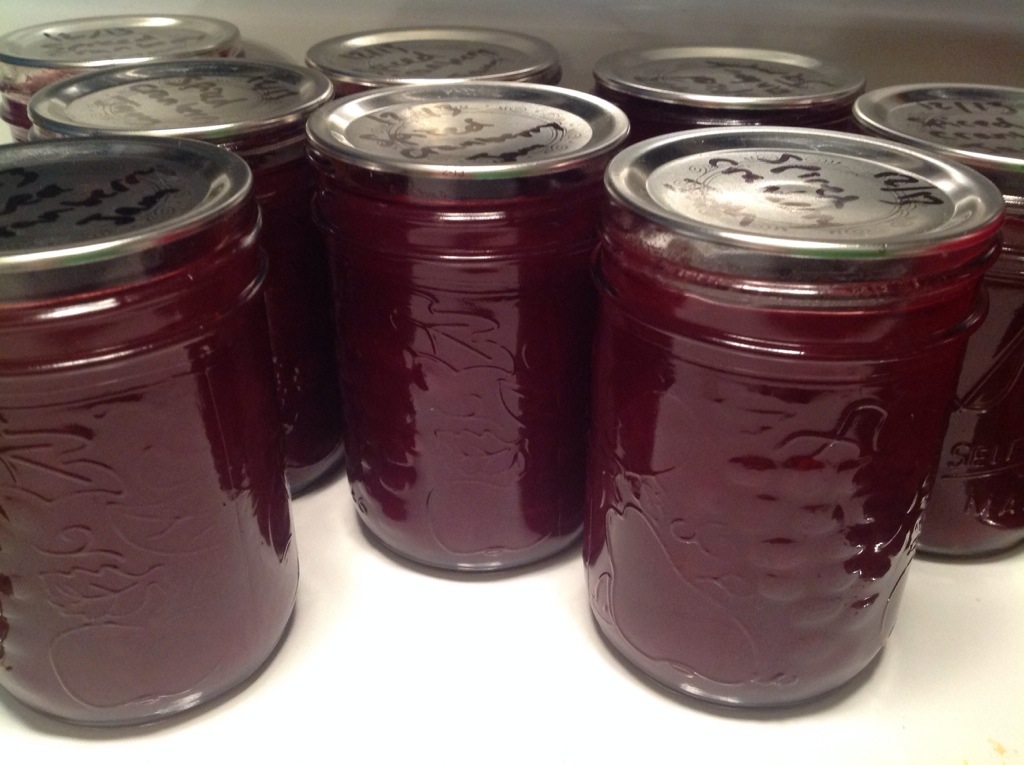
Wait 12-24 hours, remove the lids, wipe down the jars and store! Makes the perfect holiday gift for someone you love.

20131228-205105.jpg

Pressure Canned Beets

Holy guacamole, I haven’t blogged in a month and now canning season is basically over! Although there are still things that can be done over the winter and ways to keep that canning fire burning. And I have a backlog of a couple other recipes I want to let you in on. But anyways, today’s post is about beets and a slight trauma I had while canning which shall be my excuse for this slight hiatus I took.

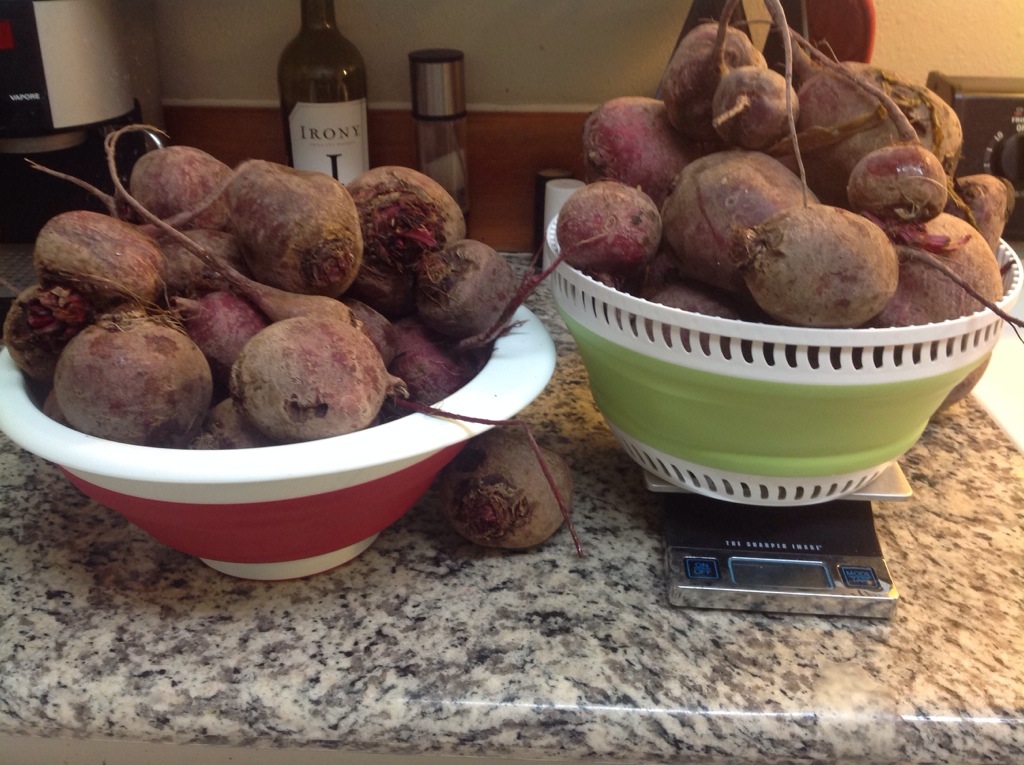
So! Pressure canning beets is a teensy bit time consuming, but I love beets so I thought I would give it a whirl. Step 1 is to select your beets and wash them. Now everyone will tell you to select the small beets because large ones can be fibrous, and don’t select the ones over 3 inches in diameter. Well, the farm stand near me was having an end of season blowout sale so you take what you can get. And I don’t discriminate, I love beets off all sizes, so don’t be a “beetist.” But I digress again, let’s can some beets.

20131212-190515.jpg

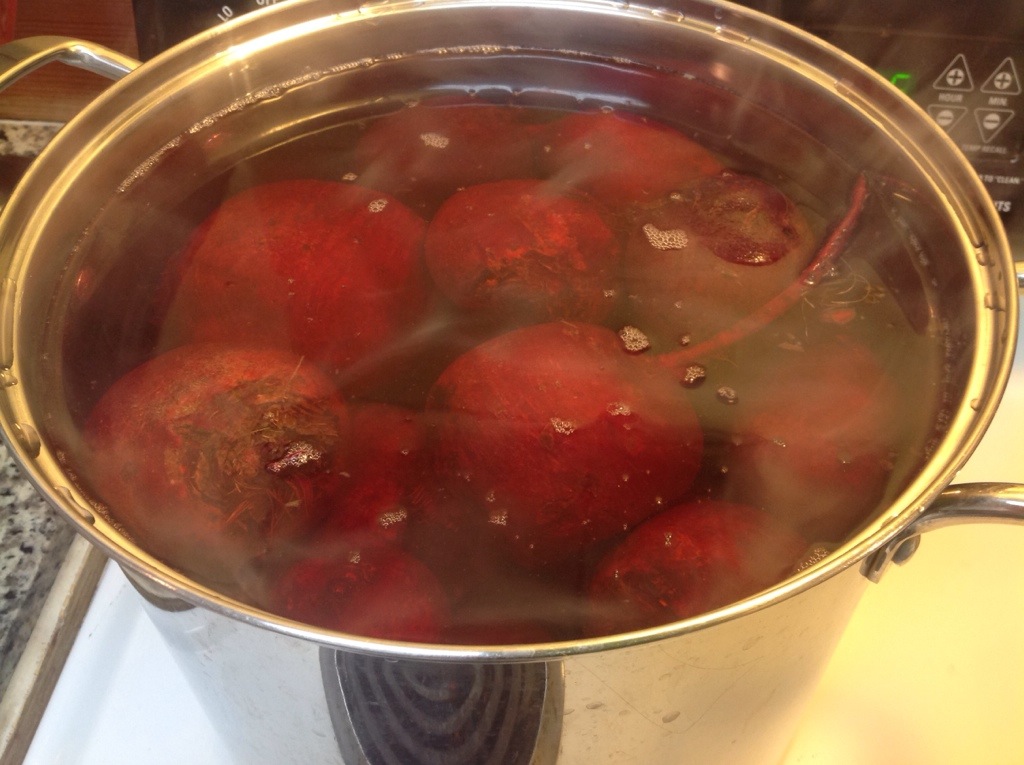
Step 2 is to trim the beets then boil them for 15-20 minutes “until the skins slip off easily.” Personally, I think step 2 is a sham. Trying to handle hot beets and slip their skins off turned my kitchen into what looked like a murder scene. I wish I had taken a photo for you. I guess they were a bit easier to peel, but I feel as though next time I’d prefer to peel and chop and then heat them even though everyone does the boiling whole. But I digress again. The moral of the story is you want your beets heated, pealed, and chopped in pieces. If you would like to change the order I feel like you should be allowed to do so.

While they are boiling it’s a good time to prepare the canner, jars, and lids. Add 3 quarts of water to your pressure canner and start heating it. Canning in quarts would be my recommendation, not a lot fit in a pint. In fact, I had pints prepared, and at the last second realized how little fit in them and swapped them out, but anyways…

20131212-190624.jpg

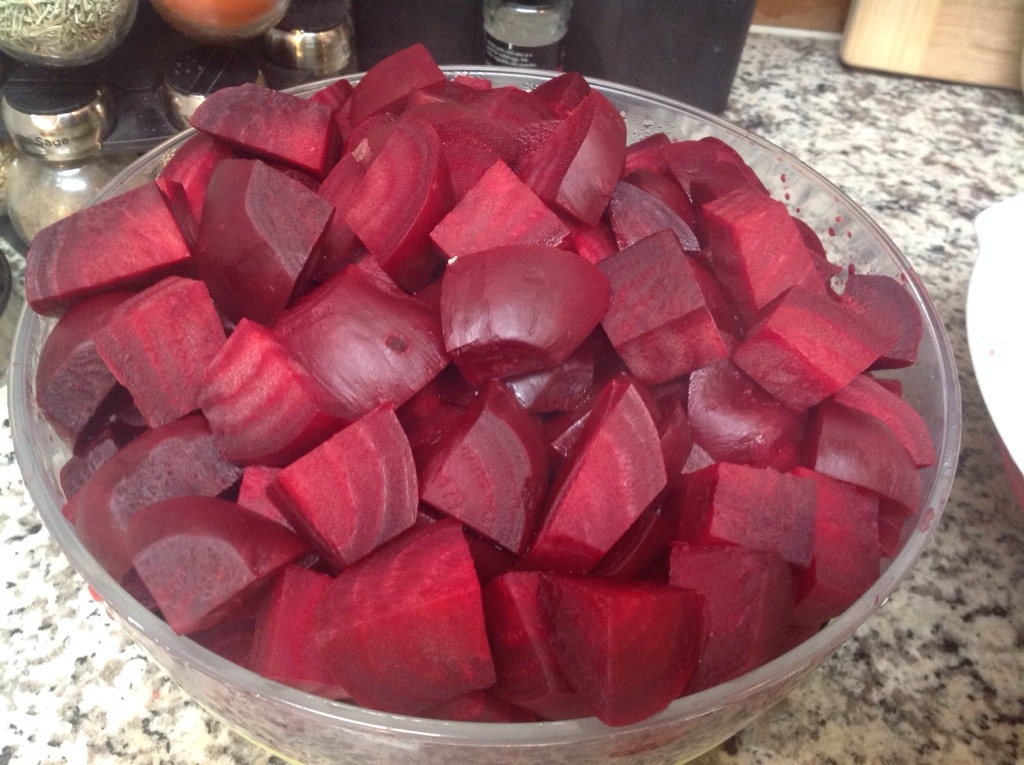
Chopped beets! The idea is you want a hot pack. So whichever order you did you want those beets still hot. Boil some clean water (i.e. not the water you boiled the beets in) to use to pack them in.

20131212-190745.jpg

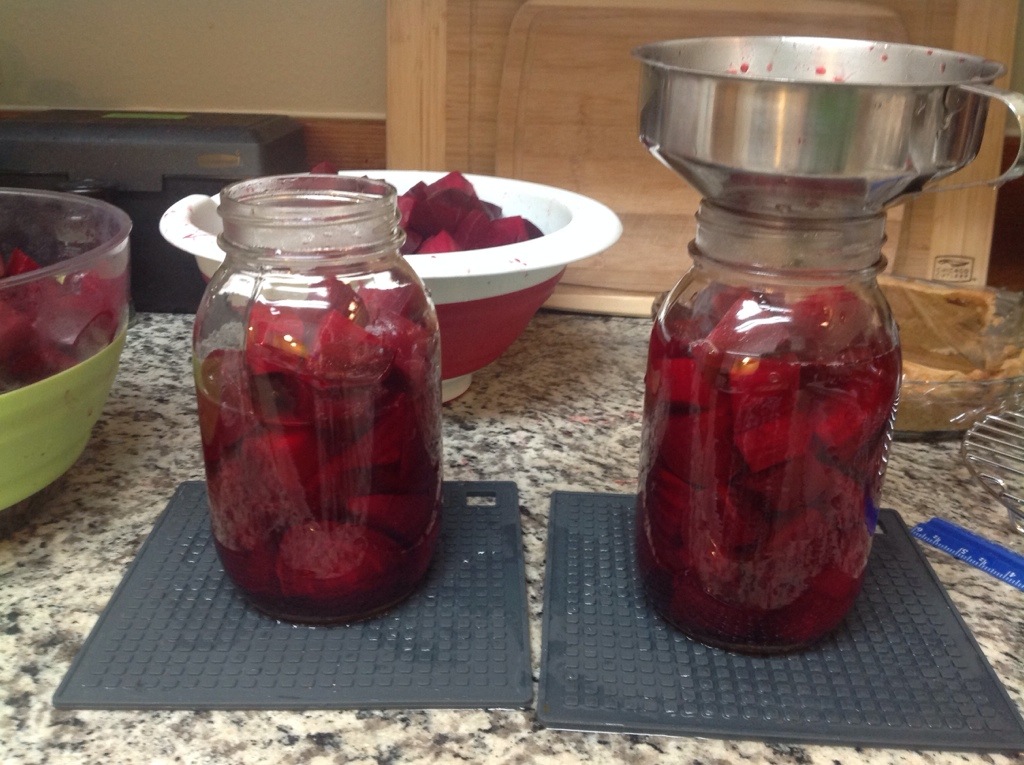
Pack them into the jars, and cover with the boiling water. Leave an inch head space and be sure to remove the air bubbles between the beets. Wipe the rims, apply the lids, and tighten finger tip tight. Place the jars in the canner. Secure the canner lid, vent the canner for 10 minutes, then place the weight on the vent. Bring to 11 pounds of pressure and process 30 minutes for pints or 35 for quarts.

20131212-190905.jpg

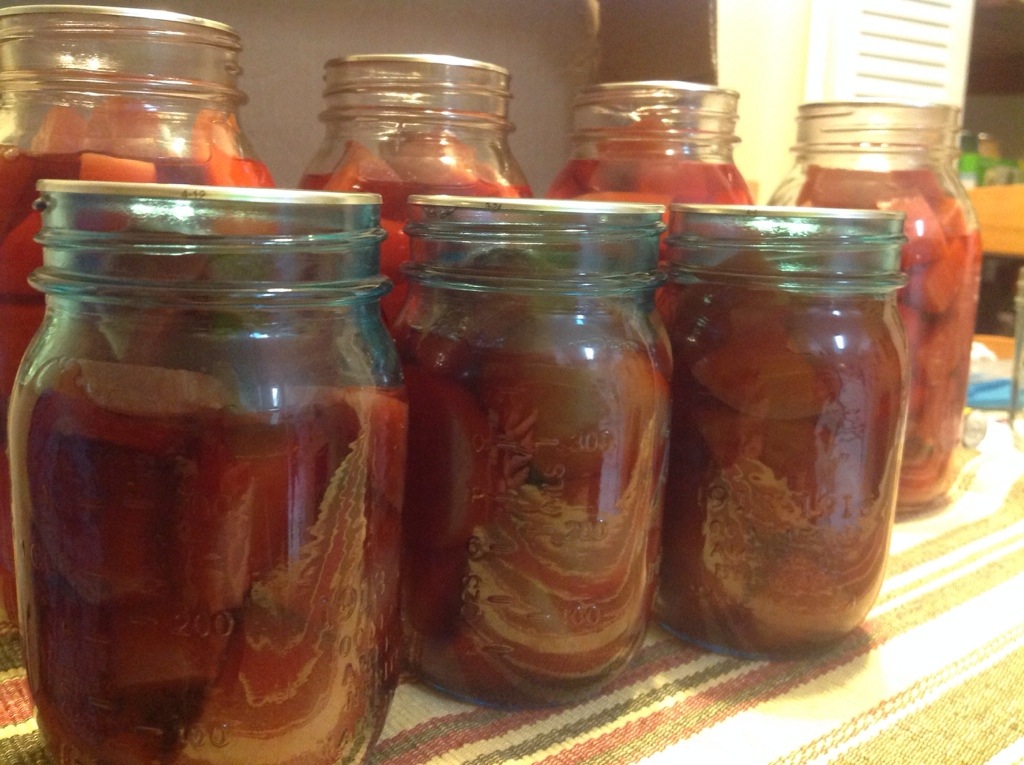
Now it was at this point for me that tragedy struck! About 15 minutes into my canning time THE POWER WENT OUT! I was so upset. I may be canning to prepare for the apocalypse but it’s not supposed to come WHILE I am canning. OK I jest, maybe, but still I was very upset. So I lit some candles and angrily listened to the canner depressurize. It’s usually a lovely sound “yay they’re done,” but when you know they are not done it is a maddening sound! OK rant complete. So assuming your power did not also go out (it returned at 3am by the way, too little too late) you will turn off the heat after 35 minutes, let the pressure drop on its own, and remove the weight once the pressure is all the way down and the do-dad drops. Wait 5 more minutes, remove the lid and remove your beets to a hot pad or towel. Listen to the ping ping ping. After 12-24 hours when they have cooled, check the seals, remove the bands, label and store.

As a side note, below are my successful jars, done with different beets a few days later. Tune in for the next post for what I did with the failed pressure canned beets. As an additional side note, yes I put some in pints, I wanted to see how cute they’d look in blue jars. Meh, not as cute as expected but OK.

20131212-191117.jpg

Lip Balm

Lip balm is probably one of the easiest homemade cosmetics you could try, and it is so worth it to make yourself. It’s way cheaper than store bought, has no weird ingredients you can’t even pronounce, and you can customize pretty much whatever flavour you want.

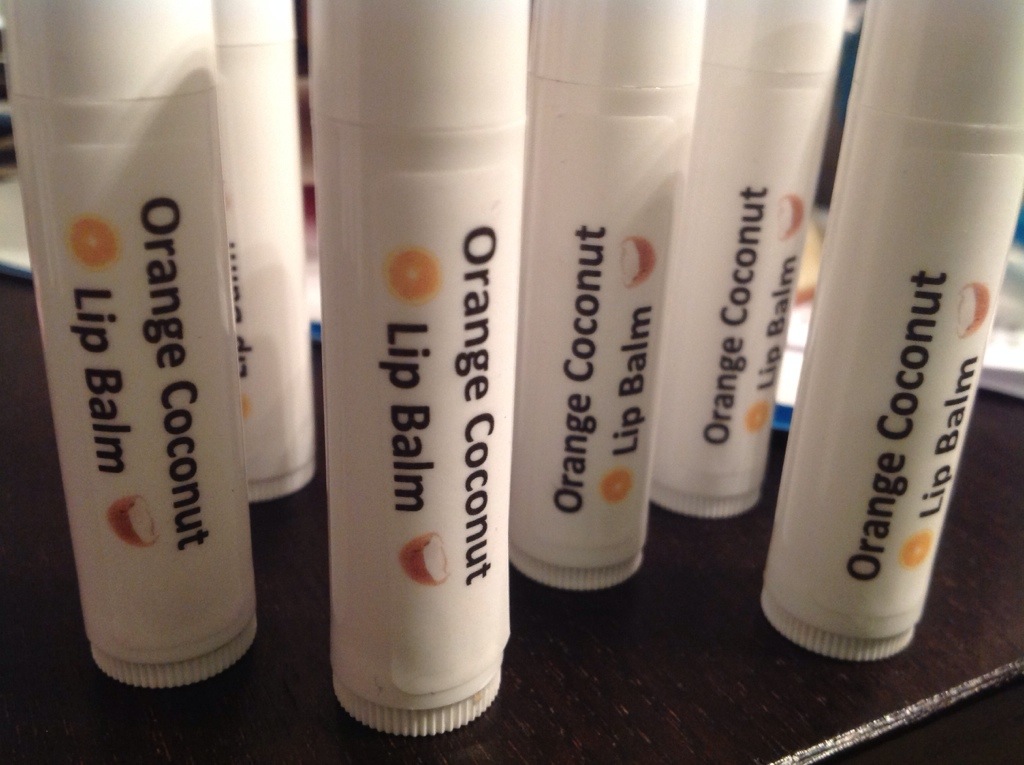
20131114-135738.jpg

The basic lip balm recipe is 3 parts of liquid oil to slightly more than 1 part beeswax (more if it’s really hot where you live). You can basically use whatever food oil you want; nutty oils, flowery oils, olive and coconut are awesome choices. You can also add a little shea butter or cocoa butter too if you like, and these can just be added in addition to your 3:1 ratio. Melt all the ingredients, add a few drops of the essential oil of your choice, and a couple drops of vitamin e oil and wham bam you have a delicious balm that will turn you against store bought forever! I find that sometimes over time with temperature changes the ones with Shea or cocoa butter can start to kind of separate or get a weird texture, so might need a little extra beeswax, but the coconut plus liquid oil plus beeswax ones have never given me a problem and are so awesome!

So, while I encourage you to explore different recipes, here are two of my favourites, modified from mountain rose herbs (which is also a great place to get ingredients).

Peppermint Cocoa Lip Balm
1 tablespoon cocoa butter
2 tablespoons sweet almond oil
1 tablespoon macadamia nut oil
1 tablespoon + 1 teaspoon of beeswax
15 drops of peppermint essential oil
A few drops of vitamin e oil

Grapefruit or Orange Coconut Lip Balm
1 tablespoon coconut oil
2 tablespoons sunflower oil
1 tablespoon + 1 teaspoon beeswax
15 drops grapefruit essential oil
A few drops vitamin e oil

These recipes will fill about 10 regular sized tubes of lip balm, or less if you are doing larger containers of course. I halved it for this since I was doing 2 flavours and wanted to try them out, so I made 5 of each.

How to make it:

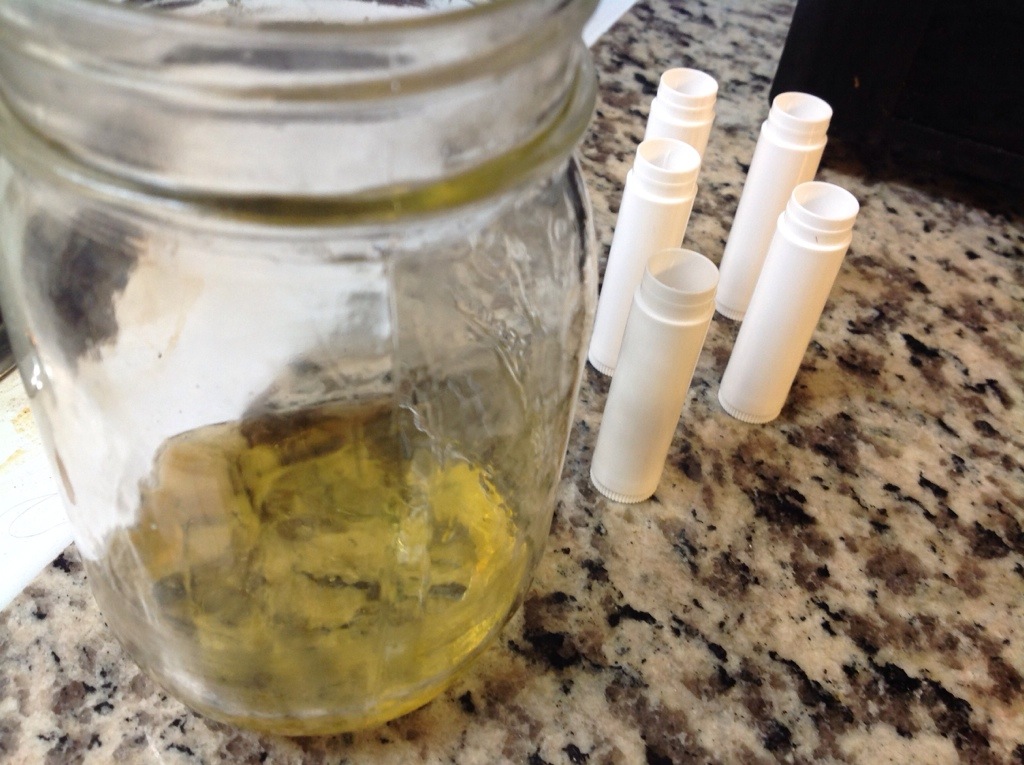
Combine all the ingredients except the essential oils and vitamin e in a glass container double boiler and heat until melted. I have used a ball jar for this purpose that I set in a small pot of water on the burner, but you can use any glass jar you desire. One with a spout is way better, like a glass measuring cup. I spilled way less when I started using one with a spout – silly me!

20131114-135811.jpg

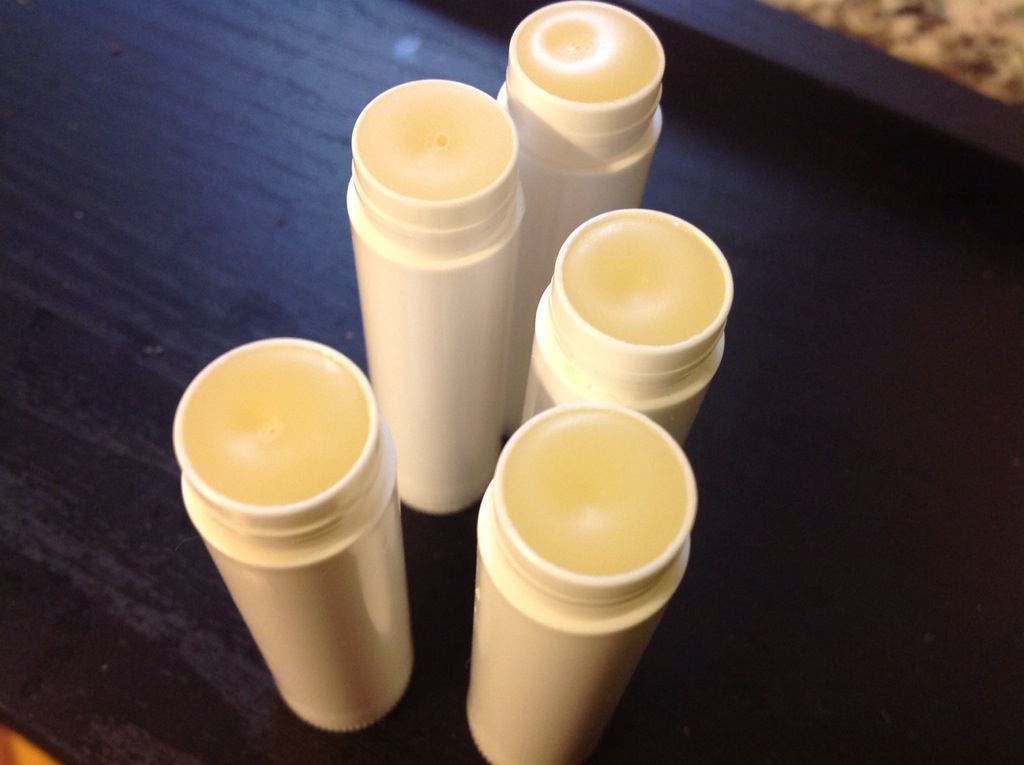
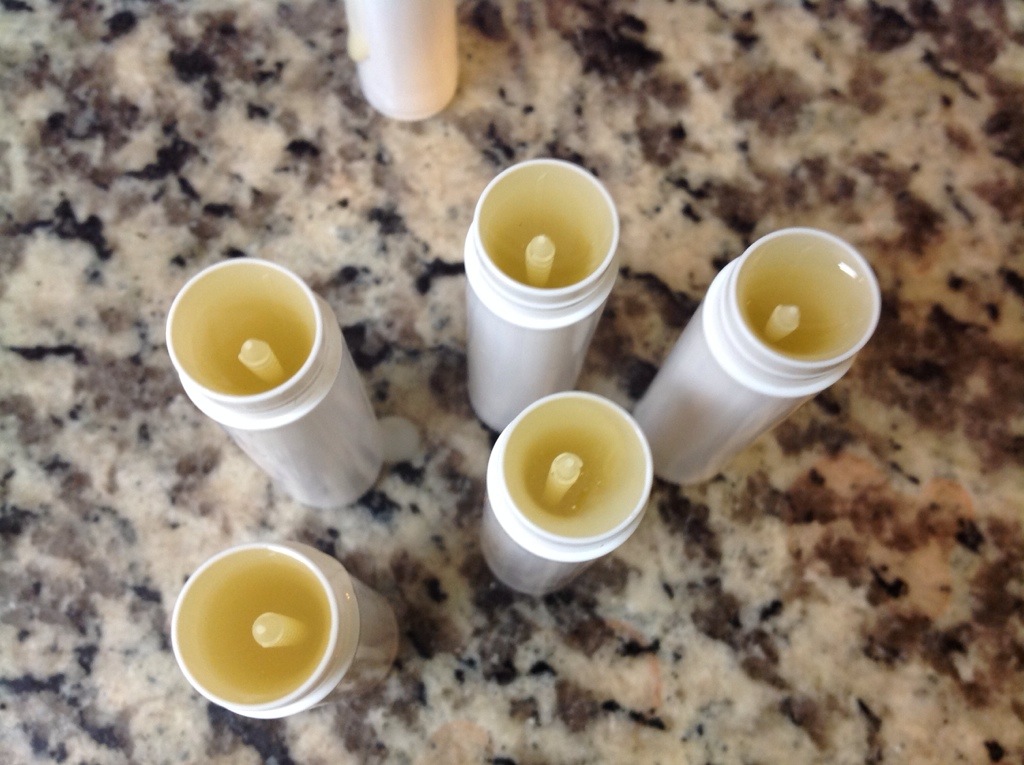
Once all the ingredients are all melted and mixed, remove from heat, quickly add the essential oils and vitamin e oil, stir, and then pour into your containers. I bought these tubes on amazon for like 15-20 cents each, or you can put it in whatever little tin or container you want. Try to move quickly, especially if it’s chilly in your house, or it starts to harden on the side of the jar. Even filling 5 I started to have it harden a little so move as quickly as you can.

20131114-135922.jpg

And voila – that’s all there is to it! Explore and try new recipes, it’s fun! Not sure where to find these items? I get the coconut oil in the healthy food section at the grocery store, and vitamin e oil and essential oils can usually be found at health food stores. For items I buy online, click on the links embedded in the recipe above which are mostly for amazon, or check out Mountain Rose Herbs. For the cute little labels below I actually used file folder labels.

*This post contains affiliate links. Check out the “About the Blogger” page for more information.
20140404-204636.jpg

Salsa Verde

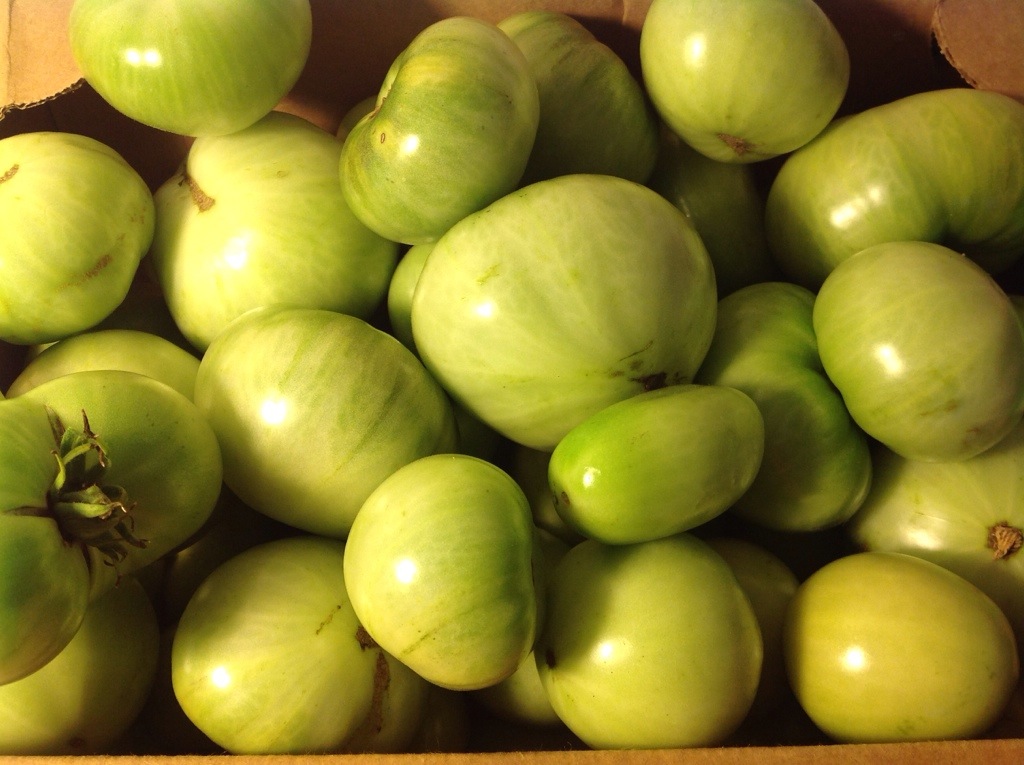
NOOOOOO TOMATO SEASON IS OVER! 😦 It is sad, but at least I have a pantry full of delicious goodies to get me through the winter. The first frost was a week or two ago, and it meant that upon seeing the warning I picked all my green tomatoes. Sadly it came a little early this year so I had a lot of green tomatoes still. However, the bright side is that I made this green tomato salsa! If you still have green tomatoes this is a great use for them.

20131101-193316.jpg

Ingredients:
5 cups chopped green tomatoes or tomatillos
1.5 cups seeded chopped long green chilies
1/2 cup finely chopped jalapeno peppers
4 cups chopped onions
1 cup bottled lemon or lime juice
6 cloves of garlic, finely chopped
1 tablespoon ground cumin (or to taste)
3 tablespoons oregano (or to taste)
1 tablespoon salt
1 teaspoon black pepper

Here’s what I did:

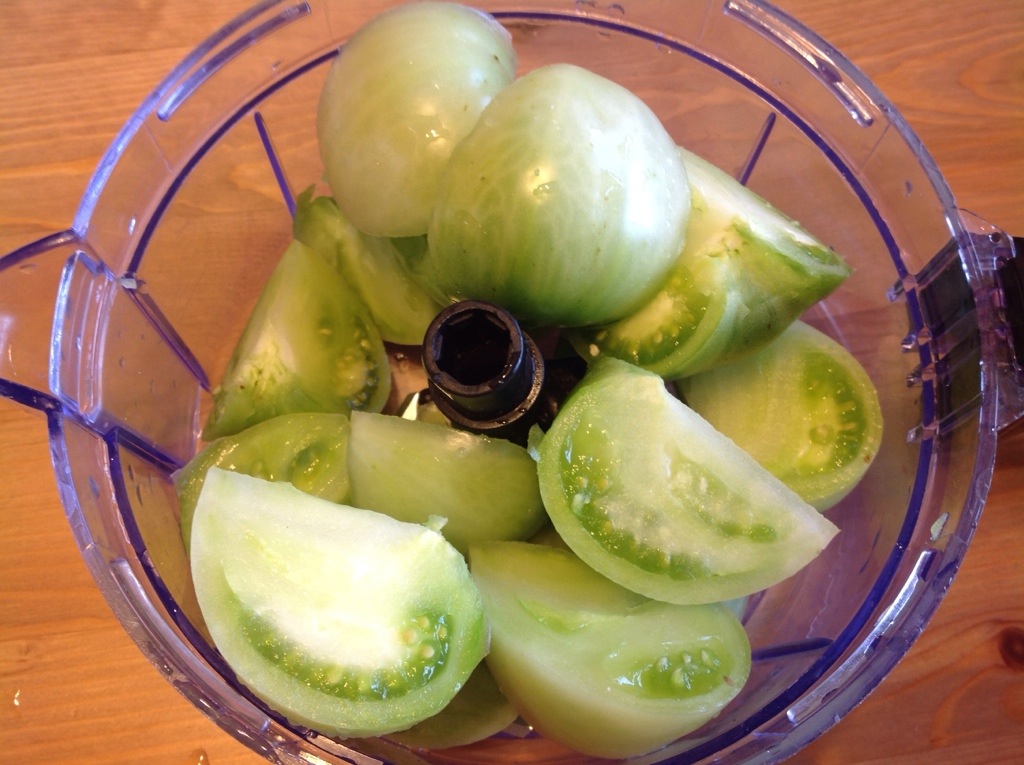
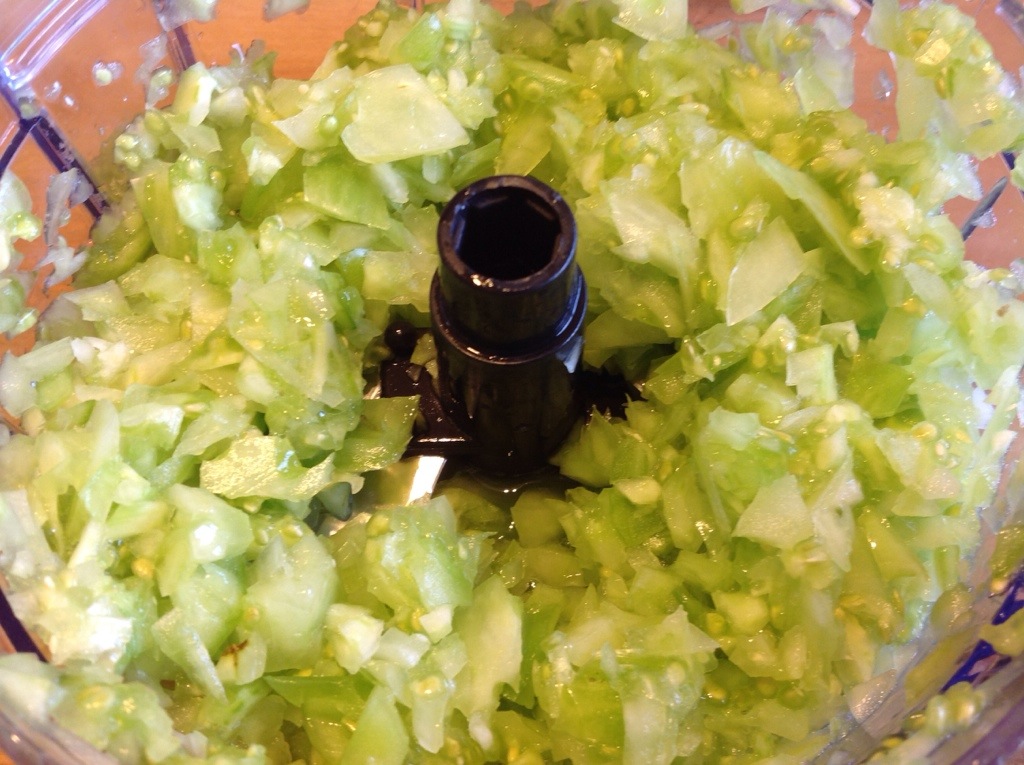
I wanted the tomatoes, peppers and onions chopped pretty finely so I used my little food processor on all three.

20131101-193359.jpg

Chop the tomatoes, peppers and onions.

20131101-193419.jpg

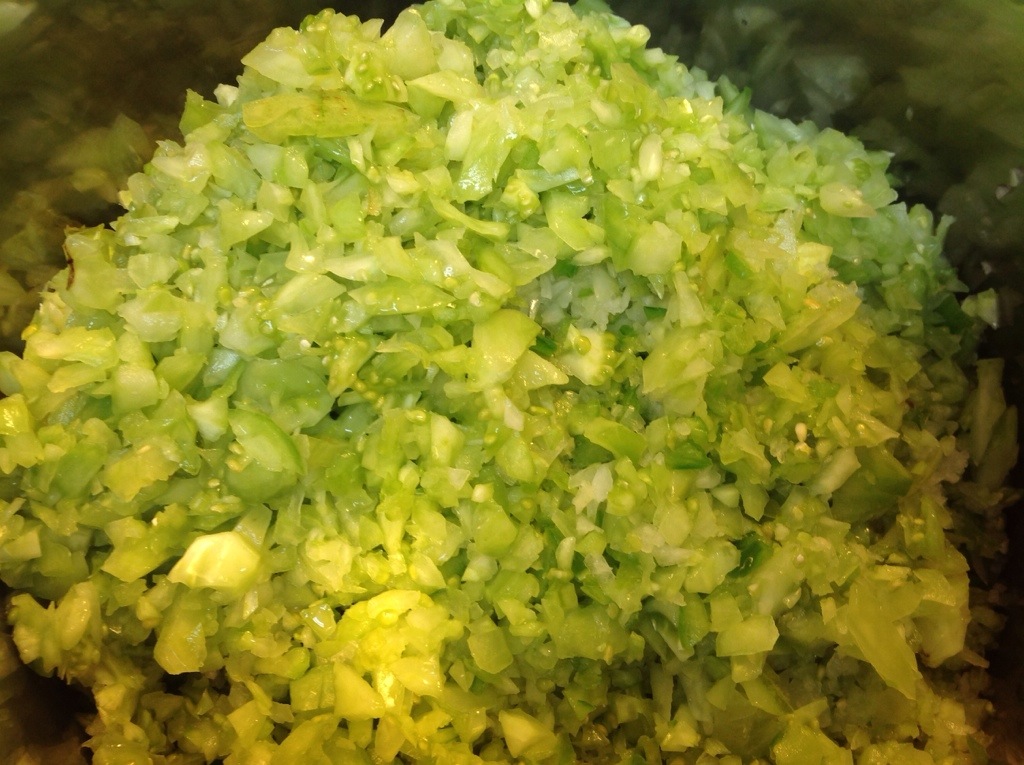
Mix all the ingredients together in your stock pot and bring it to a boil over medium high heat. I would wait until it’s heated and mixed together before adding the spices. I went for the full amounts of cumin and oregano but I may recommend starting with less and adding to taste because it can become a little overpowering.

20131101-193516.jpg

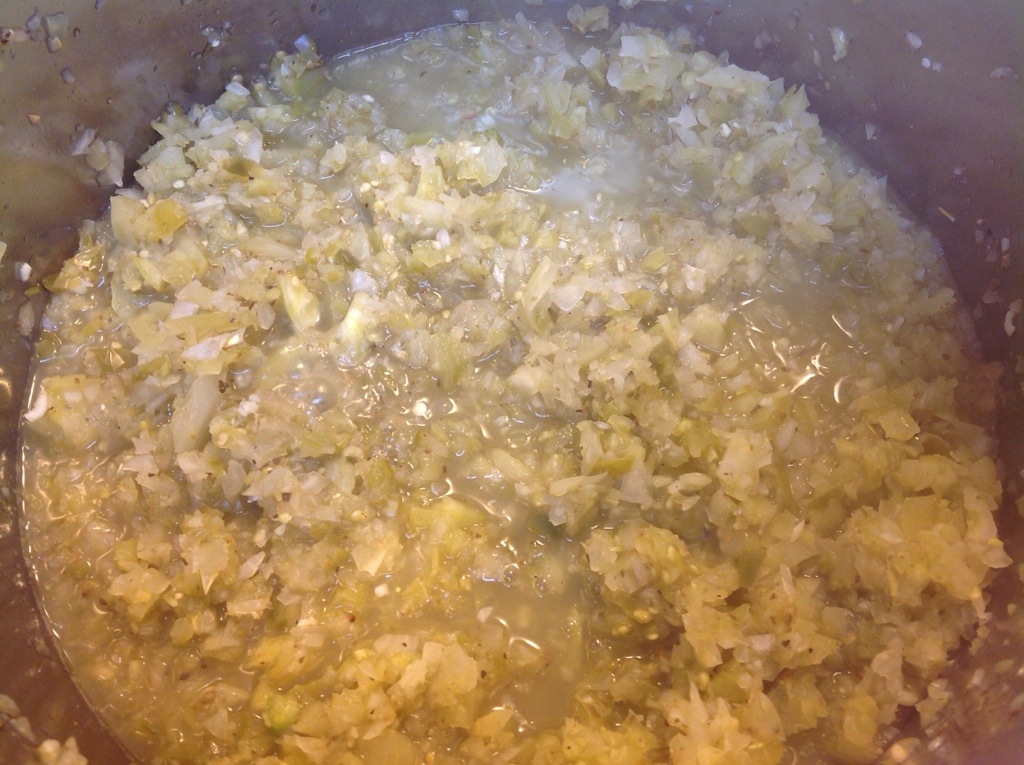
Once boiling, reduce heat and simmer for 20 minutes, stirring occasionally to prevent sticking. Meanwhile prepare the canner, jars and lids.

20131101-193538.jpg

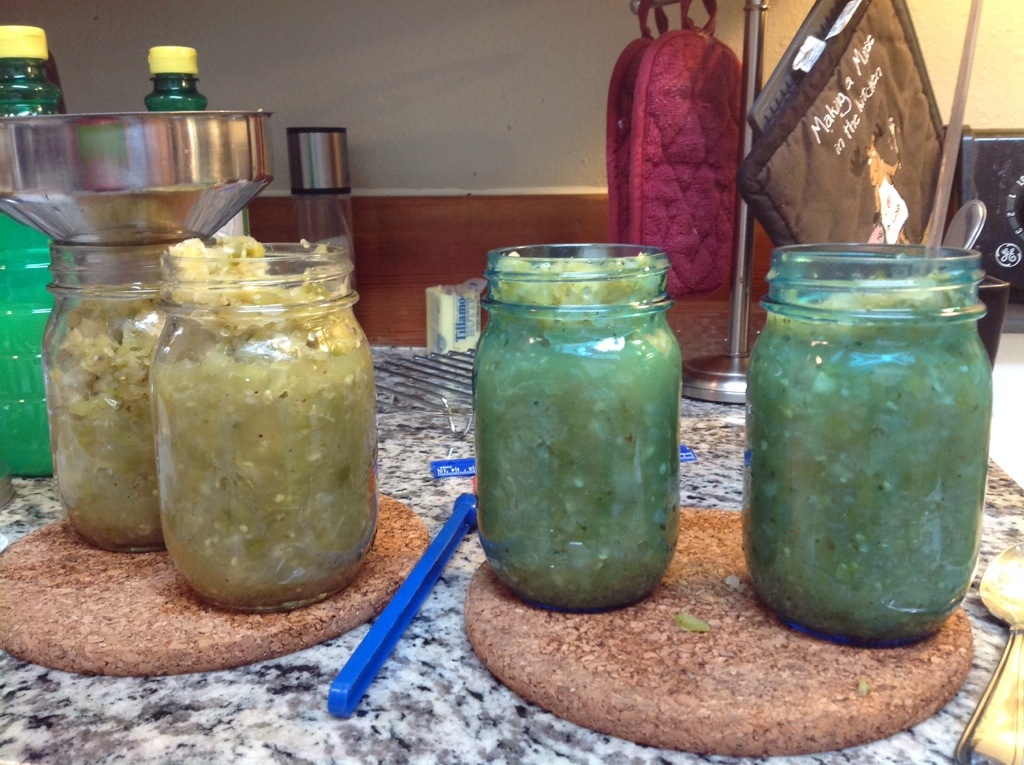
Fill the hot jars leaving a half inch head space. De-bubble the jars, wipe rims, apply lids and bands, tightening finger tip tight. Process at a full rolling boil for 15 minutes.

20131101-193645.jpg

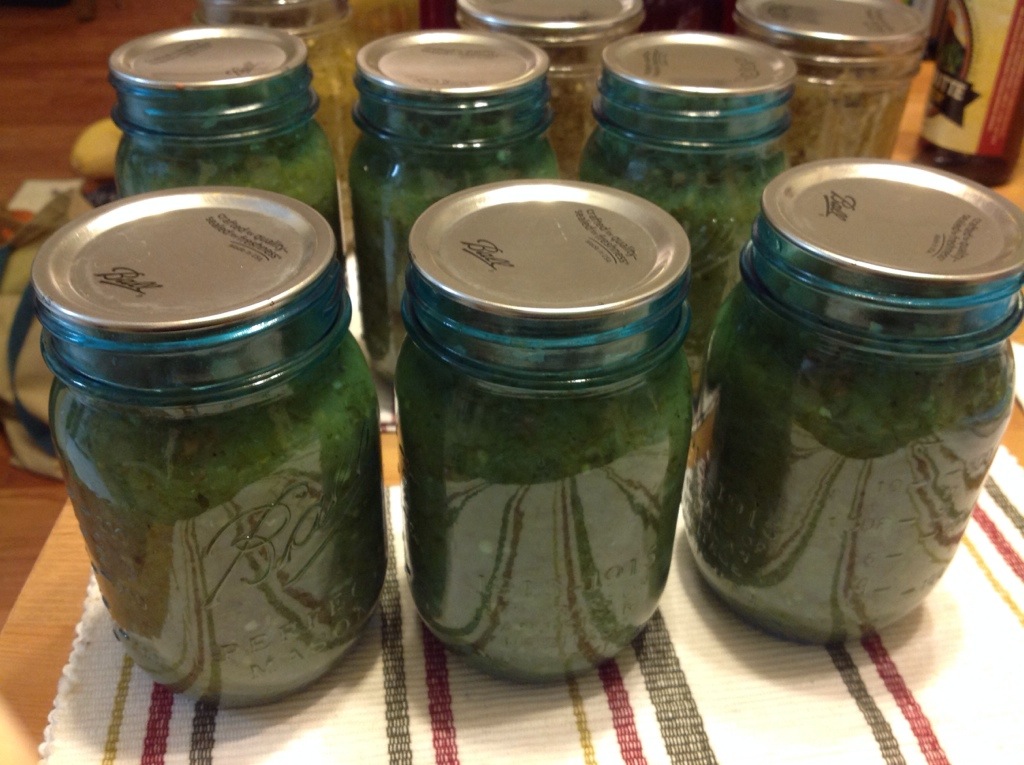
After 15 minutes, turn off the heat, remove canner lid, wait 5 minutes and remove the jars to a hot pad or towel. After 12-24 hours remove bands, check seals, label and store! Recipe yields 5 pints.

20131101-193710.jpg

Plant Profile: Golden Paintbrush

I promised in my introductory post to this blog to do some fun plant profiles in addition to my canning and things, so I am finally going to make good on that promise! I thought it would be fun to start with golden paintbrush, since this is the major study species for my masters project.

DSCF1079

Golden paintbrush is endemic to the Pacific Northwest, meaning that it is only found in British Columbia, Washington and Oregon. In Oregon there are actually no natural populations anymore. They were mostly destroyed by land use conversion for agriculture and residential development, so any populations you see in Oregon are reintroduced plants. Therefore, a main focus of my research is to improve the success of reintroductions, and aid in the recovery of this species.

There are a lot of really cool things about the golden paintbrush that make it a fun species to study. For one, paintbrush is a parasitic plant. It’s classified as a hemiparasite, meaning it doesn’t need a host for survival but it can attach below ground to the roots of other plants and take nutrients and water from them. The image below shows the connections the plant can make, which are referred to as haustoria. As a result of this quality of the plant, part of our research revolves around giving the plant hosts in order to improve its success in the field.

haustoria

Another fun fact about the golden paintbrush is that the part of it you typically think of as being the petals are not actually petals. The yellow part on a golden paintbrush like shown below is actually a colourful bract. The actual flower of the plant is reduced and green and rather hard to see here. You can see multiple stamens (the male part of the flower) and pistils (the female part) in the image though. They are super cute, and obviously get their name from looking a lot like a paintbrush.

IMG_0569

The scientific name for golden paintbrush is Castilleja levisecta. Within the genus Castilleja there are about 200 species of paintbrush plants of different colours that can be found in different habitats. The one below I saw hiking near Bend, Oregon. In this one you can kind of see the green flowers in between the red bracts.

IMG_0938

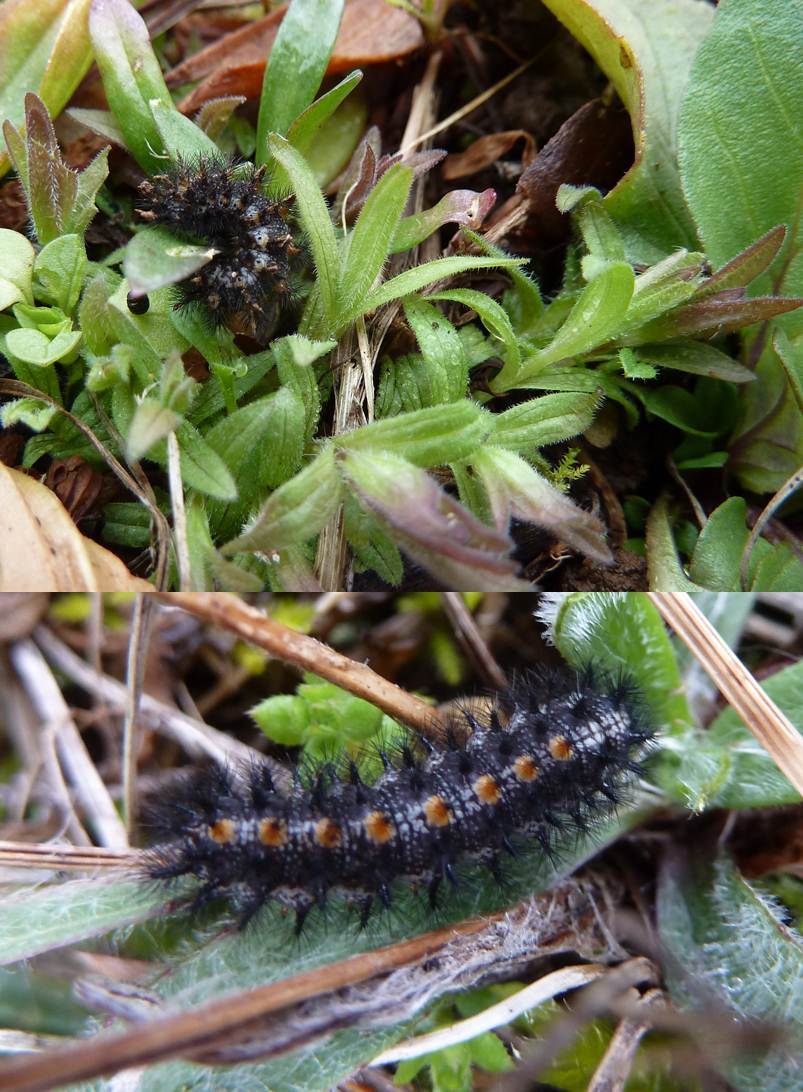
A final awesome thing about golden paintbrush, and many of the other paintbrushes, is that they are host species for butterflies. In the case of golden paintbrush it is a host for an endangered butterfly, the Taylor’s checkerspot, so in planting paintbrush we hope to help both species recover. The photo below shows checkerspot larvae feeding on paintbrush, courtesy of the Institute for Applied Ecology, where my major professor works. The top image shows them feeding on paintbrush and the bottom is English plantain, which they have been using as an alternate host in the absence of paintbrush.

taylor

So there you have it, I study a pretty cool plant!

Cranberry Juice

Making your own cranberry juice is so darn easy – and cranberry season in here! All you need is cranberries and water, and a little sweetener if you desire.

20131025-183932.jpg

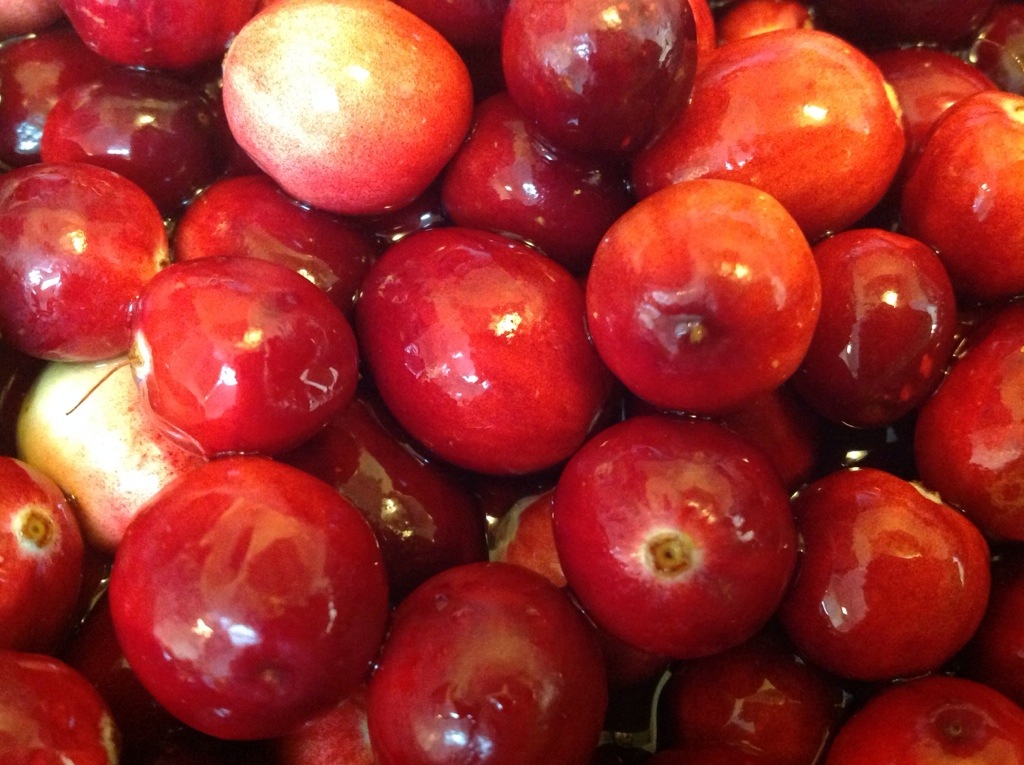
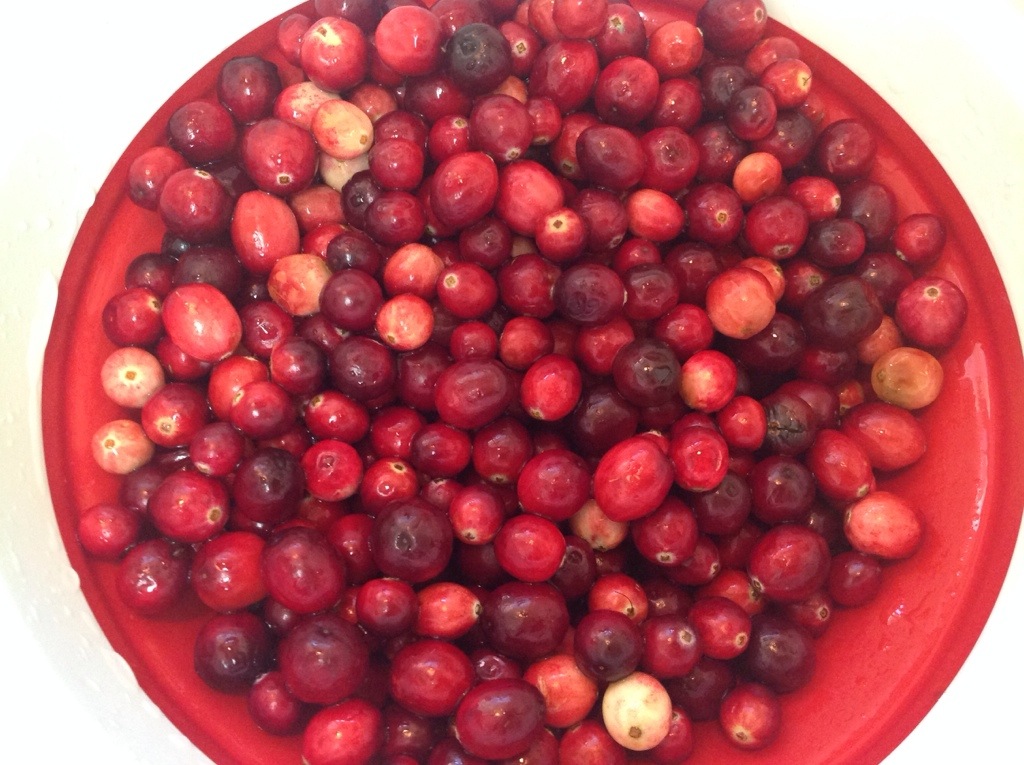
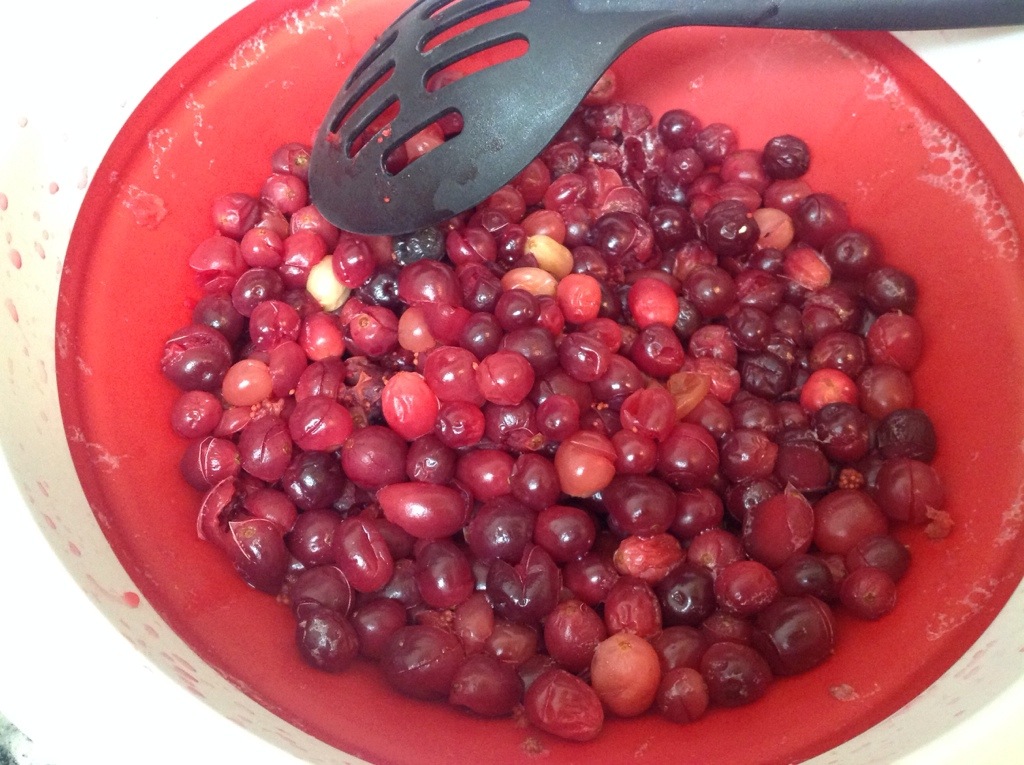
First, rinse the cranberries and pick out any yucky ones.

20131025-183959.jpg

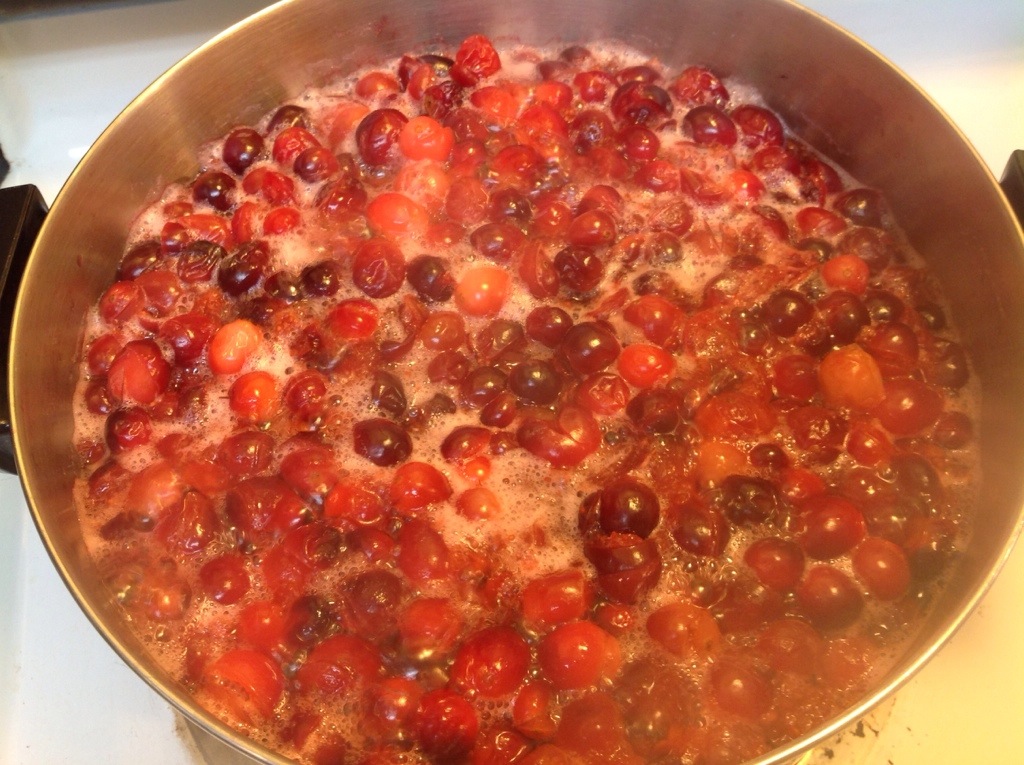
Then combine however many cups you have with equal parts of water and bring to a boil over medium high heat. Once boiling, reduce the heat and boil for 5 or so minutes. You want them to start popping and once they mostly all have, it’s time to stain. I like to crush them a little bit too with the back of my stirring spoon to release more flavour.

20131025-184054.jpg

Remove from the heat and strain. If you are fancy enough to have a jelly bag you can use that. If you’re like me just strain into a deep pot using your regular strainer covered with a couple layers of cheese cloth. Let it drip for a couple hours to get all the juices.

20131025-184444.jpg

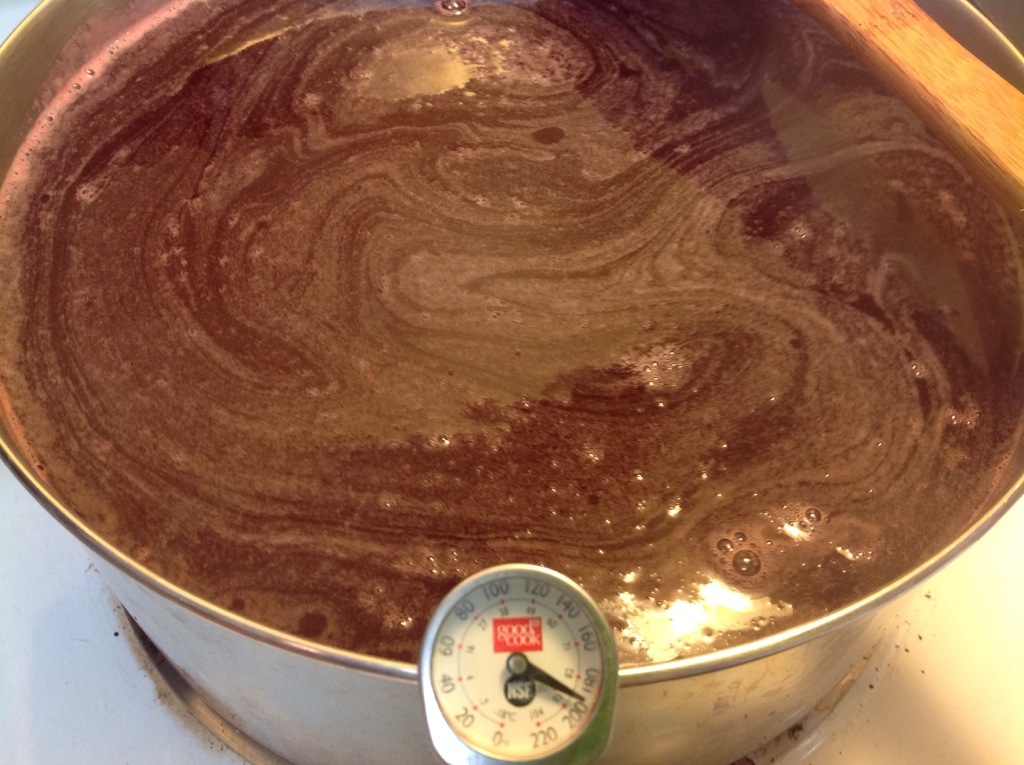
When it’s been nearly 2 hours, prepare the canner, jars and lids. Then bring the cranberry juice back up to heat. You want to bring it to 190F without boiling it. At this point you can sweeten the juice to taste, if desired. Once you reach 190, sustain it for about 5 minutes and then fill the jars.

20131025-194520.jpg

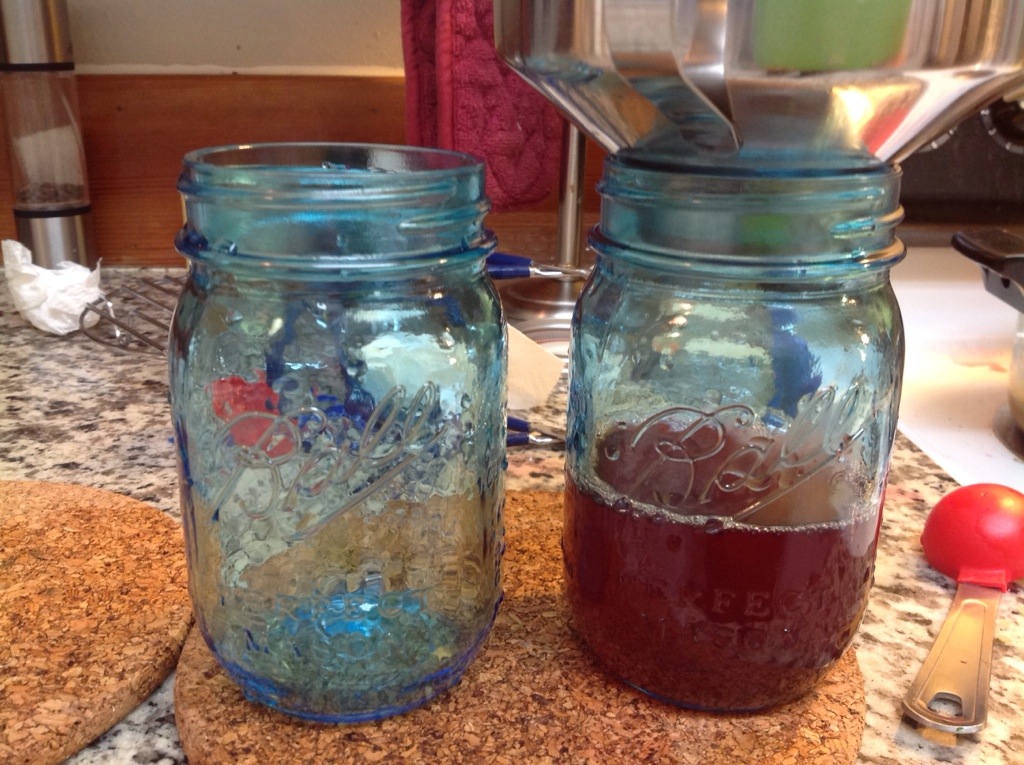
I went for the blue anniversary jars since it is the end of the season and they FINALLY put them on sale! Woohoo my waiting paid off. Fill jars leaving a 1/4 inch head space. Wipe rims, apply lids and place the jars in the canner covered by at least 1-2 inches of water. Process at a full rolling boil for 15 minutes for both pints and quarts. After 15 minutes, remove canner lid, wait 5 minutes and remove jars. ping. ping. ping!

20131025-184606.jpg

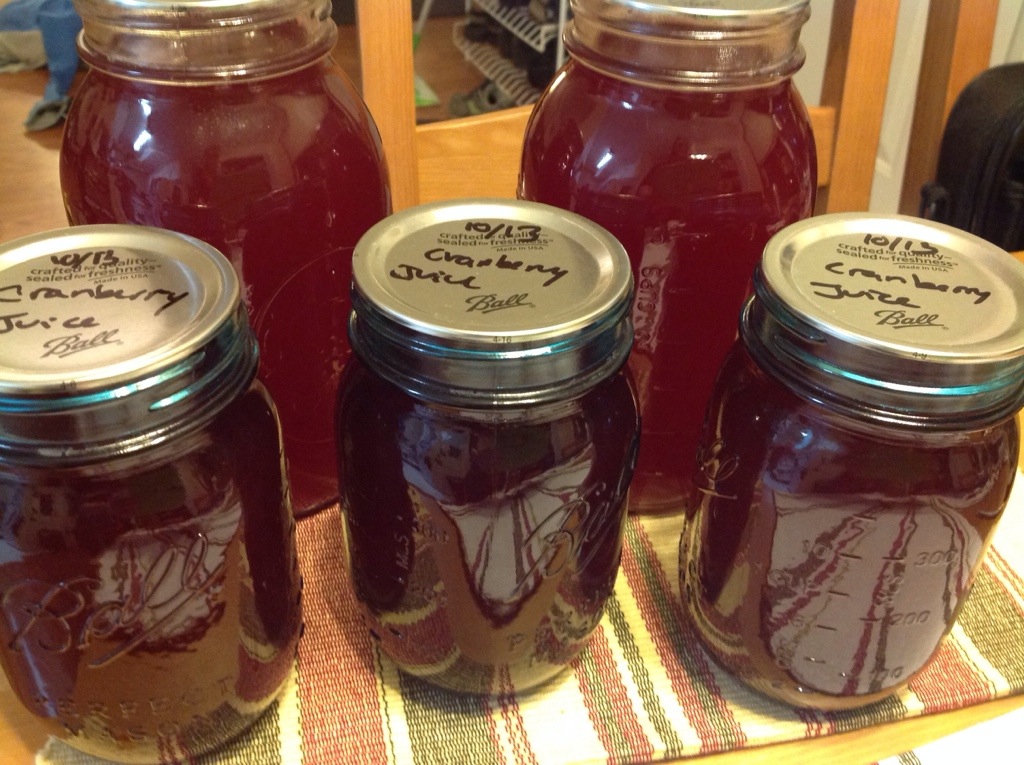
After 12-24 hours, remove bands, label and store. mmmmm home made juice!

20131025-184623.jpg

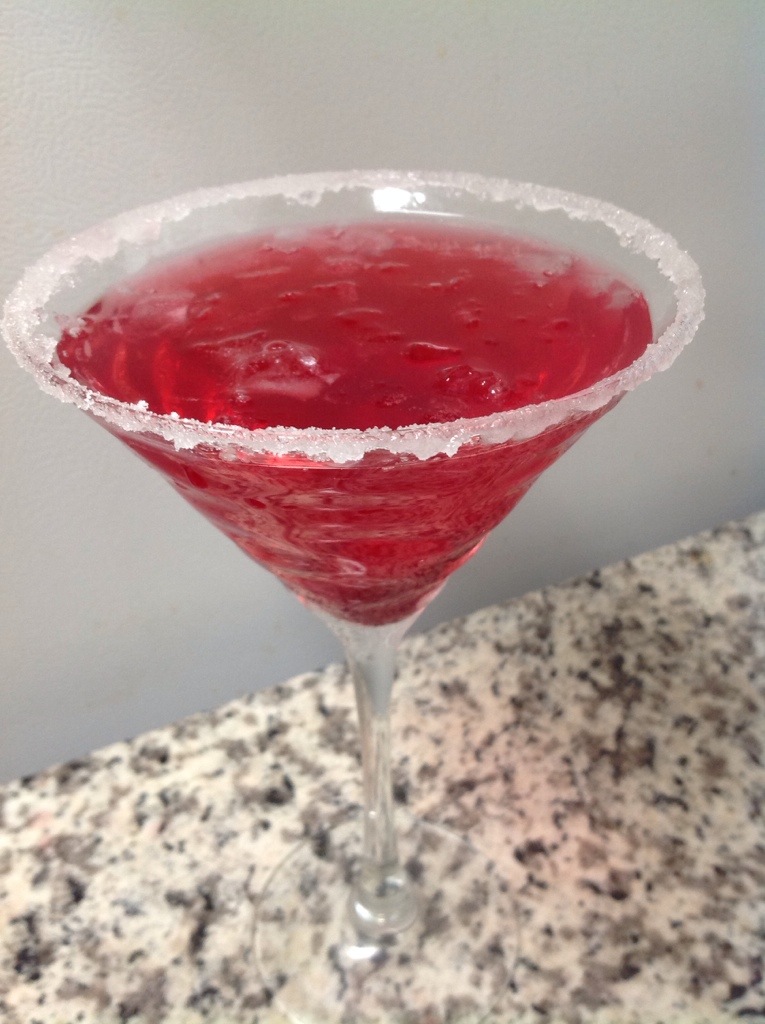
If you are having a party, or feeling like a twist on your cranberry juice, make a little cranberry martini with it! Sugar the rim, mix vodka, cranberry and ice, and voila!

20131025-194705.jpg

Cranberry Fruit Leather

For anyone who read the cranberry juice post and was wondering, “did she just throw out the cranberries?” Here is your answer: no! I made fruit leather!

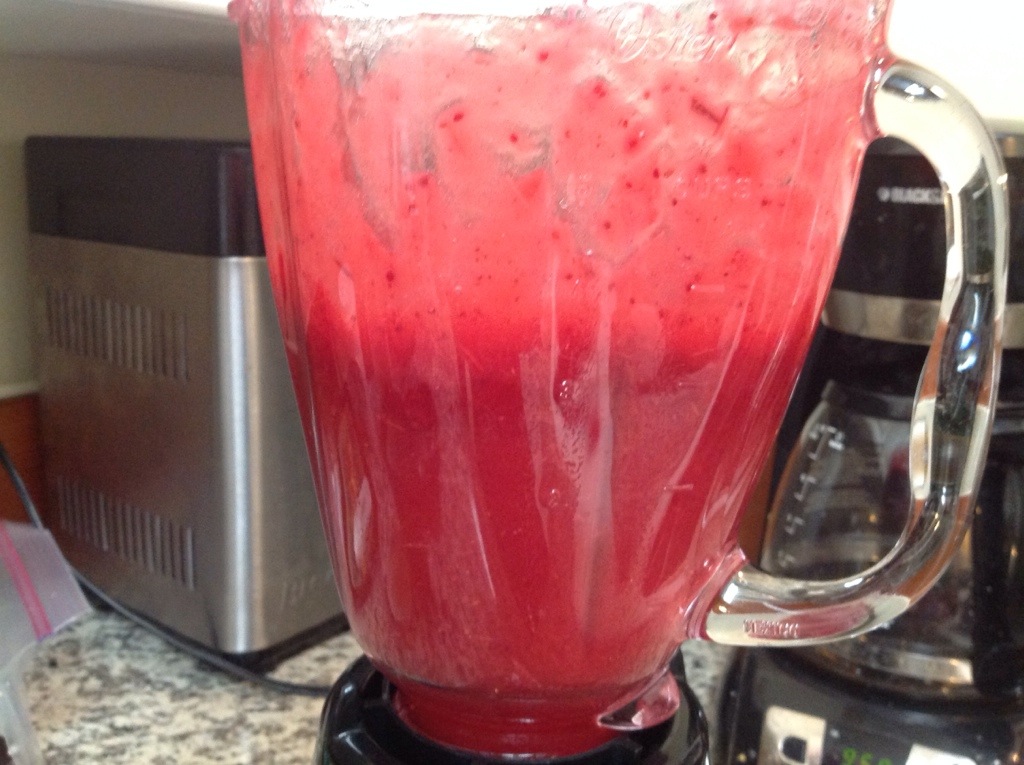
Step one: blend the leftover cranberries with a little water. This can of course be made of other pureed fruits and berries as well – be adventurous!! You can add a little sweetener if you like too.

20131025-225013.jpg

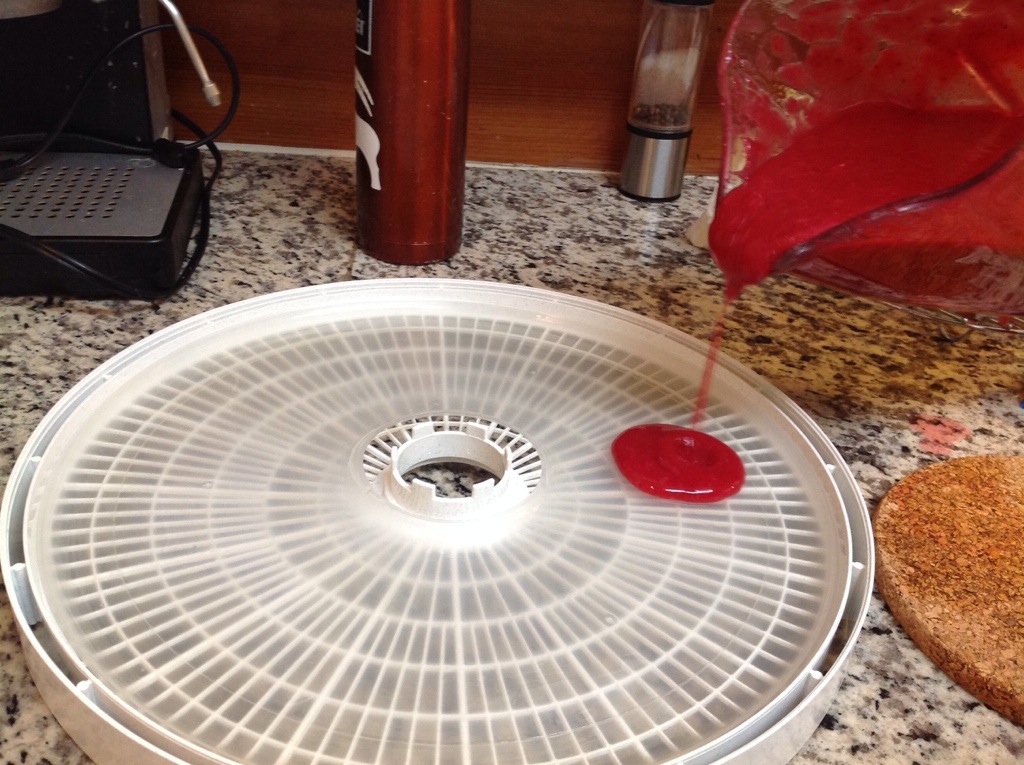
Grease a fruit leather tray a little and pour on the fruit puree.

20131025-225036.jpg

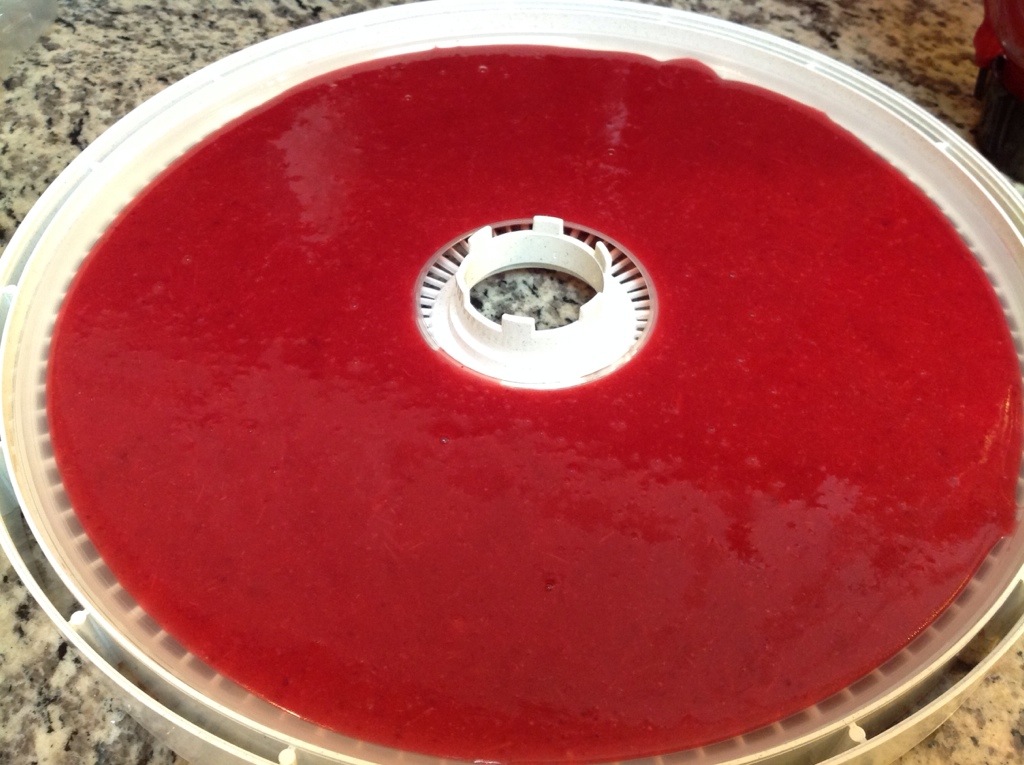
Place in the dehydrator at 135F for 4 or so hours (until it is dry enough to lift up but still a little tacky to the touch).

20131025-225102.jpg

This example is a little overdone but still tasty, check it frequently when it’s near done. Peel off pieces and eat! So tasty!

20131025-225202.jpg