Asian Plum Sauce

Plum sauce has a lot of great uses, and home made is so much better than anything you can buy in the store. This sauce makes a delicious dipping sauce, is great for meat, such as pork, and is also great as a stir-fry sauce. I hope plums are still in season in your area so you can whip up a batch!

IMG_4518 copy

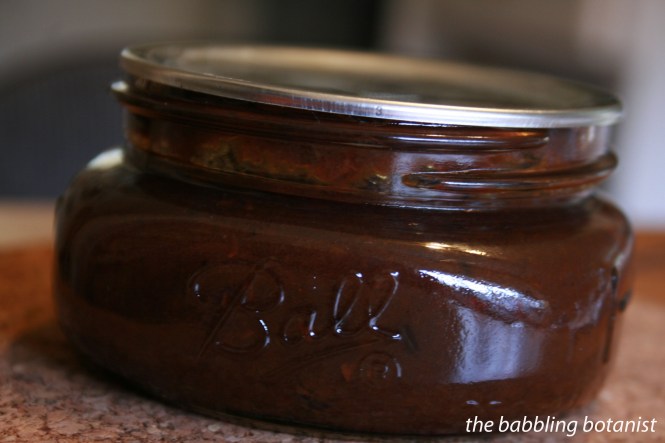
This recipe comes from this small-batch preserving book. We only made a couple modifications, including using dates instead of raisins, and doing a larger batch (3 cup yield – I think not!!), so as written here this will yield 6-7 half pints.

Ingredients:
18 – 20 plums (about 3 pounds)
3 cups brown sugar
3 cups finely chopped onion
2 cups cider vinegar
1/2 cup dates
1 tbsp soy sauce
6 cloves of garlic
1 tbsp salt
1/2 tsp chili powder
1/4 tsp ground cloves
1/4 tsp cinnamon
1/4 tsp ginger
1/4 tsp allspice

Here’s how we made it.

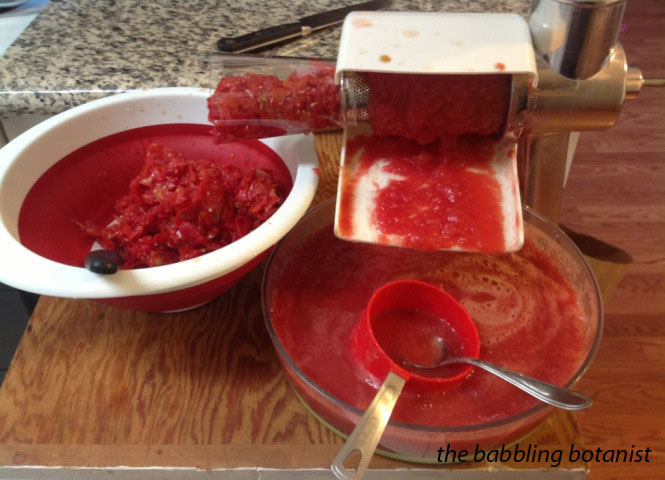
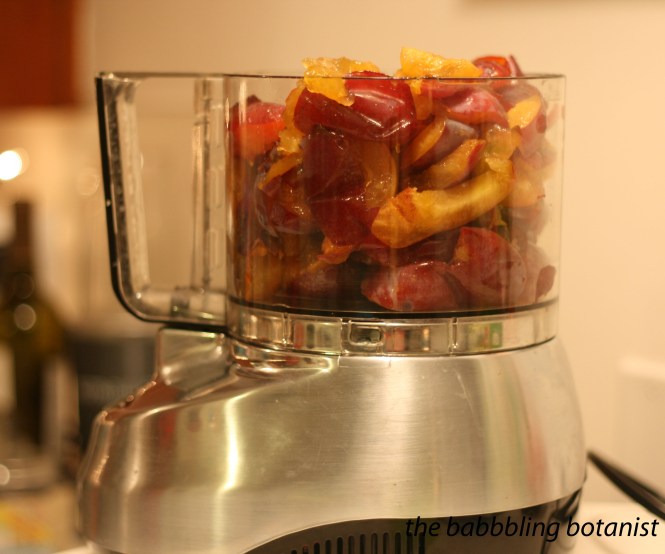
Chop or food process the plums. The one pictured is actually at a friend’s house, but I just got this one and am l loving it so far. Soup and sauces galore! And I just used it to slice a ton of carrots into coins to make pickled carrots and it was aweeesome! But I digress, back to the sauce.

IMG_4422

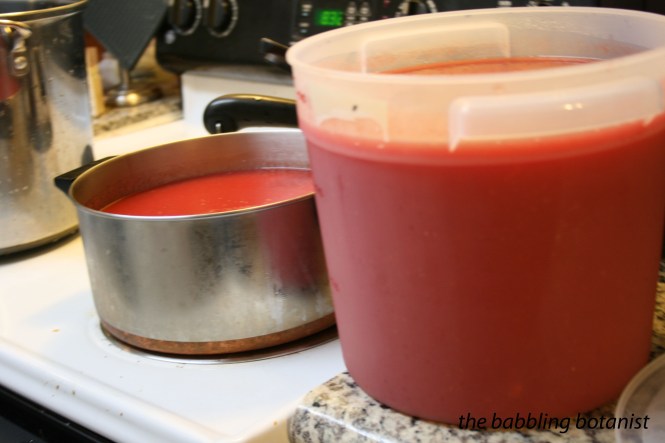
You should end up with about 3.5 cups of plum puree. Chop or food process the onions and dates as well and set them aside. I like a pretty fine chop for this sauce.

IMG_4431 copy

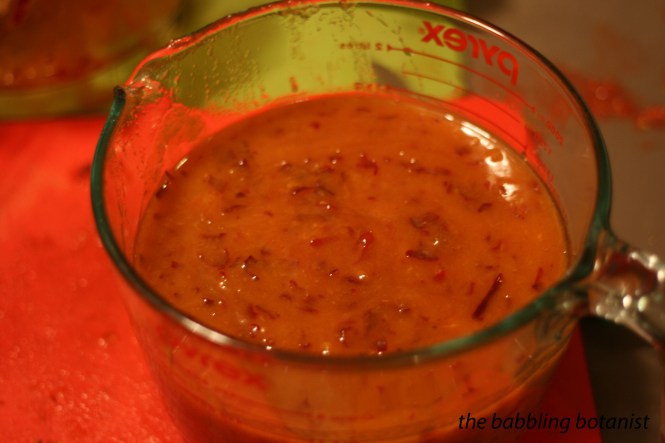
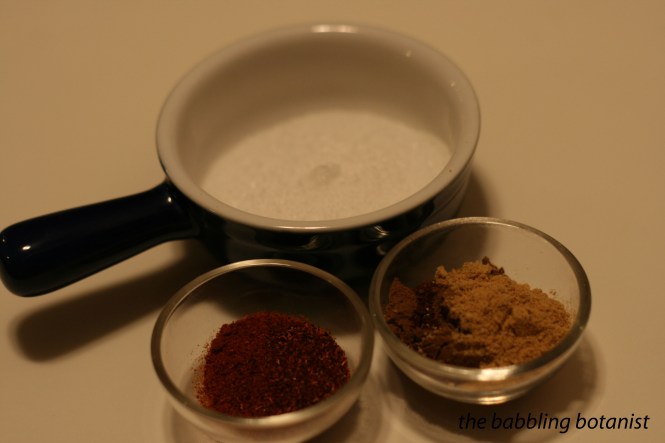
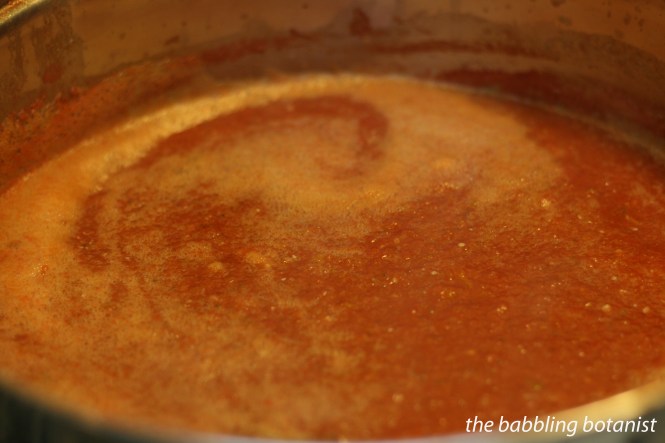
Combine the plums, sugar, vinegar and salt. Bring to a boil over high heat, stirring constantly. If you’d rather not use sugar, I bet that honey to taste would be super delicious in this recipe as well. Boil the mixture for a few minutes, then add the remaining ingredients.

IMG_4440 copy

Look at those adorable little cups!

IMG_4435 copy

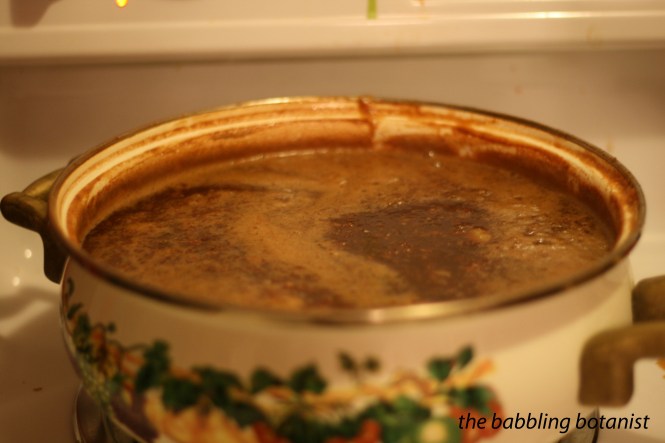
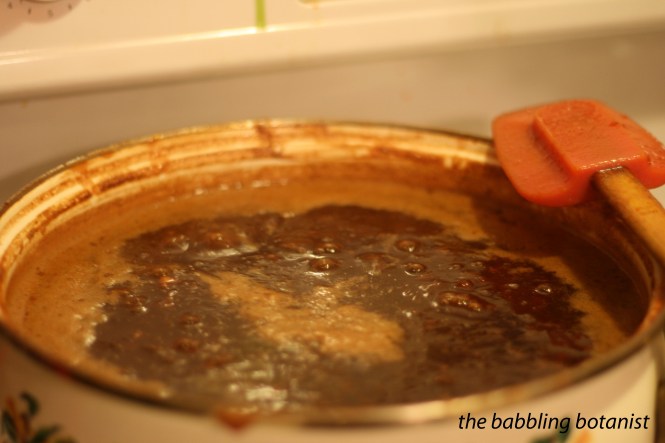
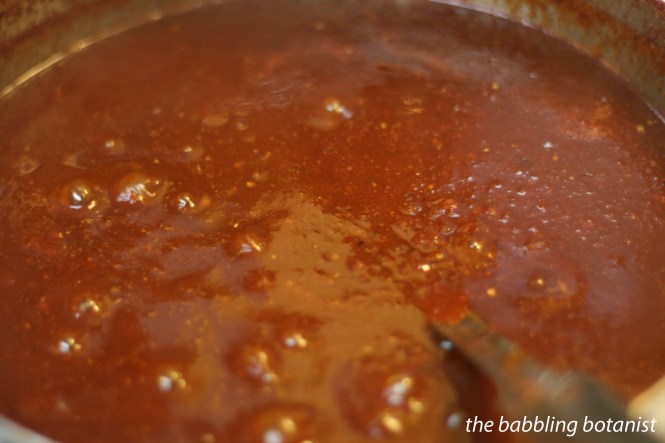
Return to a boil and reduce the heat. Allow the mixture to simmer, uncovered, until the desired thickness is achieved. Continue to stir occasionally, and prepare the canner, jars, and lids when you are approaching a nice consistency. 45 minutes to an hour is probably good.

IMG_4446 copy

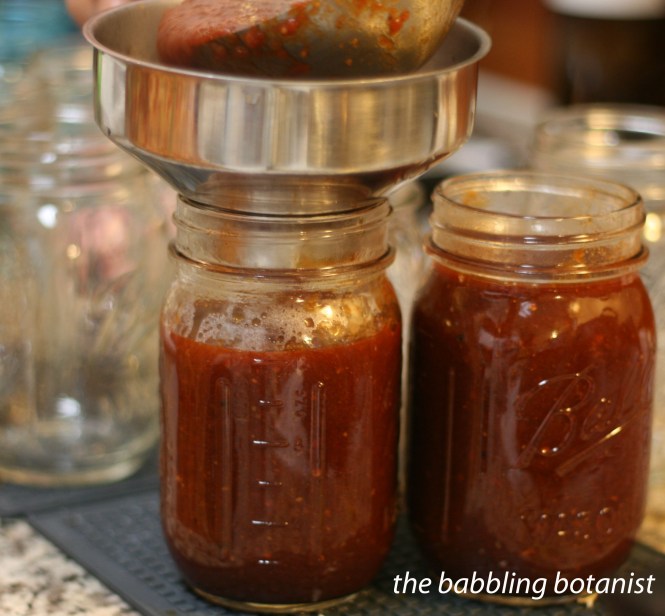
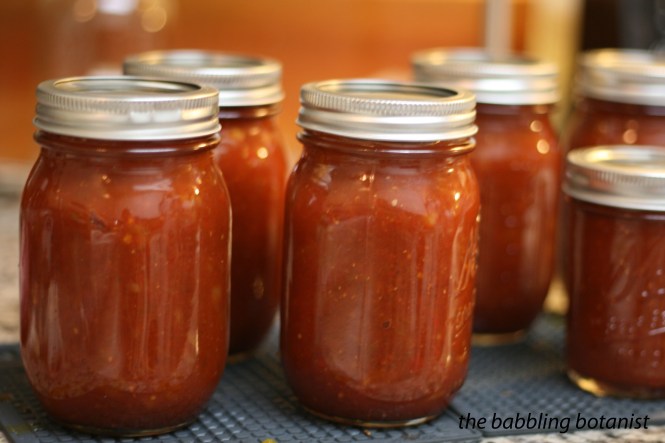
Fill the hot jars with the sauce, leaving a half inch head space. Wipe rims, apply lids, and tighten bands finger tip tight. Process the jars in a boiling water bath canner, covered by at least 1 inch of boiling water, for 15 minutes for half pints. After the 15 minutes, turn off the heat, remove the canner lid, wait 5 minutes, and remove the jar to a hot pad or towel. Cool 12-24 hours, remove bands, check seals, wipe, label, and store.

IMG_4518 copy

Enjoy this delicious sauce as a stir fry sauce, dipping sauce or however else you desire.

IMG_4500 copy


*this post contains affiliate links, please see the “About the Blogger” page for more information

Choice Salsa

In this year’s new edition of the salsa recipes for canning publication, PNW 395, our lovely extension friends added an awesome new recipe for those of us who love a little more choice in our lives – “choice salsa”! For this recipe, what you get to choose is the proportion of peppers to onions. Want a ton of peppers in your salsa? Or an equal mix of onions to peppers? Whatever your preference, you get to choose! Pretty great eh!?

IMG_4481[1]

Ingredients:
6 cups cored, peeled, chopped tomatoes
9 cups chopped onions or peppers (of any variety)
1.5 cups bottled lemon or lime juice
1 tablespoon canning or pickling salt

Here’s how we made it:
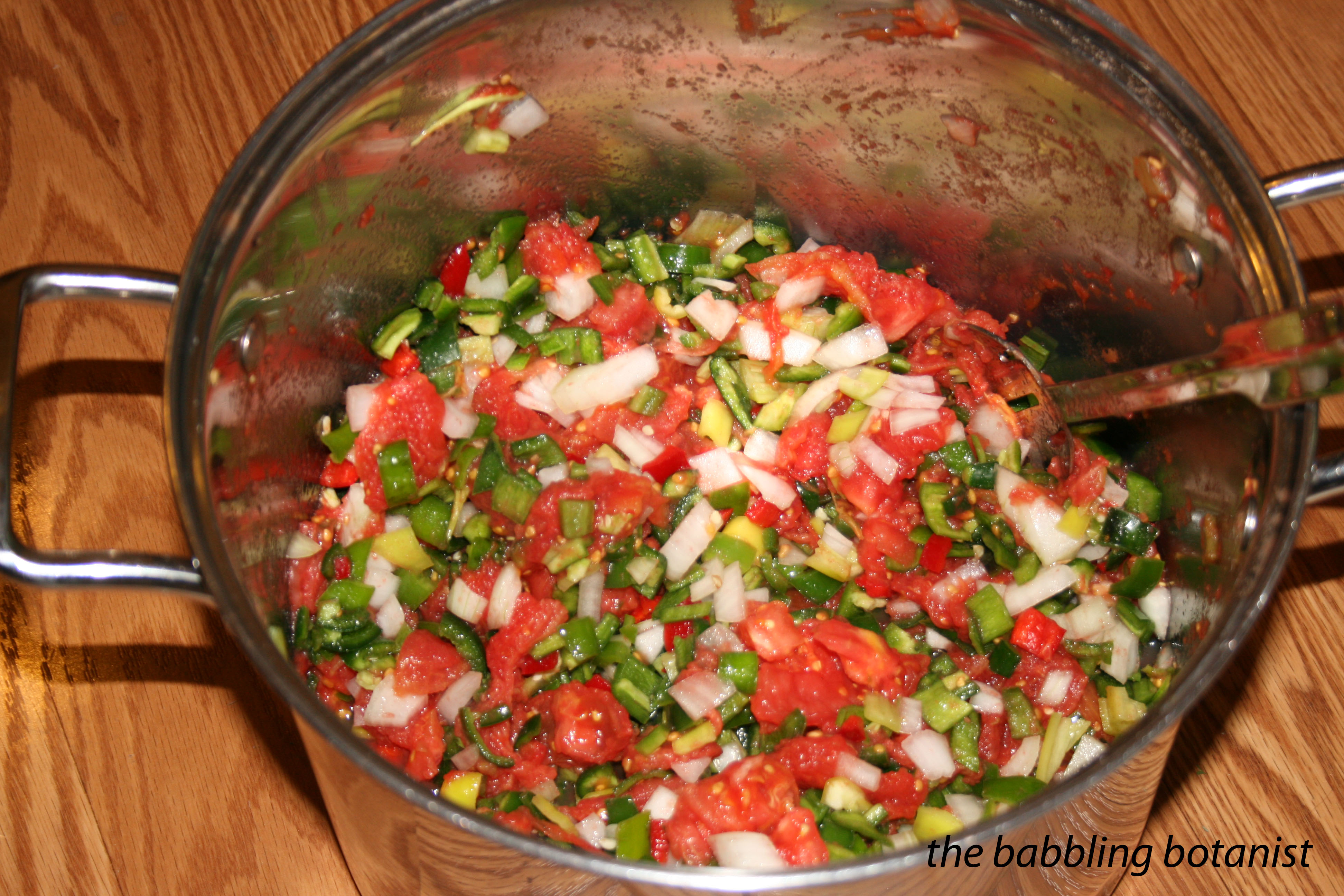
Blanch, peel and chop your tomatoes. My favourite way to deal with all the tomatoes is to core them, dip them in boiling water for 30 or so seconds, dip them in ice water, peel and chop them. Next chop up all the onions and peppers – you choose how much! But it has to total to 9 cups of onions and peppers, for 6 cups of tomatoes. This worked out really well for us because we made a big batch of Chile salsa, and then with the remaining tomatoes we made the choice salsa. It worked out well because I always have trouble buying the correct amount of peppers for a recipe. I grow my tomatoes, but buy the peppers and onions, so when I have 40 pounds of tomatoes, I have to figure out the right number of peppers to buy. This is HARD. So it worked super well that we used up all the rest of the peppers we had, then topped it off with the onions, since if you buy extra onions they store way better than peppers! So great! We ended up with a recipe fairly heavy on the peppers, but I think it turned out really well. I do find the lemon juice flavour to be quite strong though, so I think next time I might try half lemon, half lime.

IMG_4325 copy

Prepare the canner, jars and lids. This recipe yields about 6 pints. Mix all the ingredients in a large stainless steel pot. Remember, do not alter the ratios of anything. You get 6 cups of tomatoes, 9 cups peppers/onions, and 1.5 cups of lemon juice. No reducing the lemon or adding extra veggies OK! Adding other dry spices is ok though, so if you want cumin, oregano or something else, add that now too. Heat all the ingredients to a boil over medium high, stirring occasionally. Simmer for at least 3 minutes, then fill your hot jars, leaving a half inch head space. Process for 15 minutes in a boiling water bath canner (sea level), covered by at least 1-2 inches of boiling water.

IMG_4337 copy

After the 15 minutes turn off the heat, remove the canner lid, wait 5 minutes and remove the jars to a hot pad or towel. Cool 12-24 hours, remove bands, check seals, clean, label and store.

This salsa is a great one because it’s super chunky – here it is compared to my other favourite salsa. Chile salsa on the left, choice salsa on the right.

IMG_4494[1]

Spicy Tomato Vegetable Soup

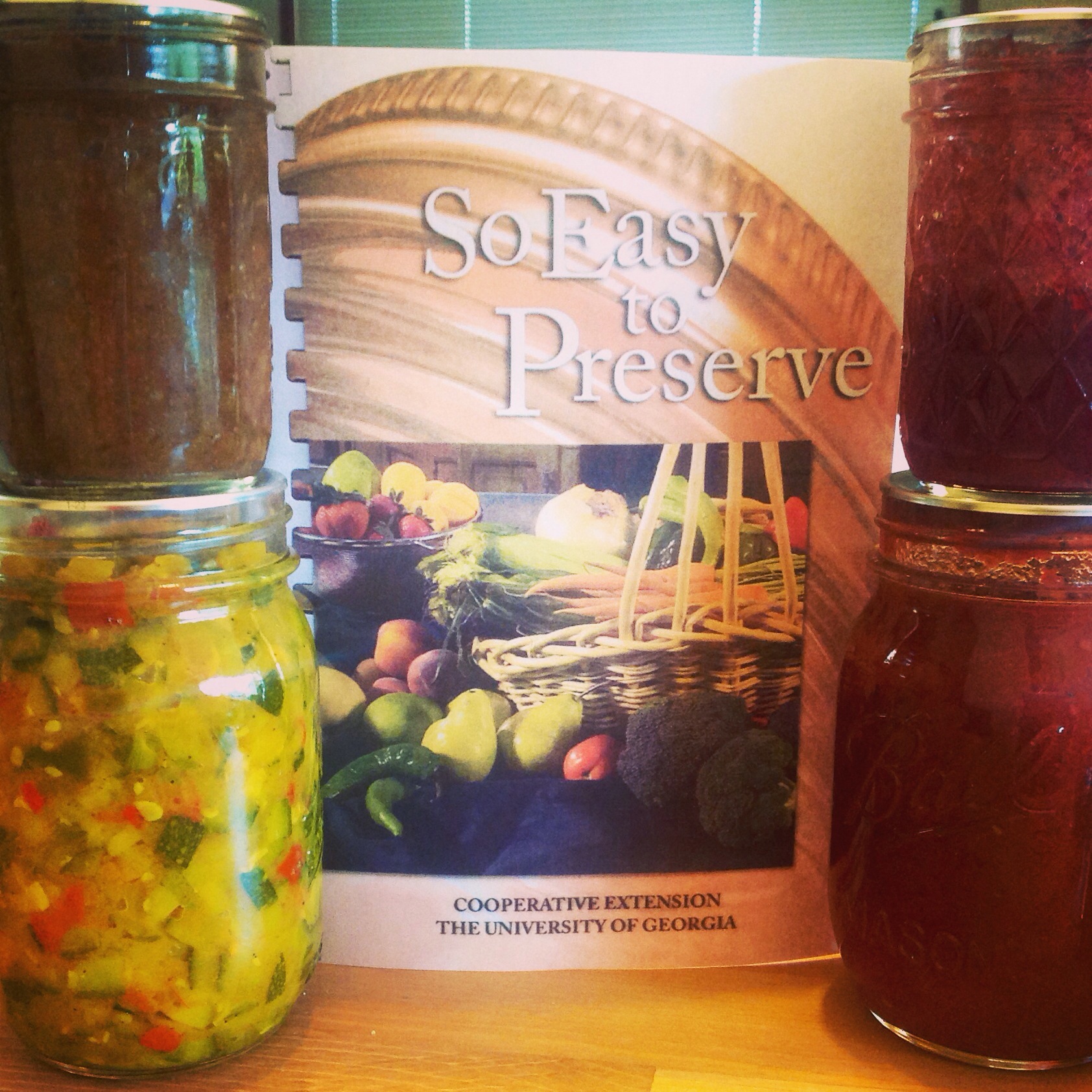
I first made this soup back in the pressure canning week of my Master Food Preserver class, and I could not wait until tomato season rolled around so I could stock up on this deliciousness. This soup is so good, and I just love that every ingredient is in season right now, which means every ingredient I either grew or picked within 10 miles of my house. That’s the best! This recipe is from So Easy to Preserve, which by the way is now out with its newest edition if you’re looking to get your hands on that. I just ordered a couple copies for myself and others. 🙂

IMG_4342 copy

Ingredients:
6 cups chopped tomatoes
2 cups chopped tomatillos
1 cup chopped onion
1 cup chopped carrots
1 cup chopped red bell pepper
1 cup chopped green pepper
1/2 cup chopped and seeded hot pepper
6 cups whole kernel corn, uncooked
2 tsp chili powder
1 tsp cayenne pepper
1 tsp black pepper
1 tsp salt
1 tbsp hot pepper sauce
5 cups tomato juice
2 cups water

Here’s how we made it:

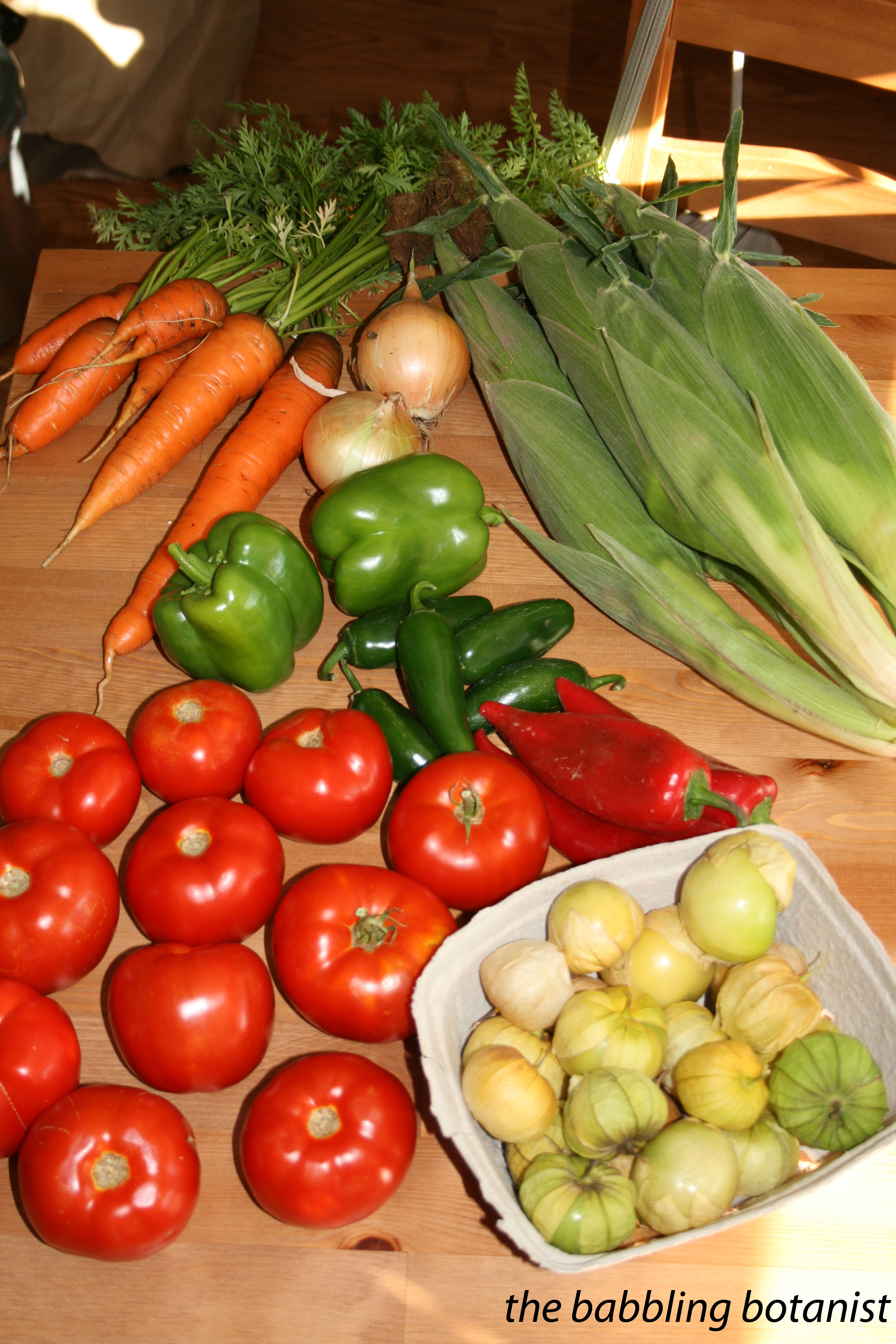
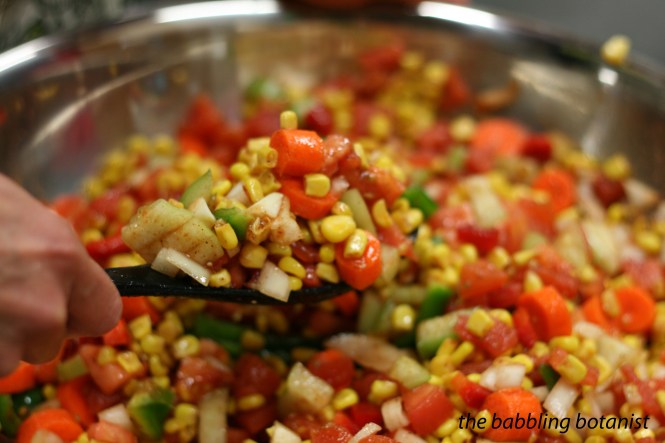
Chop, chop, chop, and chop some more. But really, that’s basically all there is to it. When I made this recipe at home by myself I got a hand cramp from too much chopping, so invite a friend over for goodness sake. For the tomatoes, core, blanch and peel them before chopping. For the tomatillos, remove them from the husk, wash and chop them without peeling. For the onions and carrots just peel and wash them and chop them into soup sized pieces. Wash and seed the peppers and use gloves to cut up the hot ones. For the corn, either cut it off the cob and measure 6 cups, or use frozen corn.

IMG_2576 copy

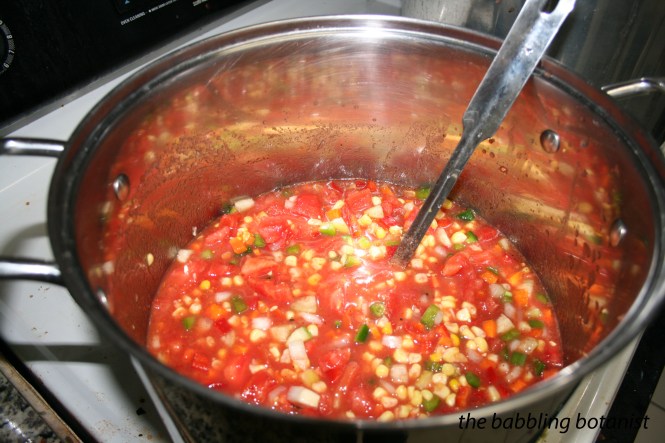
Combine all the veggies in a large stockpot. Add in the tomato juice, water, and all the seasonings. For the tomato juice, you can either make juice by pressing some tomatoes through a food strainer, or use store bought. I bet you can guess which one I prefer. I think that the ratio of solids to liquids in this soup is a bit off, so it could probably use more like 6 or 7 cups of tomato juice. And just to justify this, the reason I think it’s OK to adjust the recipe in this way is because these are the National Center’s soup recommendations. The processing is the same with whatever combo of foods you have, unless you add seafood, and they just say to cover with liquid. Plus, tomato juice is the most liquidy and most acidic ingredient in this recipe. Anyways, bring the soup to a boil, then reduce the heat and simmer for 15 minutes. While the soup is simmering, prepare your canner, jars and lids. This yields about 9 -10 pints of soup.

IMG_4346 copy

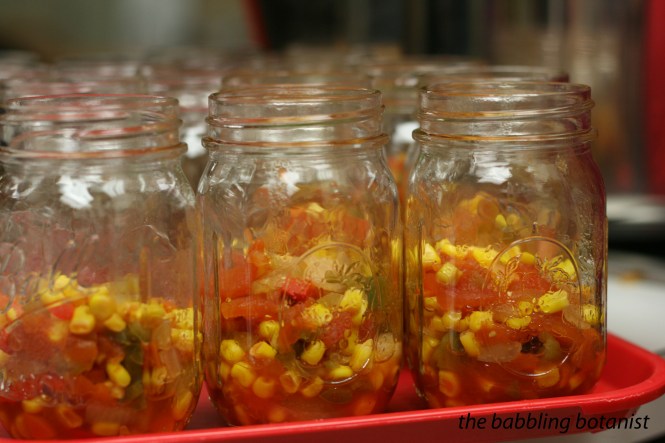
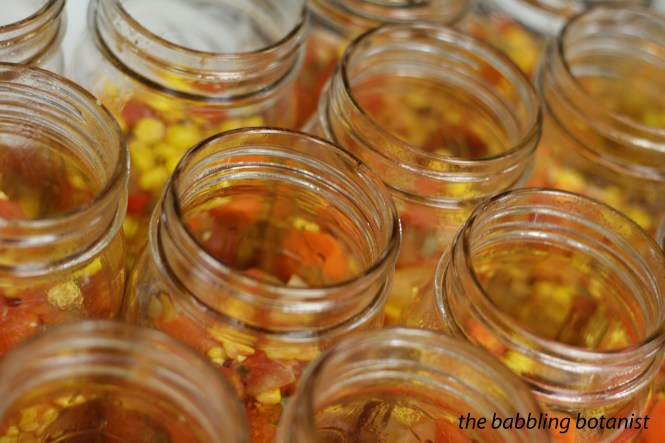
When it comes time to fill the hot jars, it’s important to follow these instructions for filling them to ensure safe processing. Using a slotted spoon, fill the jars about half full with solids. The head space for the soup is going to need to be a full inch, so when filling halfway, keep in mind that you should be filling it halfway to that point. After the jars are half full with solids, fill them with liquid, leaving an inch head space.

IMG_2621 copy

Such pretty jars.

IMG_2624 copy

Remove air bubbles, adjust head space, wipe rims, and apply the lids and bands, tightening to finger tip tight.  Place the jars in your pressure canner with 3 quarts of water and begin heating the canner. Once all the jars are in the canner, close and lock the lid and get the canner heated up. Once your canner starts to vent a steady stream of steam, continue to vent for 10 minutes. After the 10 minutes, apply the weight. Bring the canner up to 11 pounds of pressure (10 for weighted gauge; sea level). The processing time for this recipe is 60 minutes for pints or 75 minutes for quarts. Begin the timer once at or above the correct pressure, and maintain that pressure throughout the canning time. After the processing time is complete, turn off the burner and carefully remove the canner from the heat. Wait until the pressure is completely returned to zero and the safety nubbin thing drops. Remove the weight, wait 10 more minutes, and then remove the lid of the canner and remove your jars to a hot pad or towel.

IMG_2626 copy

While the jars can, eat any leftovers that you had.

IMG_2631 copy

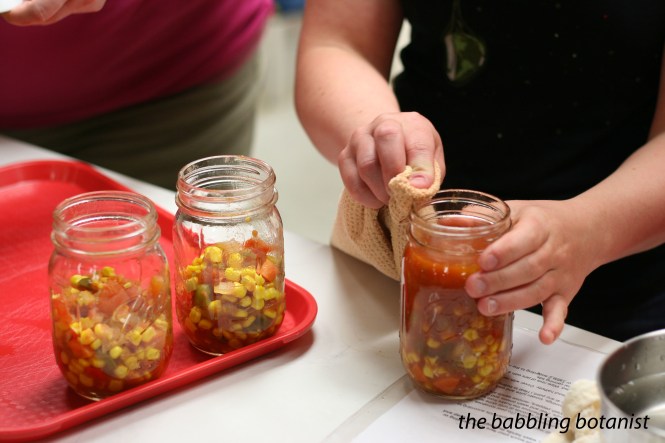
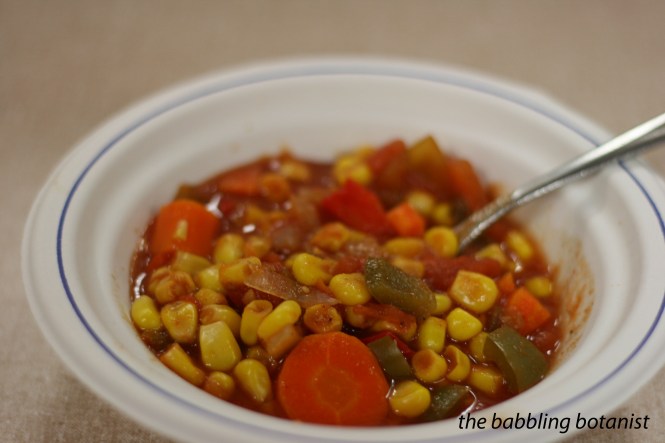
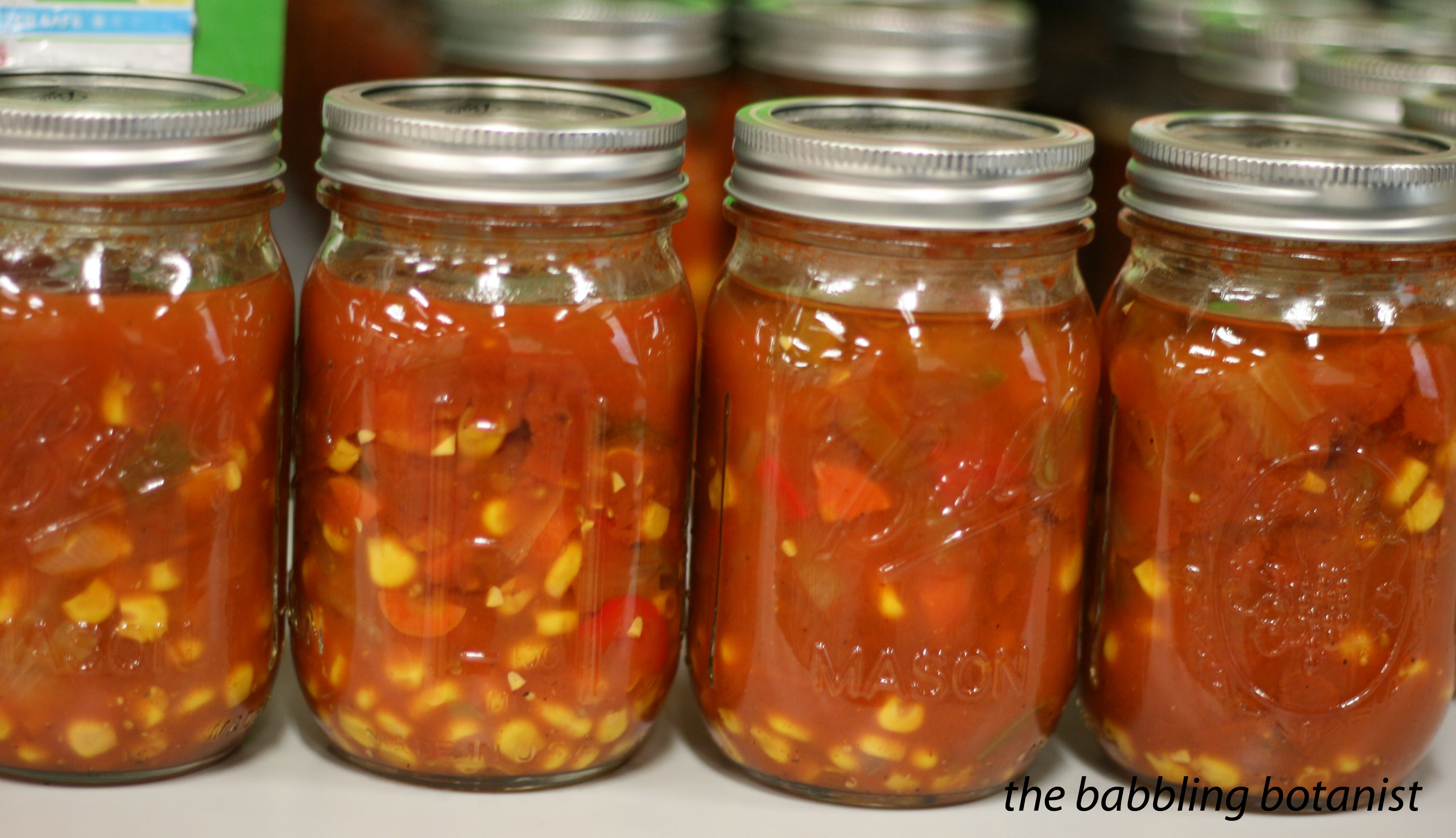
Ta-da! Gorgeous soup. And so damn delicious. After 12-24 hours, remove the bands, check the seals, wipe clean, label and store. Then repeat a week later because this soup is super good.

IMG_2646 copy


*this post contains affiliate links, please see the “About the Blogger” page for more information

Pickling experiment – the results are in!

IMG_4009 copy

In case you missed it, a few weeks ago I wrote a post about two ways that you can keep your pickles good and crispy when making quick pickles. That post can be found here, and if you missed it just head over and read that, I pasted this entire post there as well. So, I know you’ve been on the edge of your seat wondering what the results of this experiment would show, so here they are. As a reminder, what I did was 5 different pickles. The pickles were all the same spices and brine, it was the processing that differed. The first 4 were all canned as slices, the fifth was canned whole and sliced for the taste test so people couldn’t tell which one was canned whole. I randomly assigned them to a number 1 though 5 for people to taste test.

1. Boiling water bath, no pickle crisp
2. Low temperature pasteurization, no pickle crisp
3. Low temperature pasteurization with pickle crisp
4. Boiling water bath with pickle crisp
5. Low temperature pasteurization with pickle crisp canned whole

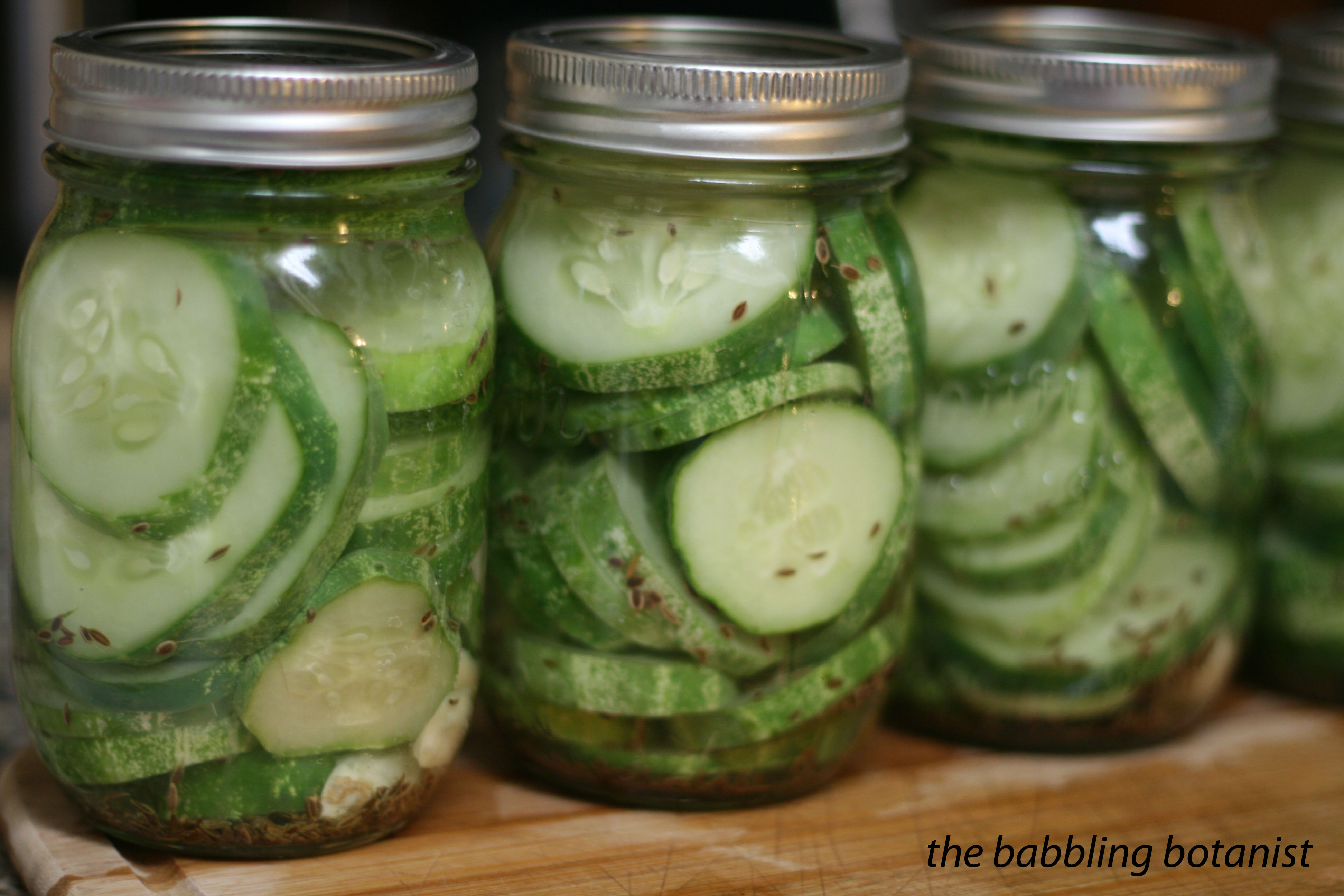
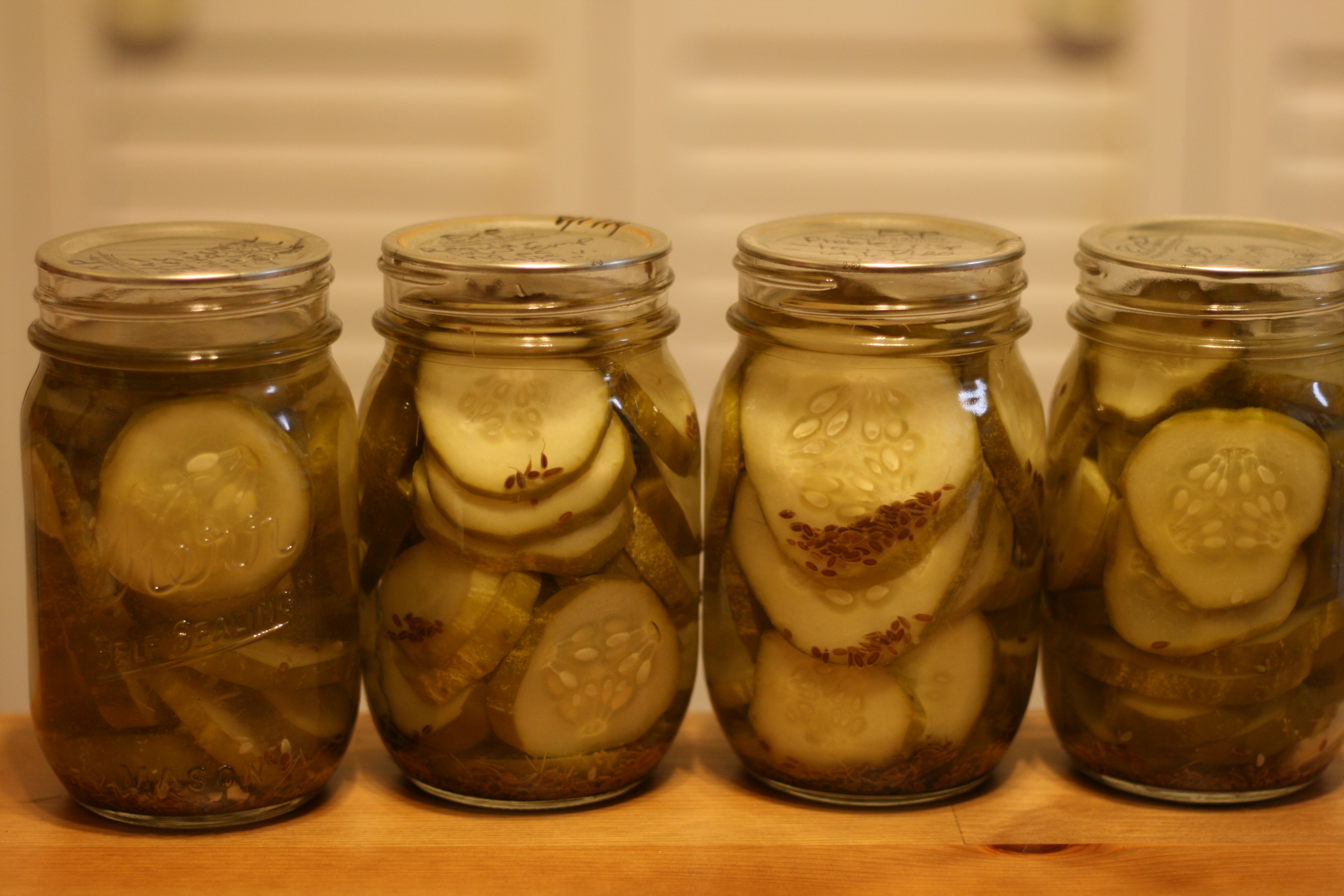
For this taste test I had 17 people test the pickles and rate them from least to most crisp. I wasn’t entirely sure how to analyze the data from the taste test, but some of the results are pretty obvious and exciting. I am going to just give you a few summary statistics that I really think give a pretty clear answer, and I’ve also included all the ratings in case you are really that interested. First off, I wanted to show a picture of the four sliced ones, because even visually some of them looked more crisp, at least to me. Below the jars are in the order listed above, so the two ends were boiled, and the middle two were processed at low temperatures. Can you see a difference? This picture was taken 5 weeks after processing. I think that even visually the boiled ones look soggier. They are a different colour and more translucent.

IMG_4371

So how did it break out in terms of numbers? The first obvious result was that 16/17 people put sample 5 as the most crisp sample. So, by canning your pickles whole, with low temperature pasteurization, you get a very crunchy, firm product. Great! Now let’s ignore number 5 for a second since it had an additional variable of being canned whole. 10/17 people chose sample 1 as the softest, and 6/17 chose sample 4 as the softest. This totals to 16/17 people chosing one of the boiled ones as the soggiest. Additionally, of the sliced ones, 13/17 people selected sample 3 as the most crisp, which was the low temperature with pickle crisp sample. Now, I didn’t run any actual stats, but I feel pretty confident saying this: Low temperature pasteurization for the win!! There was not one person that had sample 1 (boiled, no pickle crisp) as anything other than the soggiest or second soggiest. I also thought it was really interesting that Janice, our canning teacher, rated them in the exact order that I would predict. From soggiest to crispest: boiled without pickle crisp, boiled with pickle crisp, low temperature without pickle crisp, low temperature with pickle crisp, low temp with pickle crisp canned whole. Pretty fun! So the method of processing, low temp versus boiling, was detectable by most people. Some people could detect a difference with the pickle crisp, but this result was not as ground breaking. I’d like to test it again, with more people and try doing a boiled one canned whole and a few other things, but I think for now it’s safe to say I will be canning the rest of my pickling cucs at low temps and using pickle crisp. They still turn out well if you don’t can them whole, even though most people picked that for ultimate crispness, but you can also fit less in a jar. So there ya have it! Go can some pickles at 180 F!!

In case you’re crazy like me, here’s everyone’s ratings (least to most crunchy/crisp):

1 4 2 3 5
4 1 2 3 5
4 1 3 2 5
1 2 4 5 3
2 1 3 4 5
1 2 4 3 5
1 2 4 3 5
4 1 2 3 5
4 1 2 3 5
1 2 4 3 5
4 1 2 3 5
1 3 2 4 5
1 4 2 3 5
1 4 2 3 5
1 4 2 3 5
4 1 2 3 5
1 2 4 3 5

Canning Crushed Tomatoes

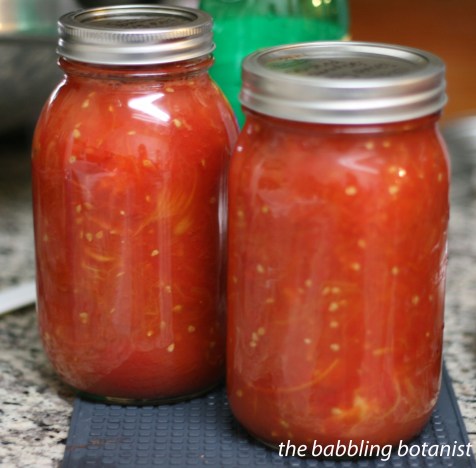
Crushed tomatoes are probably my third favourite way to preserve tomatoes, after making salsa and tomato sauce. It is one way that I try to preserve them every year though, because crushed tomatoes can be used for such a wide array of dishes. I use a lot of the jars to make chili throughout the winter, and crushed tomatoes are also great for soups, stews, sauces, you name it!

IMG_4300

Two great publications to refer to for tomato products are this USDA guide, and and PNW 300. Keep in mind that you can both raw and hot pack tomatoes, and that there are guidelines for both hot water bath canning them, or for pressure canning them. Hot packing and pressure canning will of course require the shortest processing time, whereas cold or raw packing and hot water bath canning takes the longest. For example, if you raw pack whole or halved tomatoes, they need to be water bath canned for 85 minutes! So you may want to consider cracking out the pressure canner for whole packs, as the processing time is only 25 minutes. Nice to have options though, isn’t it? This time, I did a hot pack of crushed tomatoes. Typically, this is how I use tomatoes anyways, so it’s the way I most commonly preserve them. It’s a shorter processing time than packing them whole, and produces a very nice product.

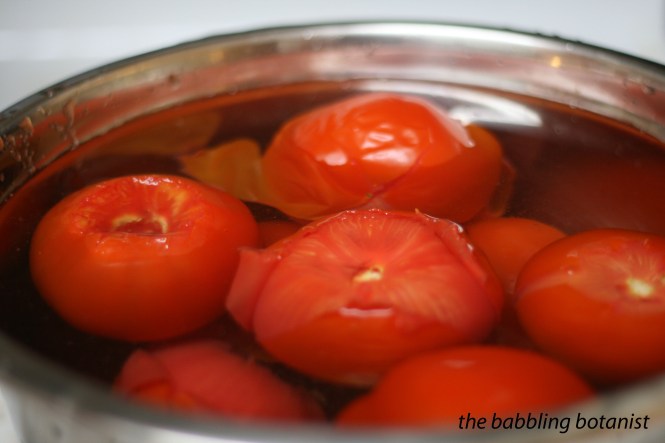
Here’s how its done! First I cored and blanched them.

IMG_4294 copy

Then threw them in cold water to cool them off. Peel and cut the tomatoes in quarters. If you are doing a big batch, check out this post by Erica, from Northwest Edible Life, one of my very favourite blogs. She shows her strategy for blanching and peeling large batches of tomatoes.

IMG_4287 copy

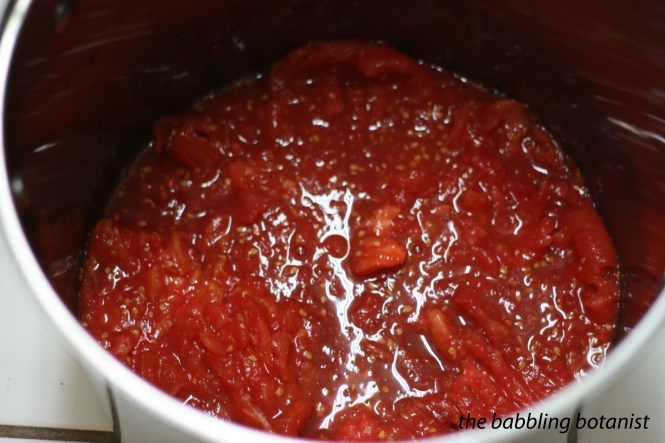
Mash about a quart or so of the tomatoes in a large pot and bring them to a boil. You want enough in there and mashed that you fill your pot 2-3 inches deep. Once at a boil, continue to add quartered tomatoes slowly to the pot, stirring frequently. After you have a good layer of crushed ones, just stir the rest in without crushing them. Wait until it returns to a boil, add more, and so on until all the tomatoes are in the pot. You’ll need about a pound or pound and a quarter per pint, so if you are aiming for a full 7 quart batch, you’ll want at least 14 pounds. The PNW publication says 2.75 pounds per quart, which might be a little bit high, but in the ballpark of 15 -18 pounds should equal a canner load. Meanwhile, prepare your canner, jars and lids. I think it’s worth it to do a full batch since the processing time will be 45 minutes. If you do a whole pack and an 85 minute processing time you had better be doing a full load or you’re just silly.

IMG_4285 copy

Once all the tomatoes are added, maintain a boil for 5 minutes, then fill your hot jars. Make sure to acidify your tomatoes when filling the jars. This means adding either 1/2 tsp per quart of citric acid or 2 tbsp per quart of bottled lemon juice. I like to just add it to every jar first so that I don’t have a chance of forgetting. Remember that this is an important step because tomatoes are on the borderline of pH levels safe for hot water bath canning, so the extra touch of acid ensures that you will have a safe, botulism free product. Also as a note when filling jars. What I like to do is use a slotted spoon to get the crushed pieces that stayed more in tact, and fill jars first with those. But still make sure you have enough liquid in there so it’s still a good crushed tomato pack. Doing it this way I label my later jars as being more runny, and use them for purposes such as soup, and the others where I want more of a meaty product. If you have juice left over at the end, use this to make up some sauce or something. I threw my leftover juice in the freezer to use this weekend when I make a big batch of spaghetti sauce.

IMG_4298 copy

Place the jars in the hot water bath canner, covered by at least 2 inches of water, and bring to a full rolling boil. When processing for these long processing times, if your canner barely fits your jars you may need to add water part way through. Especially if you are doing 85 minutes, water will boil off. Bring some water to a boil on another burner and add it to your canner if too much water is boiling off. Alternatively, pressure can the tomatoes at 11 pounds of pressure (sea level) for 15 minutes (25 if doing a whole or half pack, or a raw pack). With venting for 10 minutes, bringing the canner up to pressure, and waiting for the pressure to return to zero, it probably doesn’t actually save a ton of time, but there still could be an argument made for pressure canning being easier. I think I will try to pressure can some whole ones shortly and let you know how it goes. After 45 minutes, turn off the heat, remove the canner lid, wait 5 minutes and remove the jars to a hot pad or towel. Cool 12-24 hours, remove bands, check seals, label and store.

IMG_4304 copy

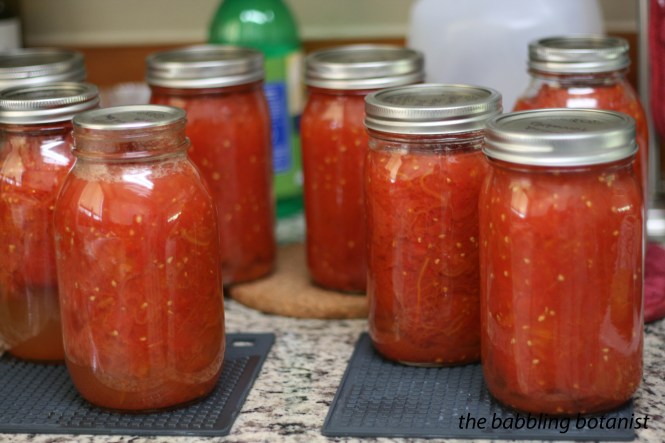
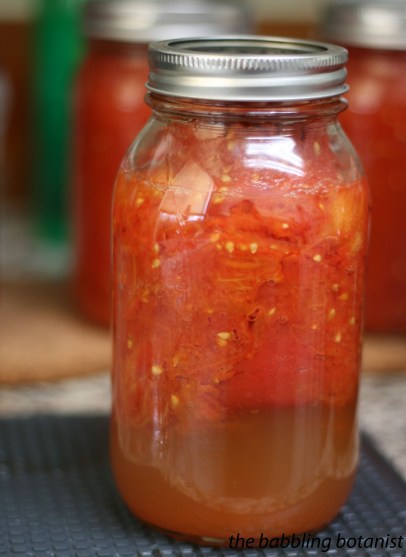
Sometimes you can get a little separation occurring in your jars like in the image below. This isn’t something you need to worry about though, it’s just because the tomatoes were boiling in the jar so the solids were pushed up to the top. Once the jar is completely cooled and you have checked the seal, give it a little shake and mix the liquids and solids back together.

IMG_4306 copy

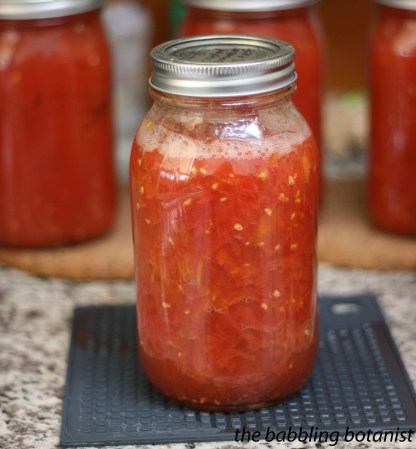
After a little shake it looks perfect. Label, store and enjoy all winter long.

IMG_4308 copy

Two in One Barbecue Sauce

Oh Ball, you have out done yourself on this one. This recipe, from the Ball Complete Book of Home Preserving, makes two awesome barbecue sauces, a stampede style sauce, and a sweet and sour sauce. Make both, or just make one. Left  is the stampede style, and right is the sweet and sour.

IMG_4242

Ingredients:
Base:
16 cups seeded, peeled, pureed tomatoes
2 1/4 cups seeded, pureed green bell peppers
2 cups pureed onions
3 cloves garlic, finely chopped
2 tbsp mustard seeds, crushed
1 tbsp celery seeds
2 dried chili peppers, seeded and crushed

Stampede-Style ingredients:
3/4 cup mild flavored or fancy molasses
3/4 cup malt vinegar
1/3 cup Worcestershire sauce
2 tbsp chili powder
2 tsp freshly ground black pepper

Sweet and Sour Sauce:
1 tbsp finely chopped ginger root
3/4 cup honey
3/4 cup cider vinegar
1/2 cup soy sauce
2 cups canned crushed pineapple, with juice

Here’s how to make it. Just as a note, since I was slightly confused until I reach the sidebar. This recipe is designed to make 6 pints, 3 of each type of sauce. So, if you just want to make one of the sauces, you’ll want to make the base sauce, and then double the ingredients from the one that you want to make. Otherwise what we’ll be doing is making the base, then splitting it into two pots and making 3 pints of each sauce.

Step 1. Puree the tomatoes. Of course, this is much easier with a food strainer, like this Victorio Strainer pictured below. If you don’t have one though, never fear. Peel and seed your tomatoes, and them blend them to puree. Or just buy a strainer.

20130902-111511

For this endeavor, Kiki had texted me that she had scored some tomatoes for dirt cheap, and asked if would I help her process them. I was thinking she’d probably have a small box we could just add to the sauce I was already making, but she showed up with a giant box that I now wish that I had weighed. We had a TON of puree when we finished, and through some ridiculous canning miracle it was actually almost exactly 32 cups, so we doubled the recipe.

While you prepare the rest of the ingredients you’ll want to get the tomato puree going on the stove so that it will reduce down to make you a nice thick sauce. Add some of it to a large stainless steel pot and bring it to a boil over high heat. Gradually add in more puree, maintaining the boil and stirring constantly, until it’s all in the pot. Continue to boil for at least an hour, or until reduced by about a half. If you are just doing a relaxing session, reduce the heat and let it simmer away for a while. If you want to reduce it faster, you could also divide it up into multiple pots for a while, and recombine it later.

IMG_4165 copy

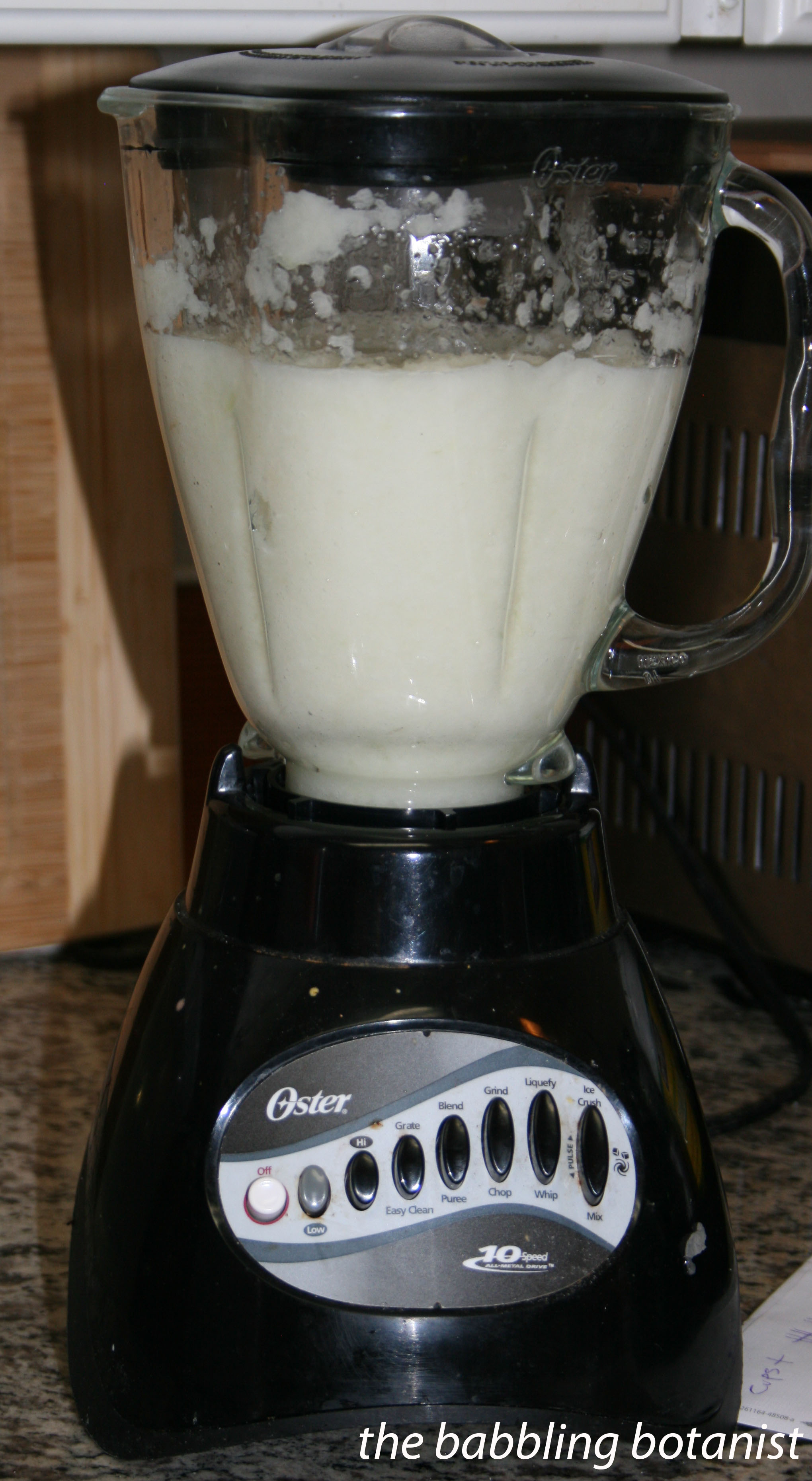
Meanwhile, puree the onions in the blender. The best way to get it going if you just have a normal old crappy blender is to cut some of them quite finely at the beginning, so that you can get some liquid onion. Once you’ve got a bit already pureed you can add pieces that are a bit bigger. Don’t mistake this concoction for a piña colada. It sure looks like one, but would certainly not go down so smooth.

IMG_4169

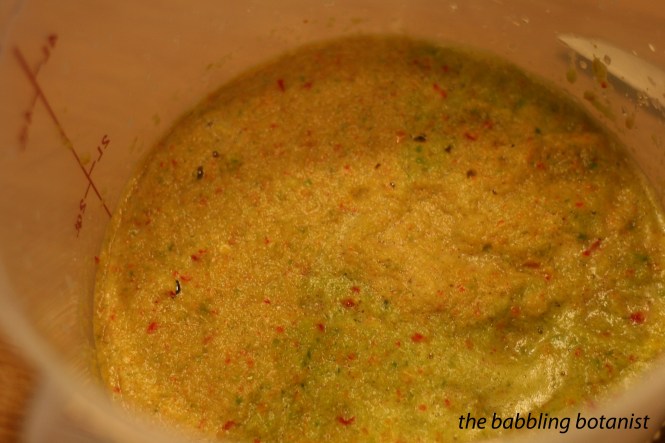
Next you want to puree the peppers, following the same procedure. We used almost all green but had a small red one too you can see we threw in there. Looks pretty nasty at this stage.

IMG_4173 copy

After the tomatoes are fairly well reduced, add in the pureed peppers and onions. You’ll want everything in one pot now if you had separated it into multiple pots. Add the rest of the ingredients for the sauce base, the garlic, mustard seeds, celery seeds and crushed chili pepper. We found it kind of difficult to crush the mustard seeds, so used some but then also topped it off with ground mustard. I feel like you’d want less ground, not a 1:1 change out, but ground is definitely an option.

IMG_4183 copy

Cook this down for at least 10 more minutes, until the peppers and onions are cooked. When you are happy with the base sauce, it’s time to divide and conquer. Take out half and put it into a different pot.

Below is the stampede style sauce first. Add all the ingredients for it to one of your pots.

IMG_4187 copy

The other sauce is the sweet and sour sauce. Add all the ingredients for this sauce to your second pot. Continue to boil both mixtures gently, stirring frequently. You want to achieve the consistency of a thin commercial sauce, which will take about 45 minutes. However, I always tend to reduce things longer than Ball suggests, so use your judgement for a barbecue sauce consistency.

IMG_4202 copy

While they continue to cook down, prepare the canner, jars and lids. you will likely get a bit more of the sweet and sour sauce, since it has more added ingredients. Probably close to 3 pints for the stampede and 4 for the sweet and sour, depending of course how long you reduce it for. Once it’s ready, fill your hot jars with hot sauce, leaving a half inch head space. Wipe rims, apply lids, and tighten bands finger tip tight. Place the jars in a boiling water bath canner covered by at least 1-2 inches of water. Process for 20 minutes, starting the time when a full rolling boil is reached.

IMG_4189

After 20 minutes, turn off heat, remove canner lid, wait 5 minutes and remove jars to a hot pad or towel. Cool 12-24 hours, remove bands, check seals, wipe clean, label and store.

IMG_4207 copy

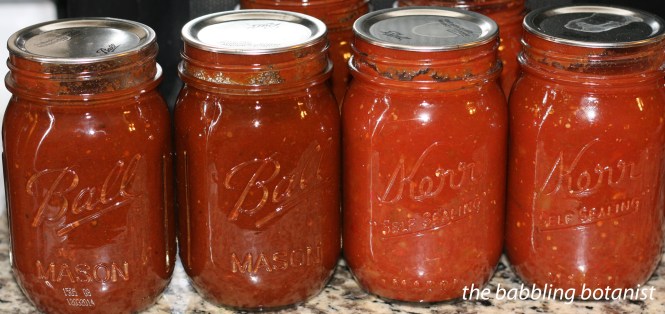
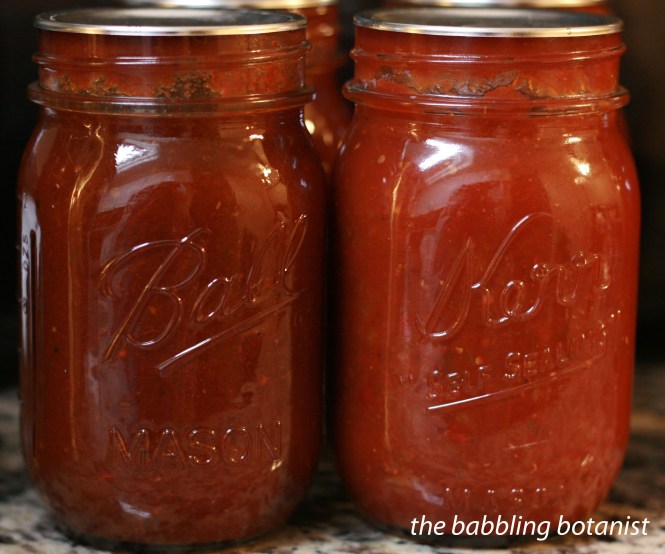
Two beautiful and delicious sauces. Stampede on the left in the Ball jar. A slightly spicy, peppery sauce, and sweet and sour on the right in the Kerr. I must admit I was much more excited for the stampede style, but that sweet and sour is also to die for. I highly recommend making both. If you are also looking for an awesome ketchup recipe, check out my country western ketchup post from last summer. Happy canning!

IMG_4251

*this post contains affiliate links, please see the “About the Blogger” page for more information

And the winner is……

Emily! The random number gods have chosen you as the winner of my can it forward day giveaway. I will email you momentarily with details for claiming your prize. Thanks so much to everyone who entered, and to those of you who didn’t win, make sure you pick up your own copy of So Easy to Preserve when it comes out, it’s an awesome resource! And we’ll have another giveaway some day soon. Happy canning!

IMG_2315.JPG

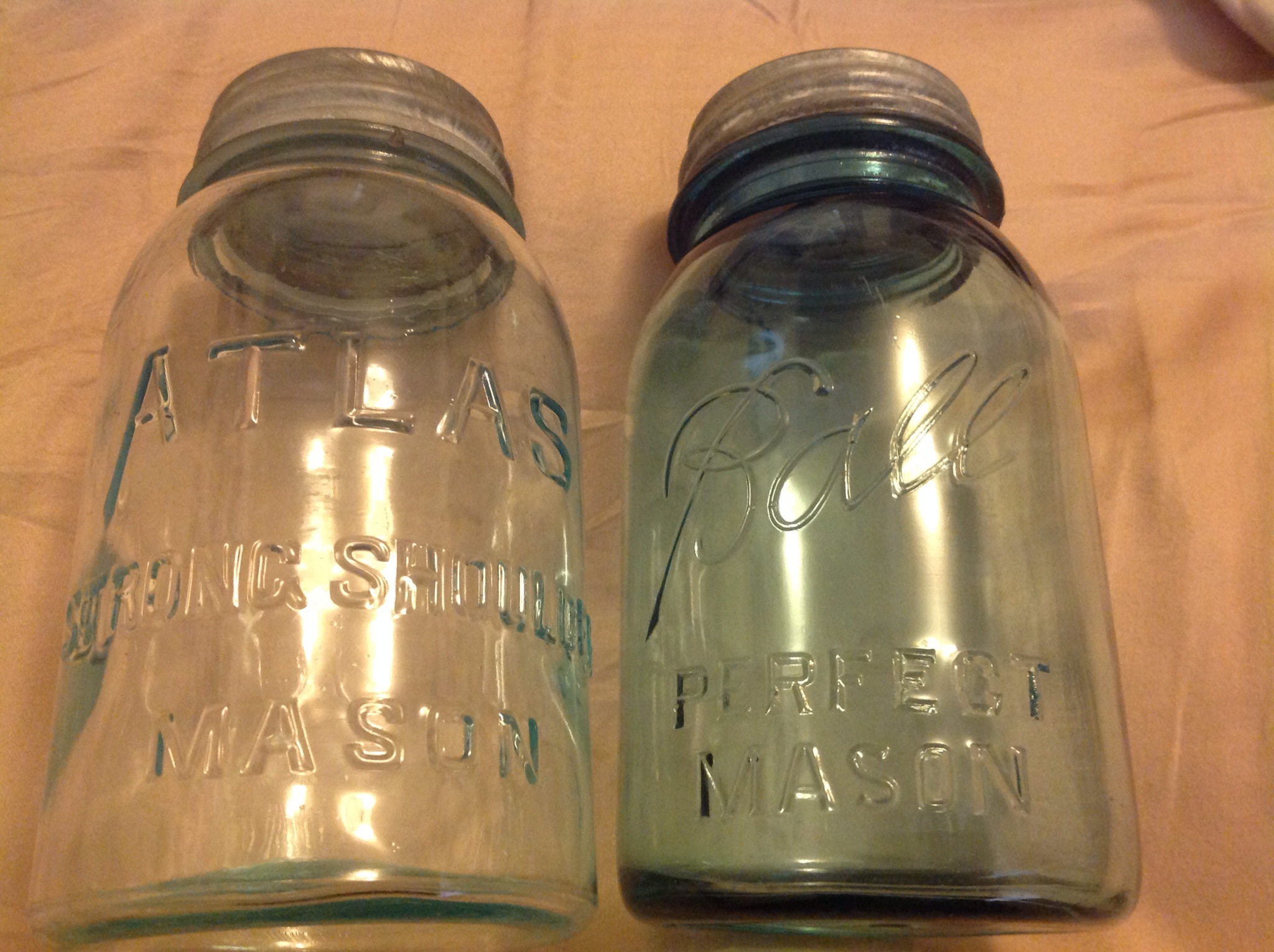
In other news, check out these sweet antique jars my sister gave me for my birthday! Starting my antique jar collection 🙂

IMG_2320.JPG

Cherry Pie Filling – Canning with Clear Jel

Pie fillings made with clear jel are so easy to preserve and are really great to have during the winter, when none of that delicious fruit is in season anymore. However, if you’ve never used clear jel, it can be a bit weird to use at first. The first time I used it I was canning blueberry pie filling, and the jel was looking pretty strange so I almost threw it away thinking I had screwed up. As a result, I wanted to do a little clear jel tutorial for this post, along with the recipe for cherry pie filling. See the very end of the post also for some additional clear jel notes. This recipe comes from an OSU Extension Service publication on fruit pie filling that you can find by clicking here. In that publication you can also find the recipes for how to do blueberry, apple, peach, or blackberry pie filling, which are very similar.

IMG_4025 copy

In the publication, it lists ingredients for 1 and 7 quarts, so here I’ve just listed ingredients for one jar and you can scale up as needed. I do recommend a small batch first though, to see if you like it, because you can then adjust the sugar and clear jel to your liking. When canning with clear jel, you can alter the amount of clear jel and sugar that you use if you decide that it is too much, but don’t alter the amount of lemon juice. The lemon is important both for safety, and for making the clear jel stay the right consistency and remain shelf stable.

Ingredients:
3 1/3 cups fresh, pitted sour cherries
1 cup granulated sugar
5 TBSP clear-jel
1 1/3 cups cold water or fruit juice
1 TBSP + 1 tsp bottled lemon juice
1/4 tsp almond extract (optional)
1/8 tsp cinnamon (optional)

For this recipe I actually had sweet cherries, so I reduced the sugar because of that. Again, try one jar first and see what you think. I also omitted the almond. The first step is to pit the cherries, which is pretty much impossible with out one of these, and soak them in an ascorbic acid solution, to prevent browning. The solution is one teaspoon of ascorbic acid per gallon of water, or 6 crushed vitamin c tablets (500 mg).

The first step in preparing the clear jel, is to combine the clear jel powder with the sugar (and cinnamon if you’re using it). Stir to combine.

IMG_4034 copy

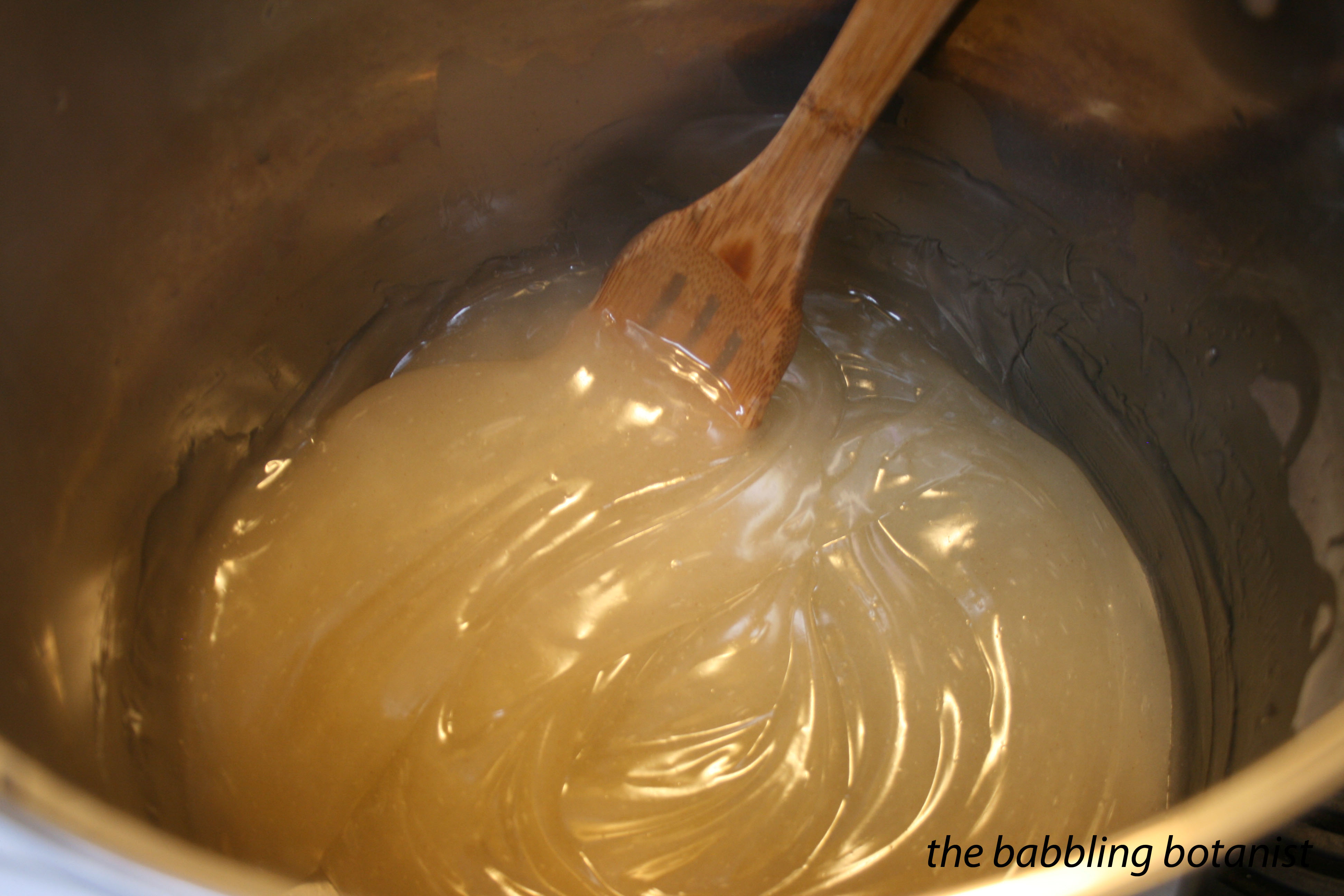
Add in the water or juice, whichever you are using, and the almond extract. Begin to heat the mixture over medium high heat, stirring constantly. This step, and what you see happening below, is where I almost threw out my first batch. As you can see, parts of it are starting to thicken and it becomes sort of chunky and nasty looking. I thought bits were burning to the bottom, which can happen if you aren’t careful, but don’t panic if this happens and some of it starts to thicken faster in chunks.

IMG_4036 copy

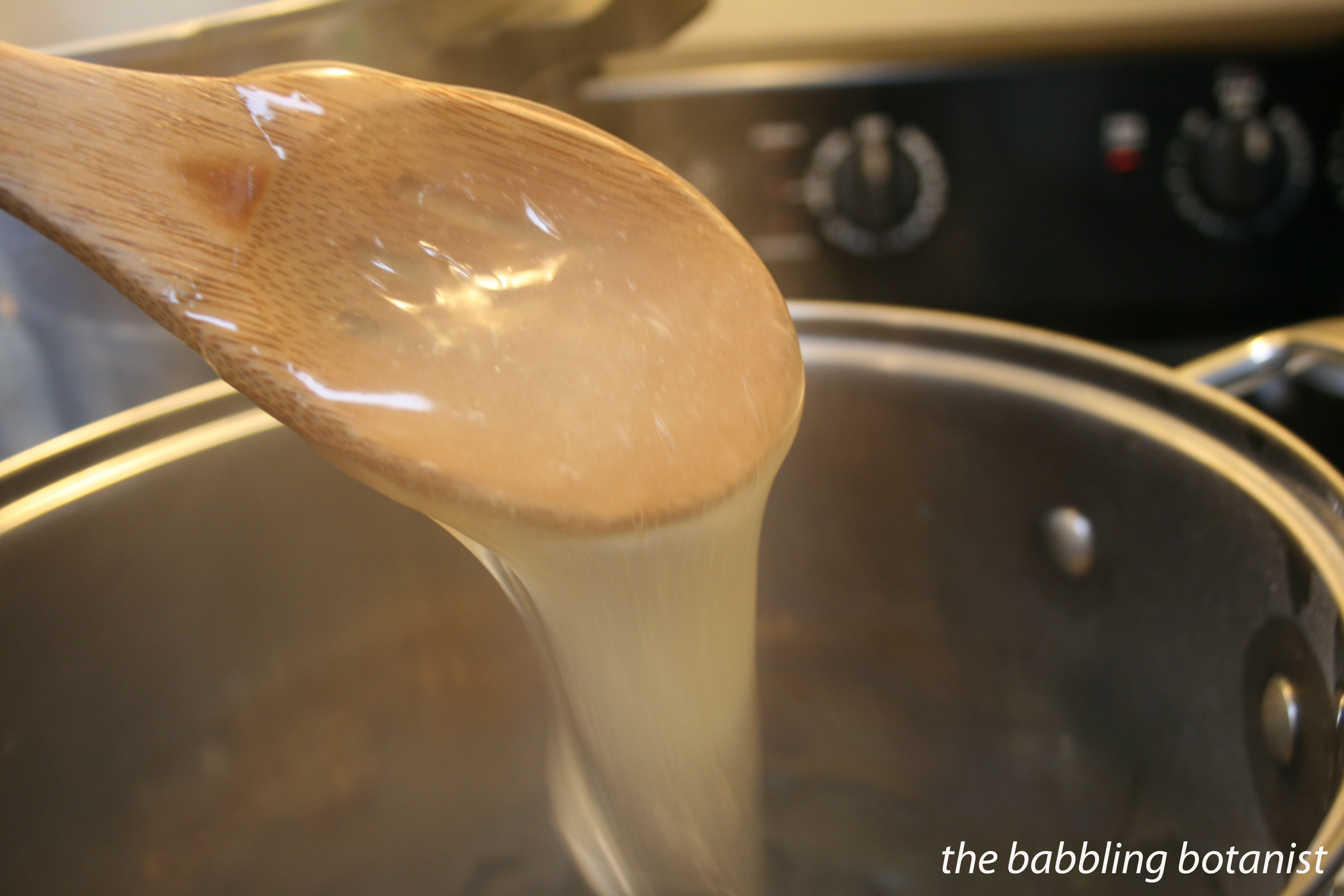
Continue to stir and heat until it looks more like the consistency here. It will thicken nicely and consistently and begin to bubble.

IMG_4039 copy

Once that consistency is reached, add in the lemon juice and stir for one more minute.

IMG_4042 copy

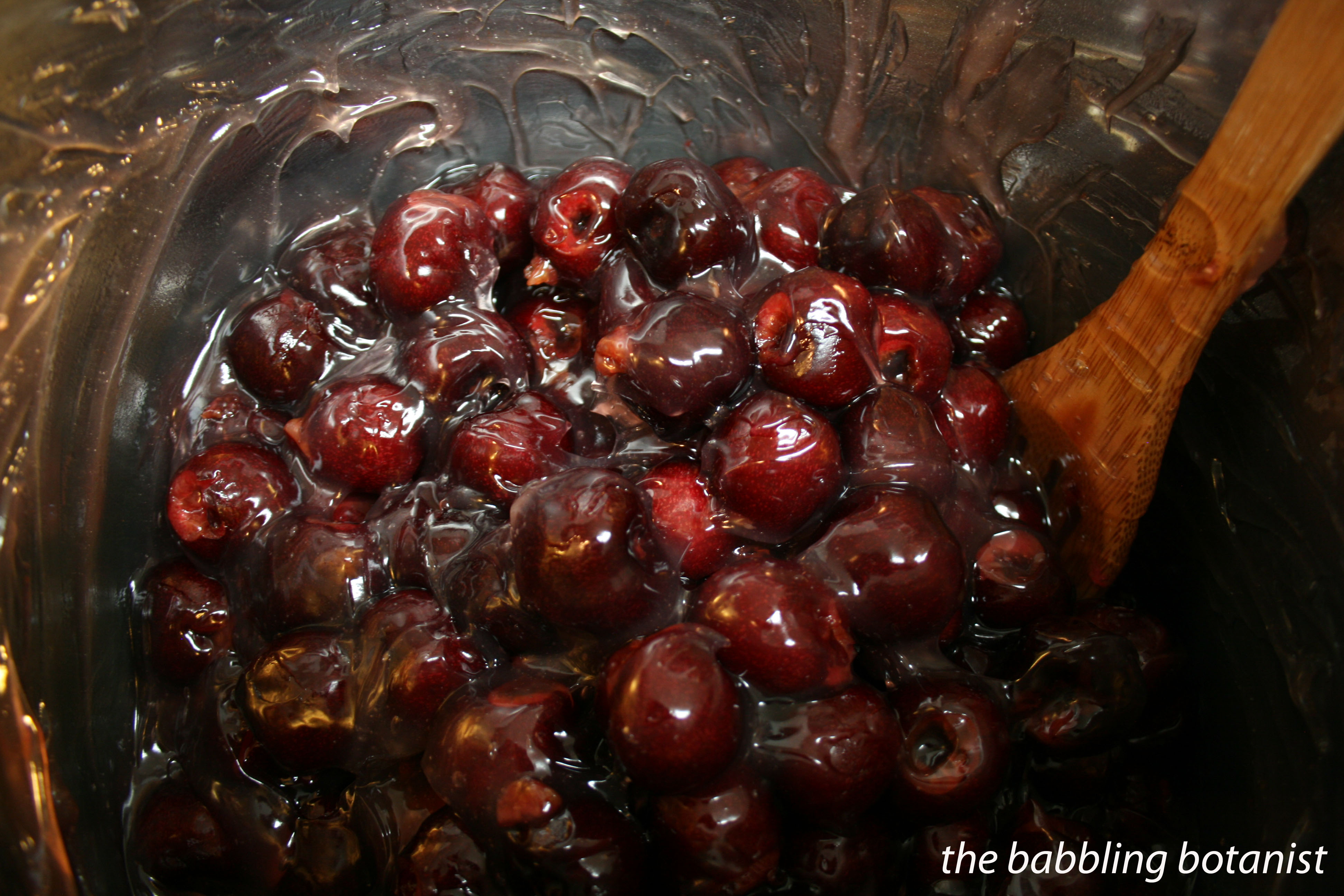
Remove from heat and fold in the cherries.

IMG_4050 copy

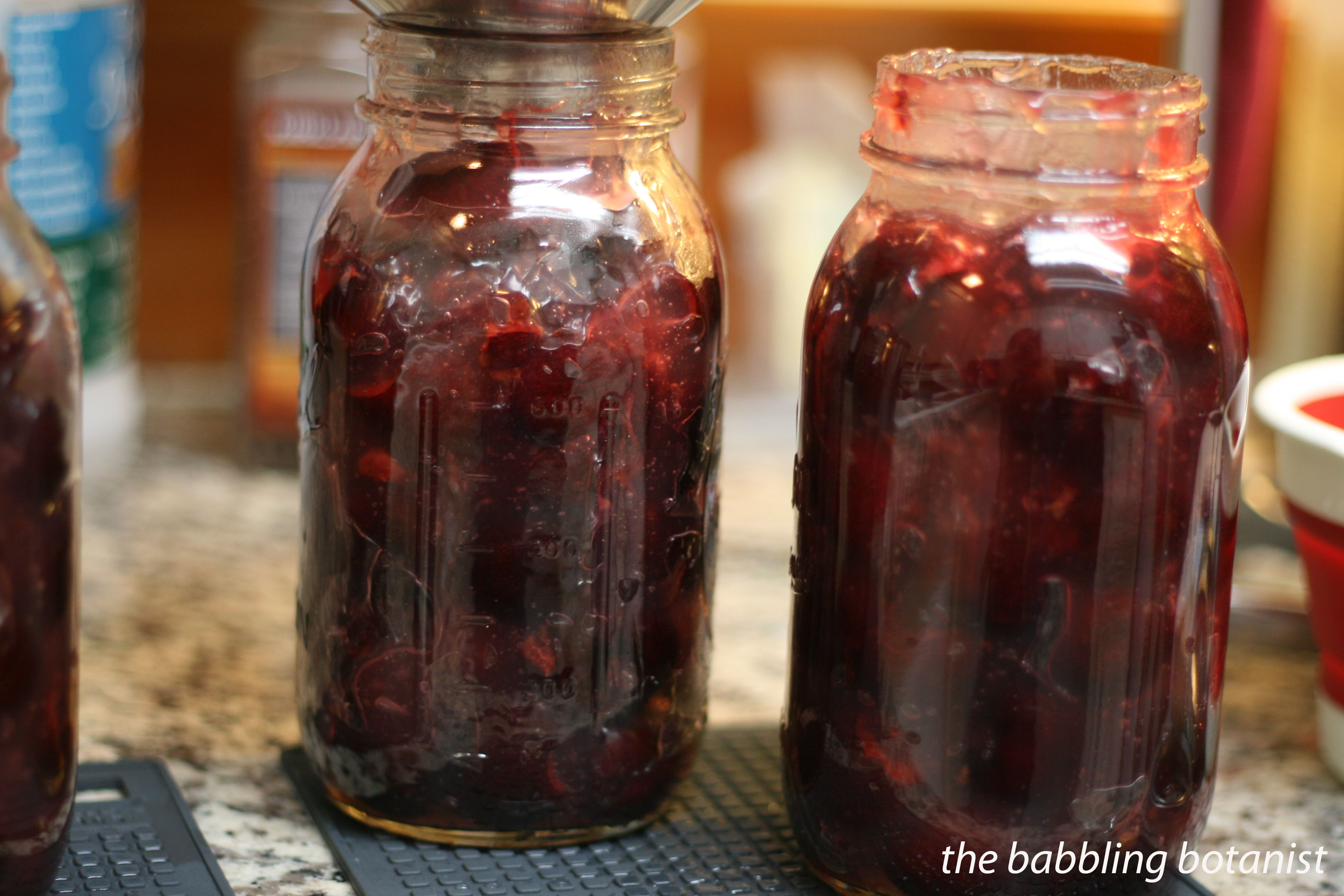
Fill quart jars, leaving a generous 1 inch head space. Pie filling, especially with clear jel, is one thing where you really do want that full inch or a touch more. With the starch boiling and expanding in the jars, you don’t want pie filling to volcano out of your jars when you remove them from the canner. Wipe the rims, apply the lids, and tighten bands finger tip tight. Process in a boiling water bath canner, covered by at least one inch of water, for 30 minutes, starting the time once a full rolling boil is reached. After the 30 minutes, turn off the heat, remove canner lid, wait 5 minutes and remove the jars to a hot pad or towel. Cool 12-24 hours, remove bands, wipe clean, label and store.

IMG_4054 copy

Enjoy delicious pies, tarts, etc. all winter long.

IMG_4091 copy

Some additional notes on clear jel.

When purchasing clear-jel, which can often be hard to find, make sure you buy the one made for canning, linked to here. The instant clear jel is a different product and is not the one intended for the high heat of canning. Sometimes local garden stores will carry it seasonally, or your local extension service may carry it (mine does not) but it’s also available online.

What is clear jel anyways? Well, it’s a thickener that is actually made from corn starch, but it’s been modified to withstand the high heat of cooking and canning without becoming thin and runny, or chunky. Corn starch is a great thickener for regular cooking, but it doesn’t really stand up well to canning. Clear jel is also made for use in low pH environments, like the pH of fruits. It also deoesn’t seperate over time, like other starches can. If you don’t like the starchy pie fillings there are a couple other options. You could follow a recipe for canning fruit in syrup, and then drain the syrup to use the fruit in a pie, or freeze the fruit instead. Don’t just try and can a pie filling recipe without it though, it’s not going to turn out well.

Cherry Pie Filling and Canning with Clear Jel on Punk Domestics

*this post contains affiliate links, please see the “About the Blogger” page for more information

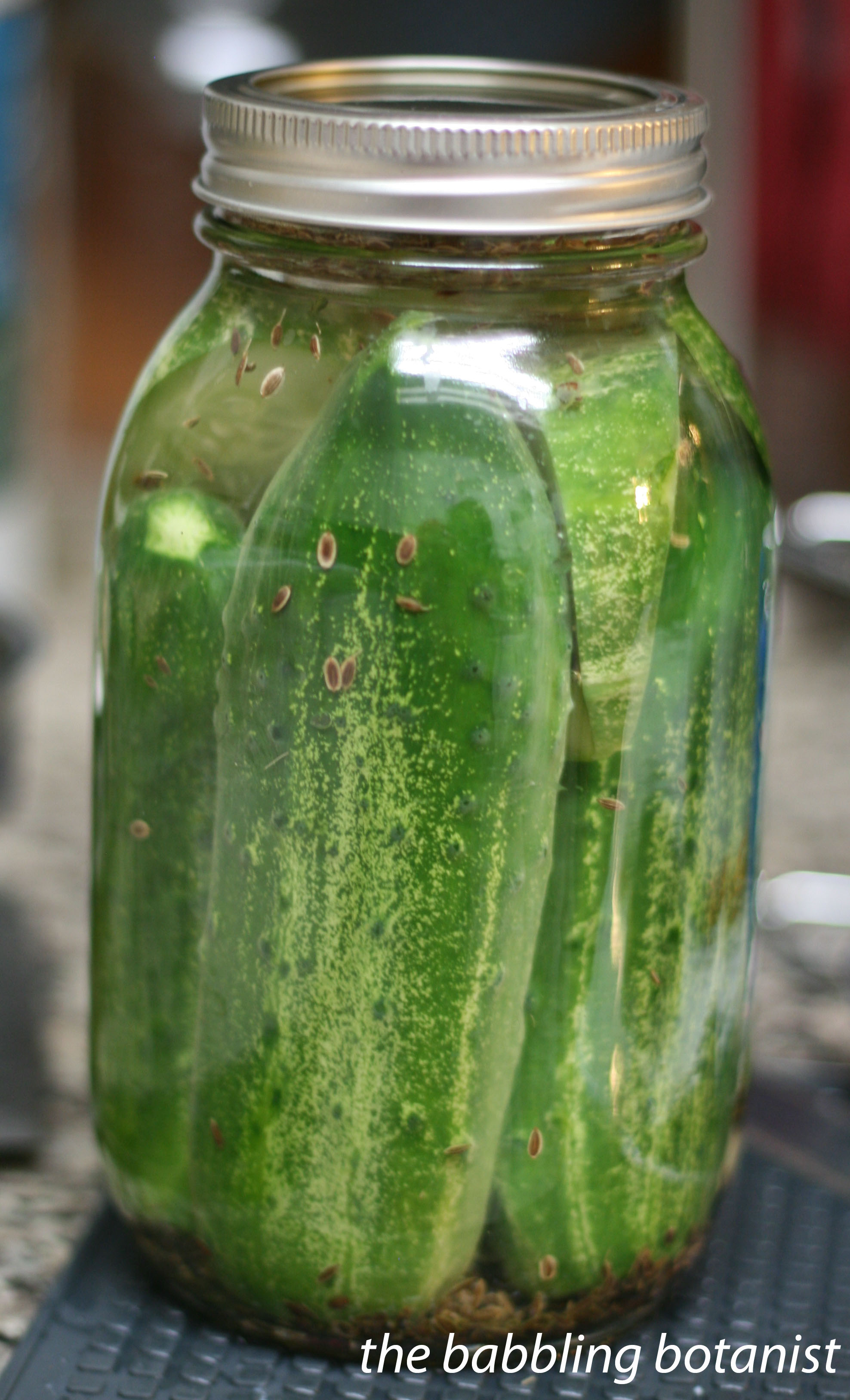
Quick Dill Pickles – low temperature pasteurization and an experiment

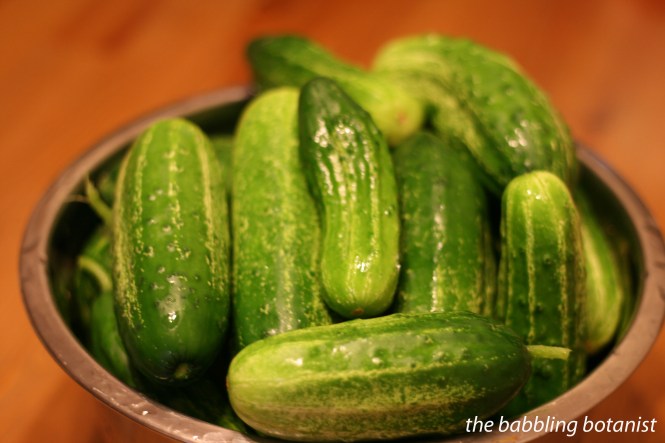
Oh the dill pickle. The pickled cucumber is a special enough pickle that we simply call it a pickle. A pickled beet is a pickled beet, and a carrot that has been pickled is a pickled carrot, but a pickled cucumber, well that is just a pickle. Where was I going with this? Oh now I’m in a pickle. Anyways, is there anything better than biting into a pickle and hearing that crunch… aww this is a good one. On the flip side, isn’t it awful to bite into a pickle and find that it’s completely soft? So dissatisfying. I actually was never a huge fan of pickles until recently, but I can remember my grandpa always having a pickle on the side of a grilled cheese sandwich. I wish he was here today to judge in this pickle experiment I am about to tell you about. So how do you achieve the perfect pickle? Well, there are a few options I sought to test.
IMG_3988 copy

One way to make pickles is through the process of fermentation, but this type of pickling will be addressed in a later post. The reason for that is because they produce a different product in many ways than making a quick pickle, so for this experiment I wanted to test two of the most common methods of crisping quick pickles – those that are placed in vinegar and processed immediately.

Pickle Crisp
Pickle crisp is a product put out by ball, but I’m sure other brands sell it as well. All it contains is calcium chloride, which is supposed to help maintain the firmness of pickles. You simply add a very small amount to each jar when you are packing them. Quick, easy, and just calcium chloride.

Low temperature pasteurization
Generally, when we process foods in jars to make them shelf stable, we do so in a boiling water bath canner, with the water at a full rolling boil (or of course in a pressure canner for low acid foods). Quick pickles of all types are traditionally made this way, and most canning book instructions will tell you to do it that way. However, when some extension service or food science folks somewhere (I forget the exact details of Janice’s anecdote) started digging deeper into how pickles are processed industrially, they discovered something very interesting. Pickles were being processed at lower temperatures, which can help maintain that crispy, crunchy texture that we all love about pickles. So, it was time for some science! Can we safely process at lower temperatures at home? Yes, it turns out we can. Maintaining the temperature between 180-185F for 30 minutes is a safe way to process certain tested recipes, all of which can be found in PNW 355. To process your pickles at low temperatures, there are a few things that are a bit different. First, you pack them as you would normally, then place the jars in a half filled canner with warm water (120-140F). Then add hot water, until an inch above the jars, and heat the canner to 180F and start the timer. Try not to exceed 185F or it sort of defeats the purpose of low temperature pasteurization. The frustrating part can be that you have to watch it a bit more closely than when you are processing in boiling water, because you don’t want to drop below 180F or go above 185F. Unless you have a sweet electric canner with set temperatures, like the one that OSU extension has for classes (which by the way is impossible to find on sale anywhere), you need a thermometer, like this long one to check the temperature, or this sweet one with an alarm that goes off when you reach the set temperature. Then all you do is process them for 30 minutes, removing them right at the end of 30 minutes will no additional wait time like in boiling water.
IMG_4009 copy

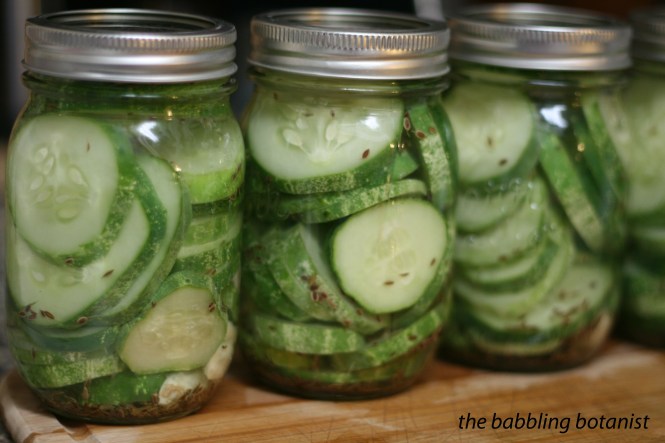
OK, so on to the making of the pickles. These are the ingredients I used in every jar. Then my experiment consisted of processing some of the jars using the traditional boiling water method, and some using low temperature pasteurization. Then some of those jars had pickle crisp and some did not. Finally, I made a jar also of whole pickles to see if they stay crisper than slices.

Ingredients:
4 lbs pickling cucumbers
14 cloves of garlic
14 heads of dill
28 peppercorns
hot pepper flakes to taste or a dried pepper
3 cups water
3 cups vinegar (5%)
1/4 cup pickling/canning salt

Here’s what I did:

Make the brine by combining the water, salt and vinegar in a saucepan and bringing it to a boil to dissolve the salt. I like to either do this after I see how many jars I filled, or just make a bit extra since I always seem to need more. Place 2 cloves of garlic, 2 heads of dill, 4 or so peppercorns and the red pepper flakes in each jar. To prepare your cucumbers, cut a little slice off the blossom end. This is important for firmness as well, as there is an enzyme in the blossom end that can soften the pickles. Cut them how you like, or leave them whole. Spears, coins,  slicers, you decide. I also am doing a comparison with ones that were processed whole versus sliced to see if that makes a difference for crispness. Pack the cucumbers into the jars. Cover with brine, leaving a half inch head space. Remove air bubbles with a plastic or wooden utensil and adjust head space as needed. If adding calcium chloride, add 1/8 tsp per pint jar, or 1/4 tsp per quart jar.
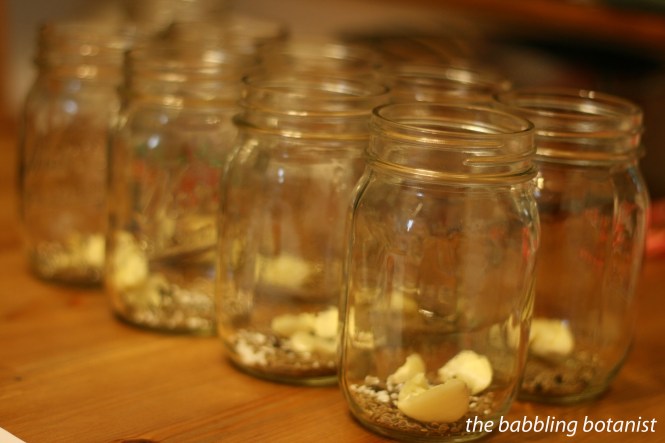
IMG_4001 copy

Wipe the rims, apply the lids and bands, and process either for 10 minutes (pints) or 15 minutes (quarts) in a boiling water bath, or for 30 minutes using low temperature pasteurization as described above. After removing the jars from the canner, let them cool 12-24 hours, remove bands, wipe them down, and store for a few weeks before eating them. I took them to canning class a few weeks later and had the students do a blind taste test – read on for the results! Which pickle was the ultimate pickle!?
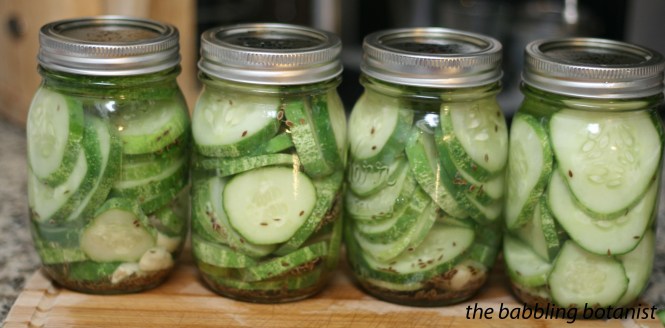
IMG_4005

Have you ever tried low temperature pasteurization? Do you have a different secret to super cripsy pickles? Let us know! Or if you’ve had trouble getting your pickles to stay crispy I’d love to hear stories if any one else wants to replicate this experiment. Make some pickles, have a tasting party in a few weeks, and let us know what your friends liked best. Happy pickling!
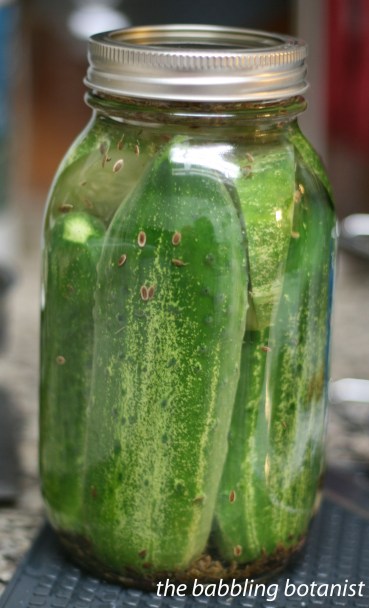
IMG_4012

September update – experiment results!

So, I know you’ve been on the edge of your seat wondering what the results of this experiment would show, so here they are. As a reminder, what I did was 5 different pickles. The pickles were all the same spices and brine, it was the processing that differed. The first 4 were all canned as slices, the fifth was canned whole and sliced for the taste test so people couldn’t tell which one was canned whole. I randomly assigned them to a number 1 though 5 for people to taste test.

1. Boiling water bath, no pickle crisp
2. Low temperature pasteurization, no pickle crisp
3. Low temperature pasteurization with pickle crisp
4. Boiling water bath with pickle crisp
5. Low temperature pasteurization with pickle crisp canned whole

For this taste test I had 17 people test the pickles and rate them from least to most crisp. I wasn’t entirely sure how to analyze the data from the taste test, but some of the results are pretty obvious and exciting. I am going to just give you a few summary statistics that I really think give a pretty clear answer, and I’ve also included all the ratings in case you are really that interested. First off, I wanted to show a picture of the four sliced ones, because even visually some of them looked more crisp, at least to me. Below the jars are in the order listed above, so the two ends were boiled, and the middle two were processed at low temperatures. Can you see a difference? This picture was taken 5 weeks after processing. I think that even visually the boiled ones look soggier. They are a different colour and more translucent.
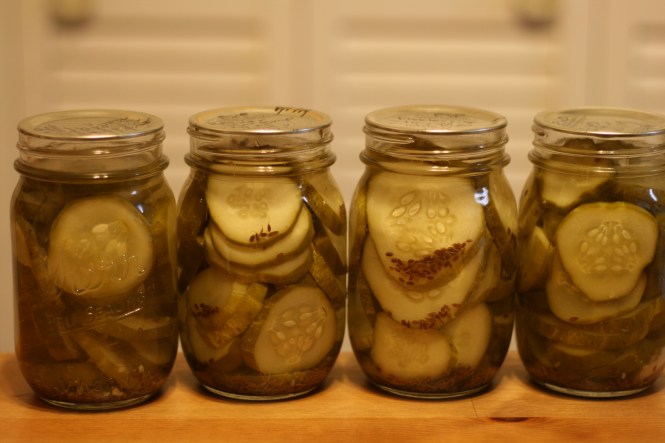
IMG_4371

So how did it break out in terms of numbers? The first obvious result was that 16/17 people put sample 5 as the most crisp sample. So, by canning your pickles whole, with low temperature pasteurization, you get a very crunchy, firm product. Great! Now let’s ignore number 5 for a second since it had an additional variable of being canned whole. 10/17 people chose sample 1 as the softest, and 6/17 chose sample 4 as the softest. This totals to 16/17 people chosing one of the boiled ones as the soggiest. Additionally, of the sliced ones, 13/17 people selected sample 3 as the most crisp, which was the low temperature with pickle crisp sample. Now, I didn’t run any actual stats, but I feel pretty confident saying this: Low temperature pasteurization for the win!! There was not one person that had sample 1 (boiled, no pickle crisp) as anything other than the soggiest or second soggiest. I also thought it was really interesting that Janice, our canning teacher, rated them in the exact order that I would predict. From soggiest to crispest: boiled without pickle crisp, boiled with pickle crisp, low temperature without pickle crisp, low temperature with pickle crisp, low temp with pickle crisp canned whole. Pretty fun! So the method of processing, low temp versus boiling, was detectable by most people. Some people could detect a difference with the pickle crisp, but this result was not as ground breaking. I’d like to test it again, with more people and try doing a boiled one canned whole and a few other things, but I think for now it’s safe to say I will be canning the rest of my pickling cucs at low temps and using pickle crisp. They still turn out well if you don’t can them whole, even though most people picked that for ultimate crispness, but you can also fit less in a jar. So there ya have it! Go can some pickles at 180 F!!

In case you’re crazy like me, here’s everyone’s ratings (least to most crunchy/crisp):

1 4 2 3 5
4 1 2 3 5
4 1 3 2 5
1 2 4 5 3
2 1 3 4 5
1 2 4 3 5
1 2 4 3 5
4 1 2 3 5
4 1 2 3 5
1 2 4 3 5
4 1 2 3 5
1 3 2 4 5
1 4 2 3 5
1 4 2 3 5
1 4 2 3 5
4 1 2 3 5
1 2 4 3 5

*this post contains affiliate links, please see the “About the Blogger” page for more information
Quick pickles- low temperature pasteurization on Punk Domestics

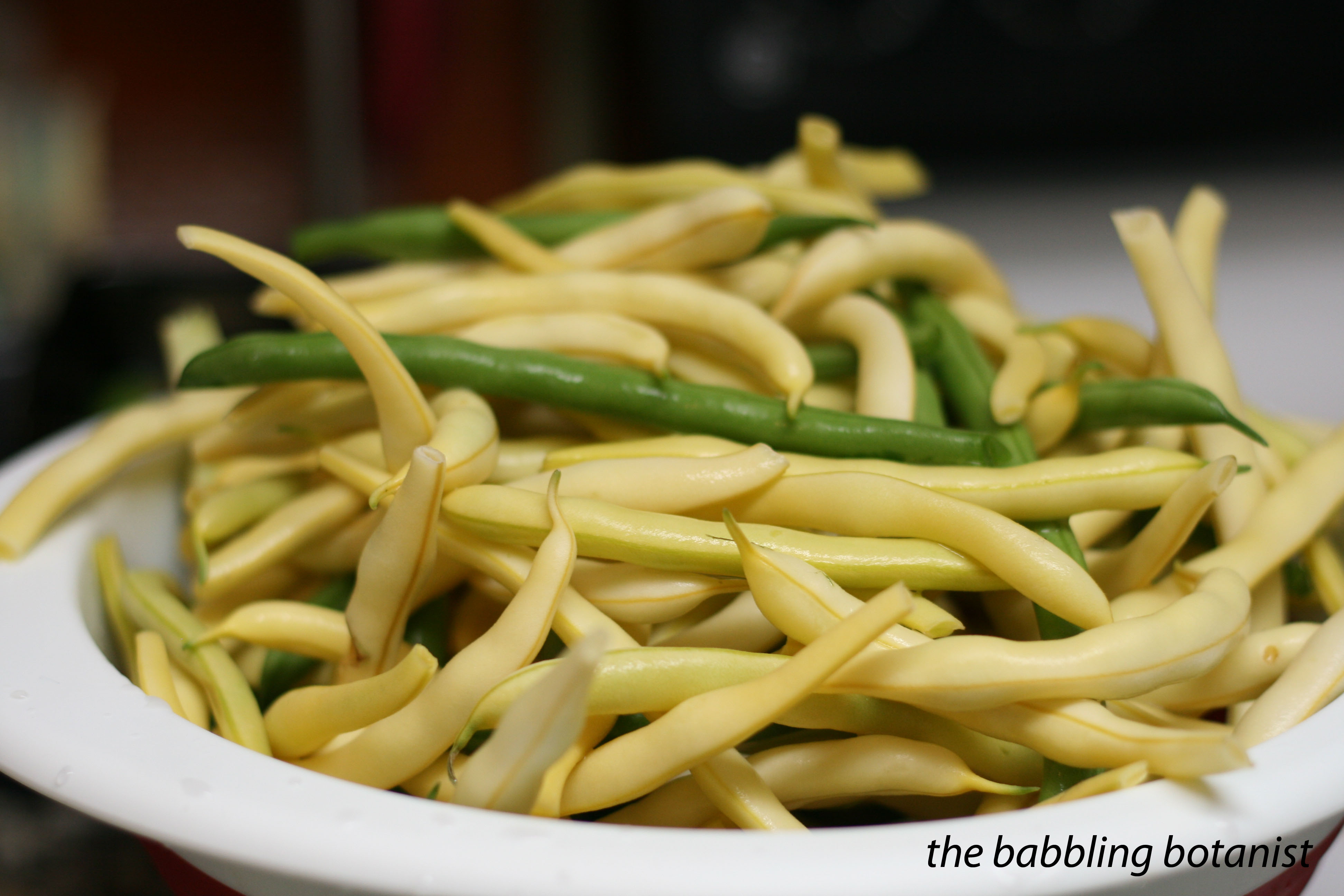
Dilly (and Basil!) Beans

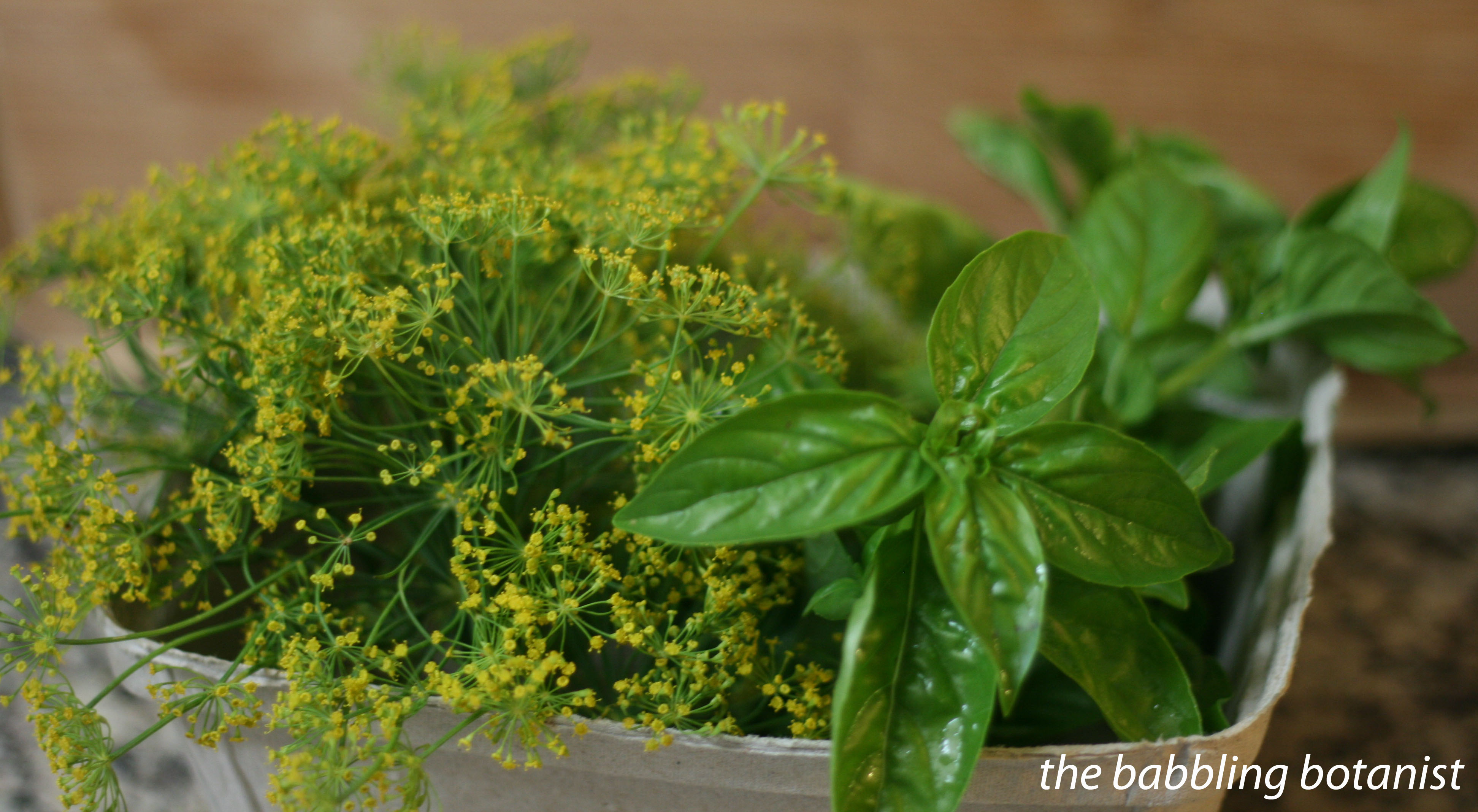
The beans are coming in hot, so I was perusing my PNW 355 publication on pickling to check out their recipe for dilly beans. I was kind of surprised to see “fresh dill or basil sprigs” in the ingredients. Dilly beans made with basil?! Well consider me intrigued. So I went out and picked some basil from the garden to test this out. In some jars I put basil, in some I put dill, and in some I put both. We’re living on the edge here people! I’ll let ya know how the basil taste in a couple weeks, the dill I know is good!

IMG_4065 copy

Ingredients (for about 8 pints):
4 lbs Beans (about a half pound per pint)
4 cups white vinegar (5% acidity)
1/2 cup pickling/canning salt
4 cups water
8-16 fresh sprigs of dill or basil
8 cloves garlic
1 tsp of hot red pepper flakes (if you want)

Beautiful fresh dill and basil.

IMG_4073

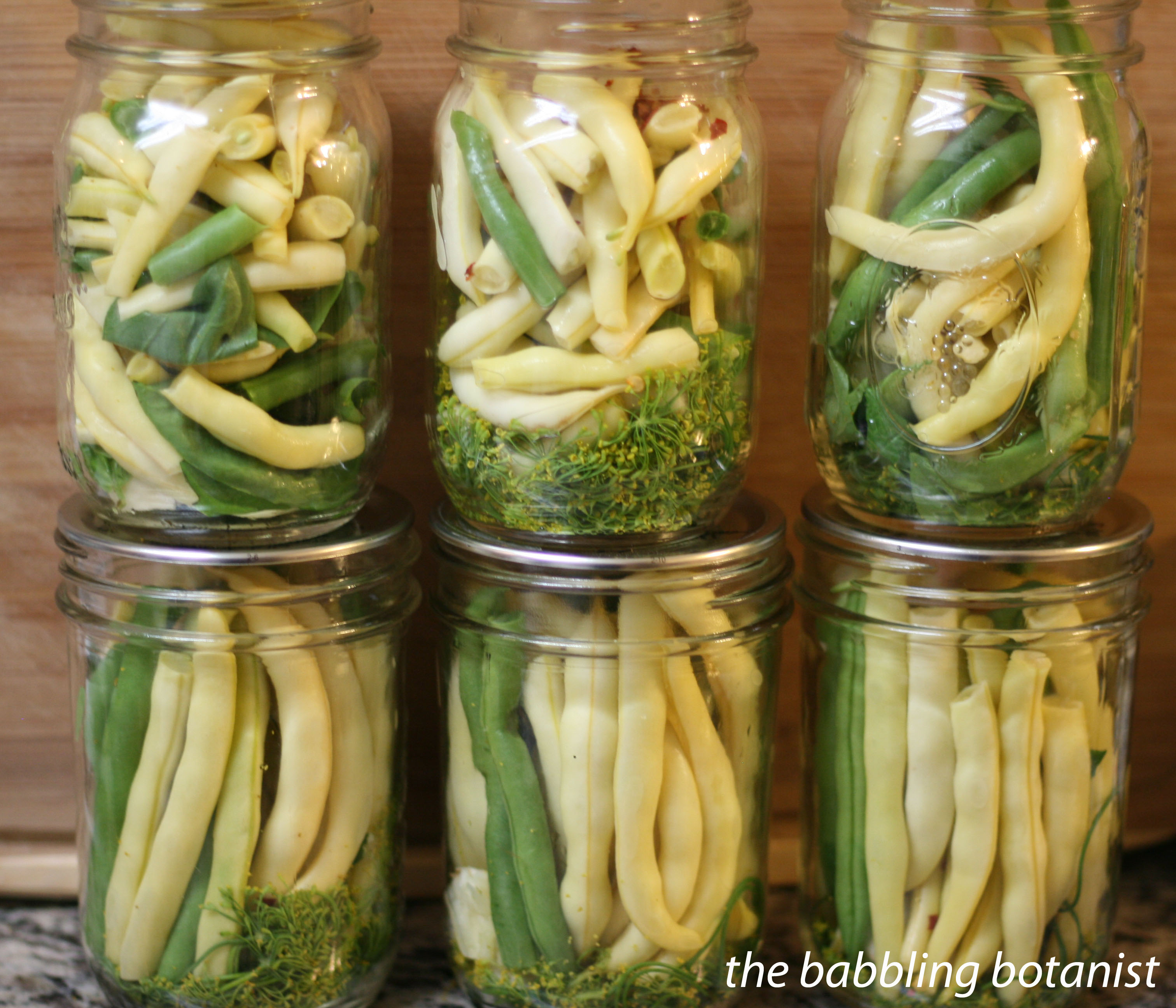
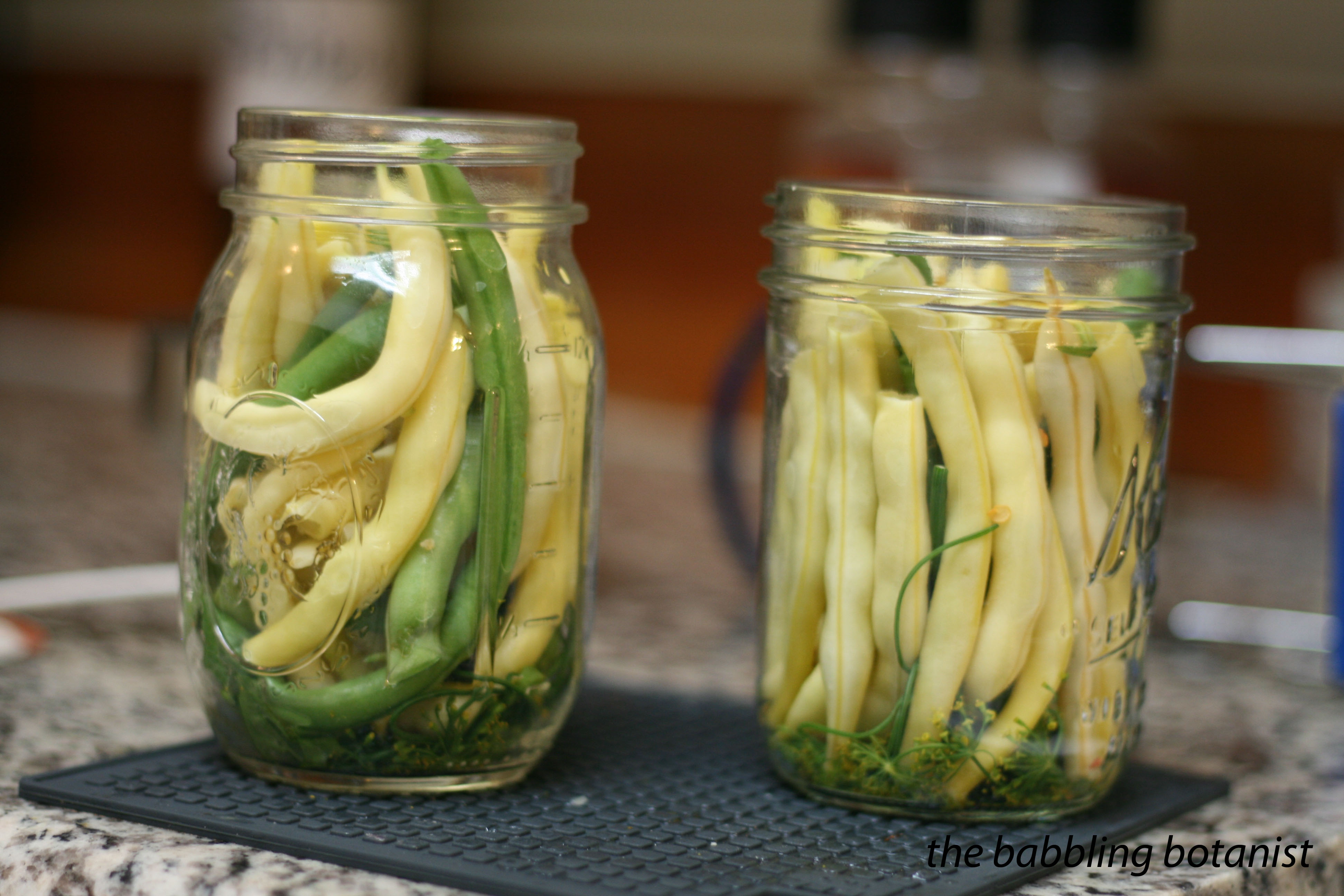
One thing that I love about this recipe is that it is a raw pack. For the recipe in Ball, you make the brine, and then you toss the beans into the brine for a bit and hot pack the jars. This is fine if you want to do it that way, but I find it really hard to pack my jars nicely with a hot pack. And I don’t see a need to soften beans either. Anyway, place some basil and/or dill in each jar, along with the garlic. What I typically do is hold a jar sized bean in my hand (you need a half inch head space) and snap my beans to match the reference one. Then I pack the nice perfect ones into jars (the bottom ones below) and the “nubbin bits” go into another jar. The nubbin ones are good for snacking on or for salads, but the whole ones are nice to have also for drinks and things, so it works great to make both.

IMG_4074

Once all your jars are packed, make the brine by combining the water, vinegar and salt in a saucepan and bringing it to a boil. I like to make it after I fill the jars so I can see how many jars I have and make more brine if I need to. If you want a spicy bean, you can add the red pepper flakes to the brine, or you can just add the flakes to the jar. I added them to the jar in this case because I wanted to make some of them hotter than others to decide what I like best, because last time I made these I wanted them hotter. Fill your jars with brine, use a plastic or wooden utensil to remove any trapped air bubbles from between the beans, adjust brine to a half inch head space, wipe the rims and apply the lids and bands. Tighten finger tip tight and place the jars in the canner.

IMG_4082 copy

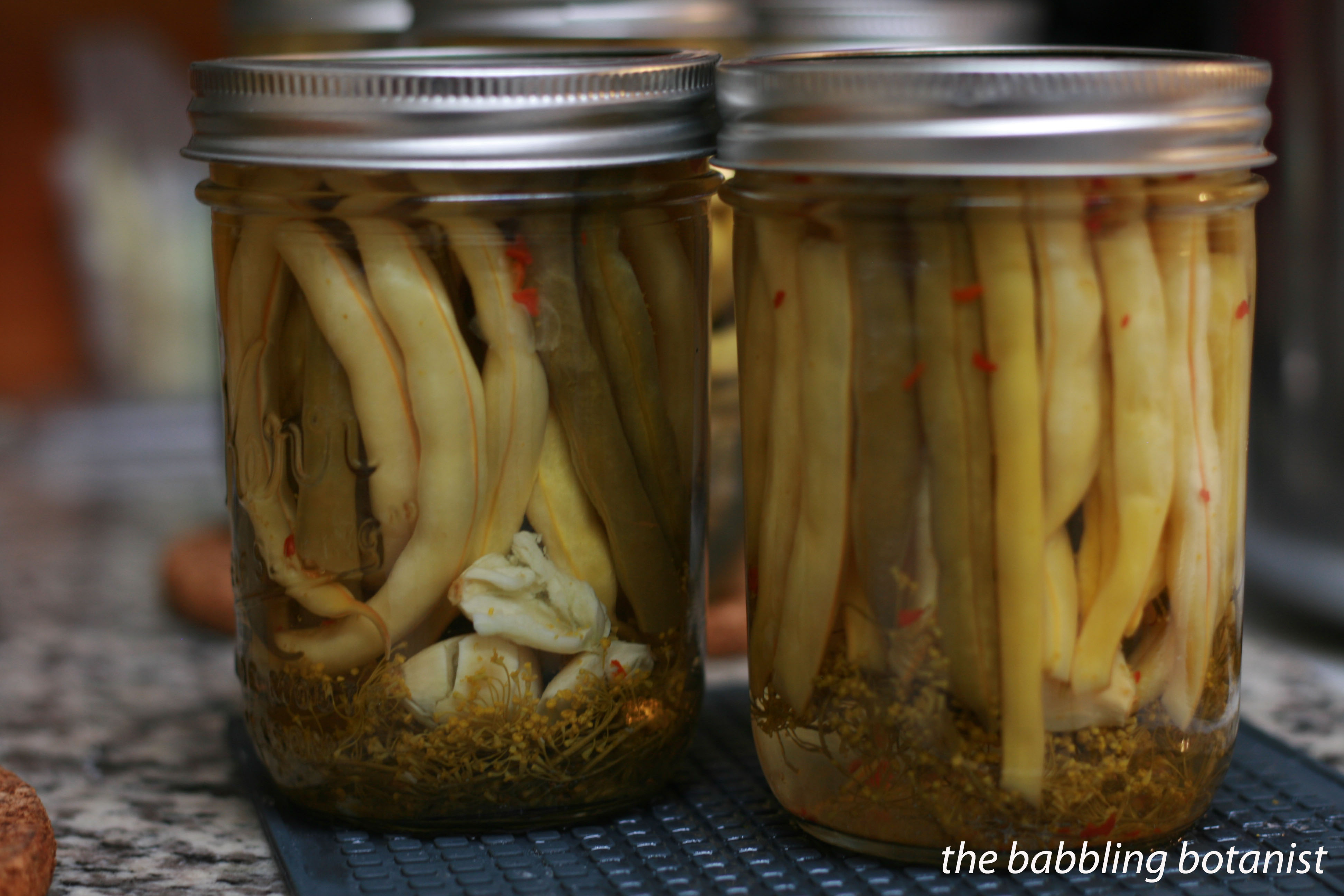
Process in a boiling water bath canner, covered by at least 1-2 inches of water for 10 minutes. The publication actually lists 5, but I have never seen that before except for jams and jellies, and your stuff should all be sanitized if you do that short of a time, so I did 10 minutes just to be safe. After 10 minutes is up, turn off the heat, remove the canner lid, wait 5 minutes and remove the jars to a hot pad or towel. Cool 12-24 hours, remove bands, wipe, label and store. Let them pickle for a little while before digging in!

IMG_4115 copy