Year End Canning Reflection

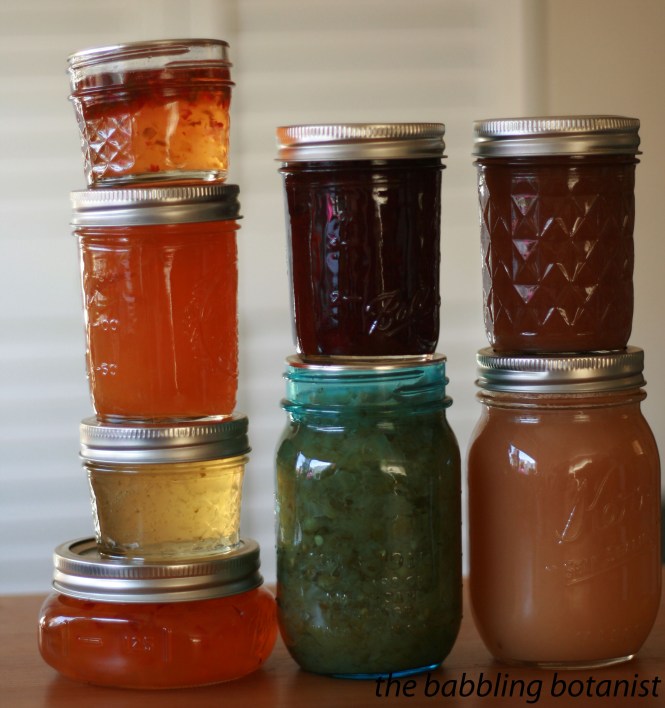
When in the world did it get to be mid December?! I can’t believe. At this time of year, most of us have entered our “net loss” phase from the pantry – i.e. we are now eating more than we are putting up. Because of this, I think it’s an appropriate time to reflect on the things we have preserved this year, and on things we were wishing we had taken better advantage of while they were in season, so we can prepare for next year. Here’s a look at my canning list – just over 600 jars, not including the things I did in MFP class. This may partially explain why I haven’t yet defended my masters… Anyways, before judging me on this crazy list, keep in mind that I often can with a friend, so for many of these large batches I only kept half. I also canned jams for two different weddings, so only about 10% of this jam is actually in my house currently.

Jams and Jelly – 214 jars (ya…I know)

IMG_2031 copy

22 rhubarb orange jam
8 strawberry rhubarb jam
8 strawberry lemon marmalade
46 strawberry jam
5 kiwi daiquiri jam
6 cherry marmalade
36 raspberry jam
26 blueberry lime jam
15 orange marmalade
12 zesty watermelon jelly
12 watermelon jelly
6 habanero jelly
6 inferno wine jelly
6 blueberry butter

Summary  – I definitely went crazy, but actually compared to last year it’s not that bad. I did 95 last year and sure I gifted some of them, but this year a massive percent were wedding favours.

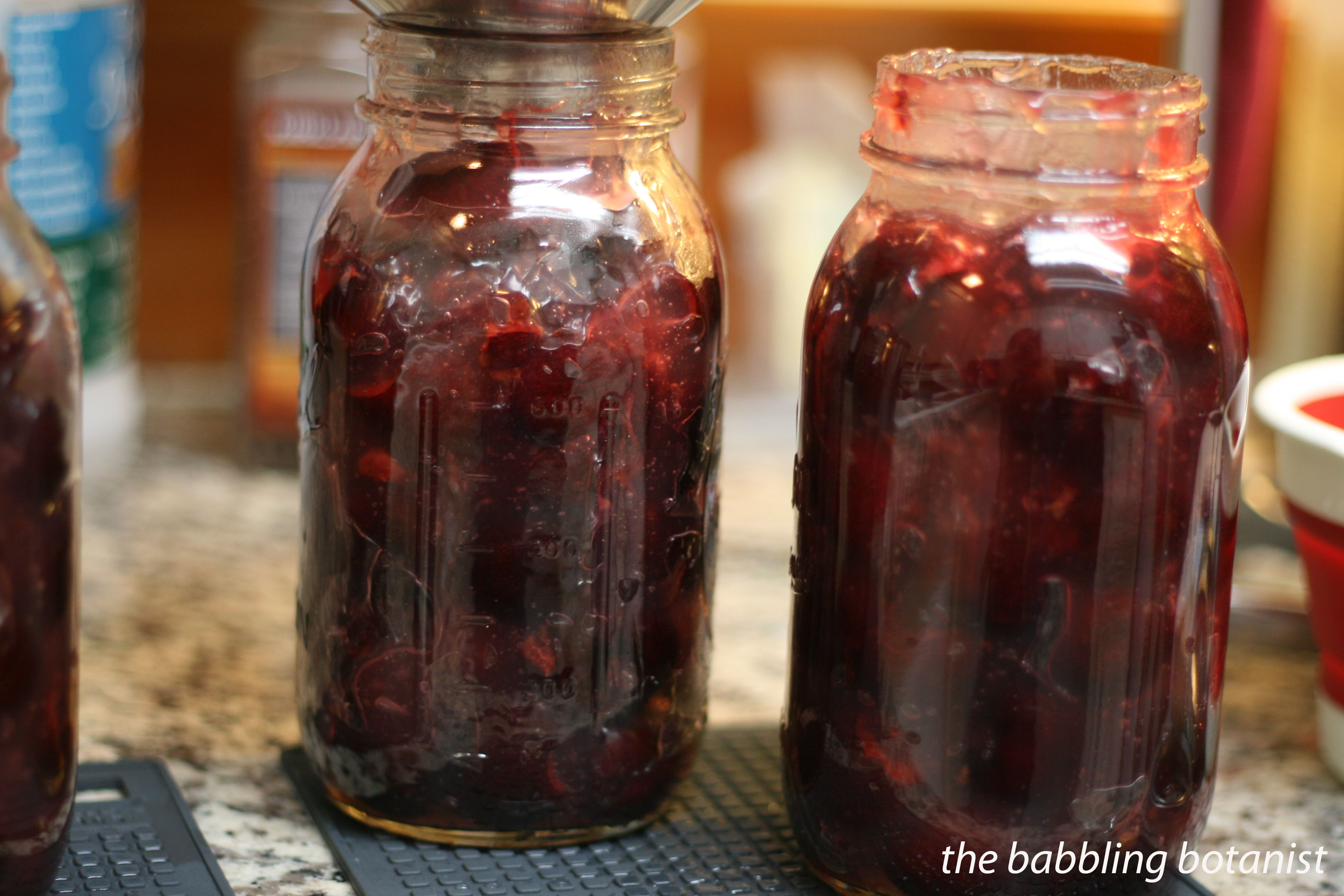
Other fruit things – 46 jars

IMG_4054 copy

4 jars cherry pie filling
8 pints strawberry lemonade concentrate
4 pints rhubarb juice concentrate
5 pints cranberry juice
12 half pint Asian plum sauce
9 pints Victorian barbecue sauce
4 half pints cranberry mustard

I am pretty happy with these items, and I certainly think I will eat it all. I do moderately regret not doing a couple other pie fillings as having those is super super nice for when a potluck catches you by surprise. Otherwise yay fruits!

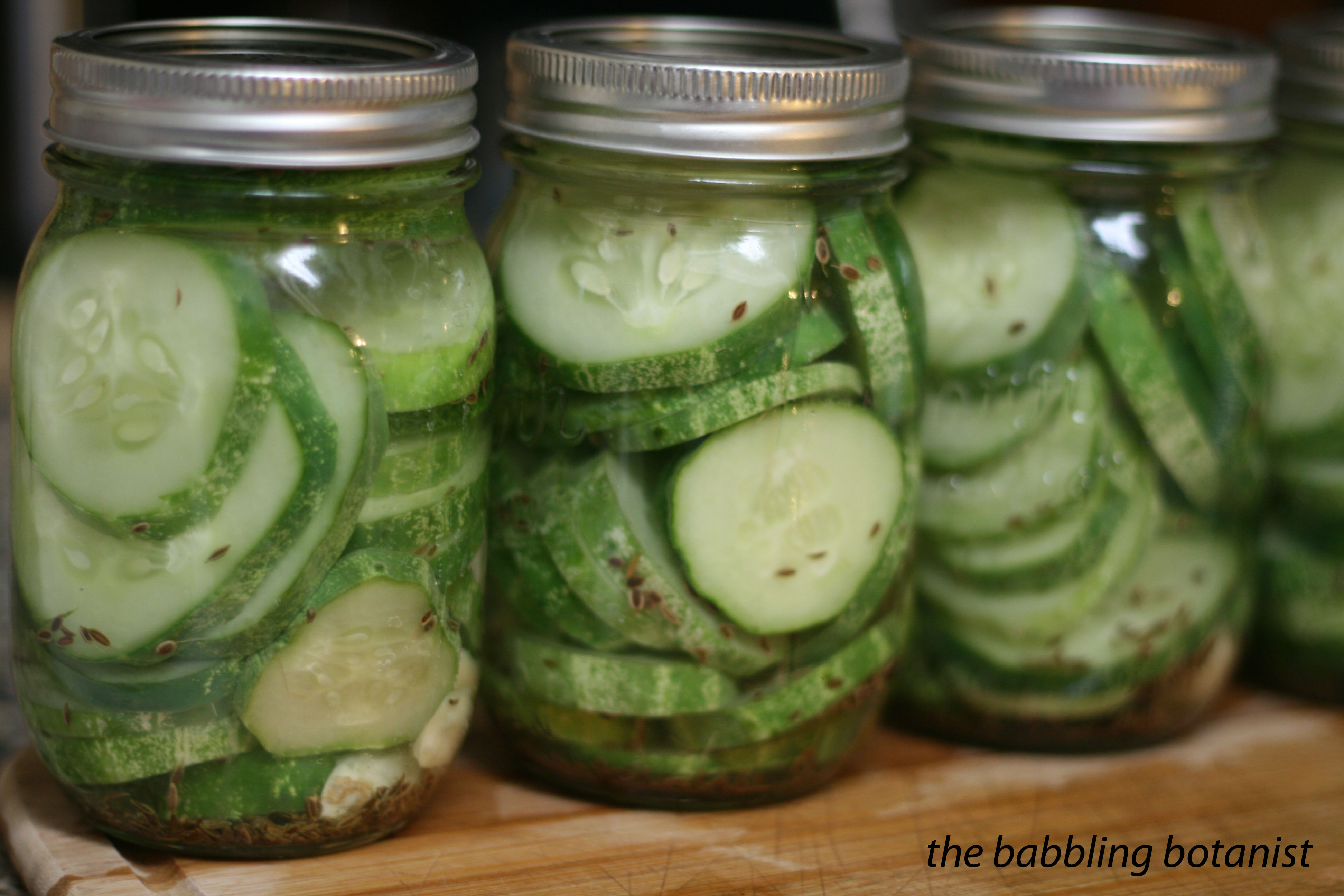
Pickling – 77 jars

IMG_4009 copy

3 quarts refrigerator pickles
20+? jars dill pickles
19 jars pickled carrots
8 pints zesty zucchini relish
9 pints pickled asparagus
14 pints dilly beans
4 quarts sauerkraut

Other than forgetting to pickle beets, my pickling was pretty good this year. And with discovering low temperature pasteurization my pickles are better than ever. Somehow I totally lost track of my cucumber pickle numbers though. My list said 12 – but I am sure I made at least 3 times that considering my pickling experiment alone was 9…but anyways.

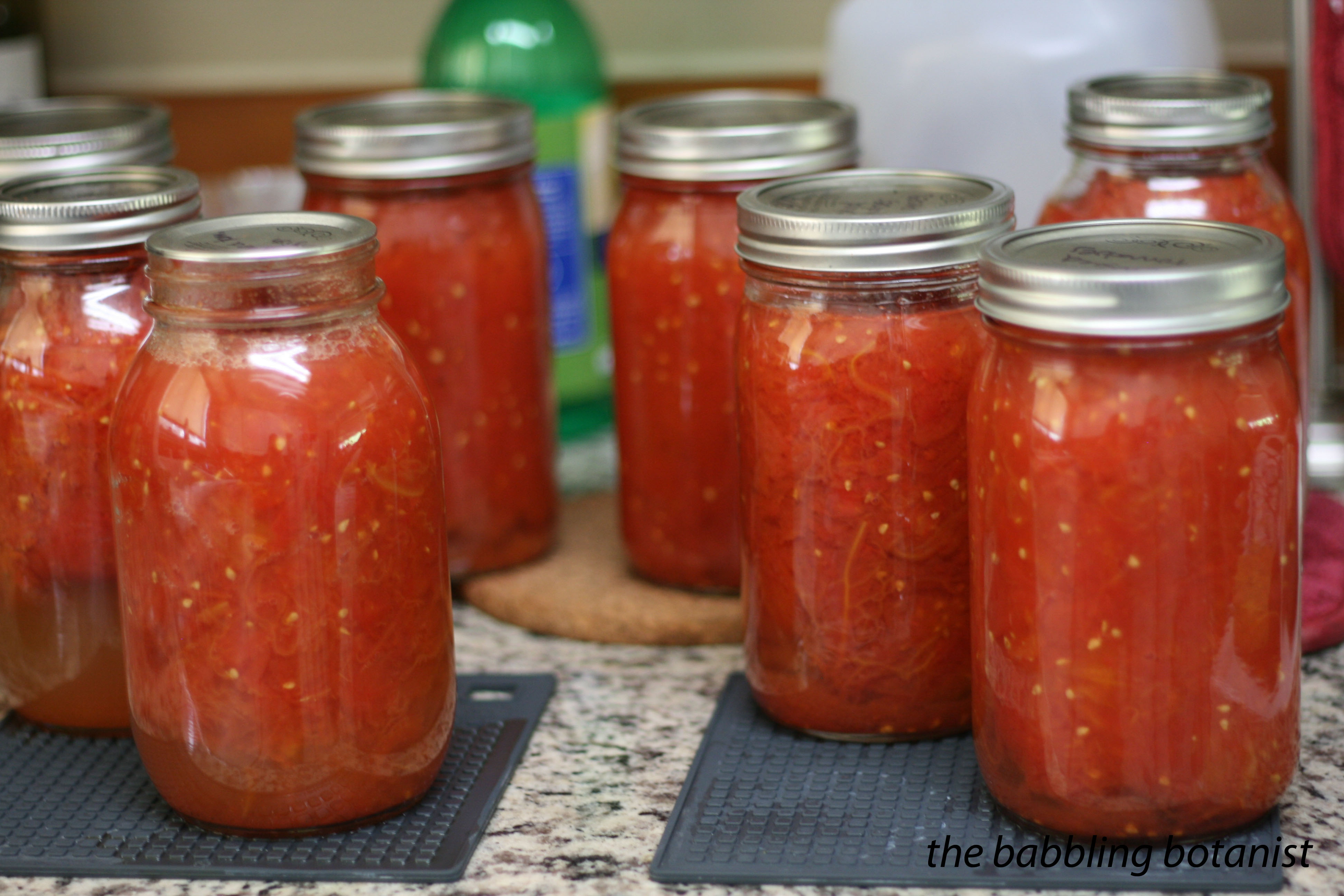
Tomatoes – 189 jars

IMG_4304 copy

8 quarts crushed tomatoes
35 pints tomato sauce
115 pints salsa
14 pints two in one barbecue sauce
9 pints ketchup
8 jars tomato “jam”

Yes…115 jars of salsa. I know, I know… I think about 65 went to me. This number makes me very very happy. Last year I had about 40, and I had a couple left when tomato season hit, so we should be golden. I was super stingy with gifting these so this year my family may get a jar or two… maybe. 😉 The only thing I kind of would have liked more of is just plain crushed tomatoes. They have so many versatile uses!

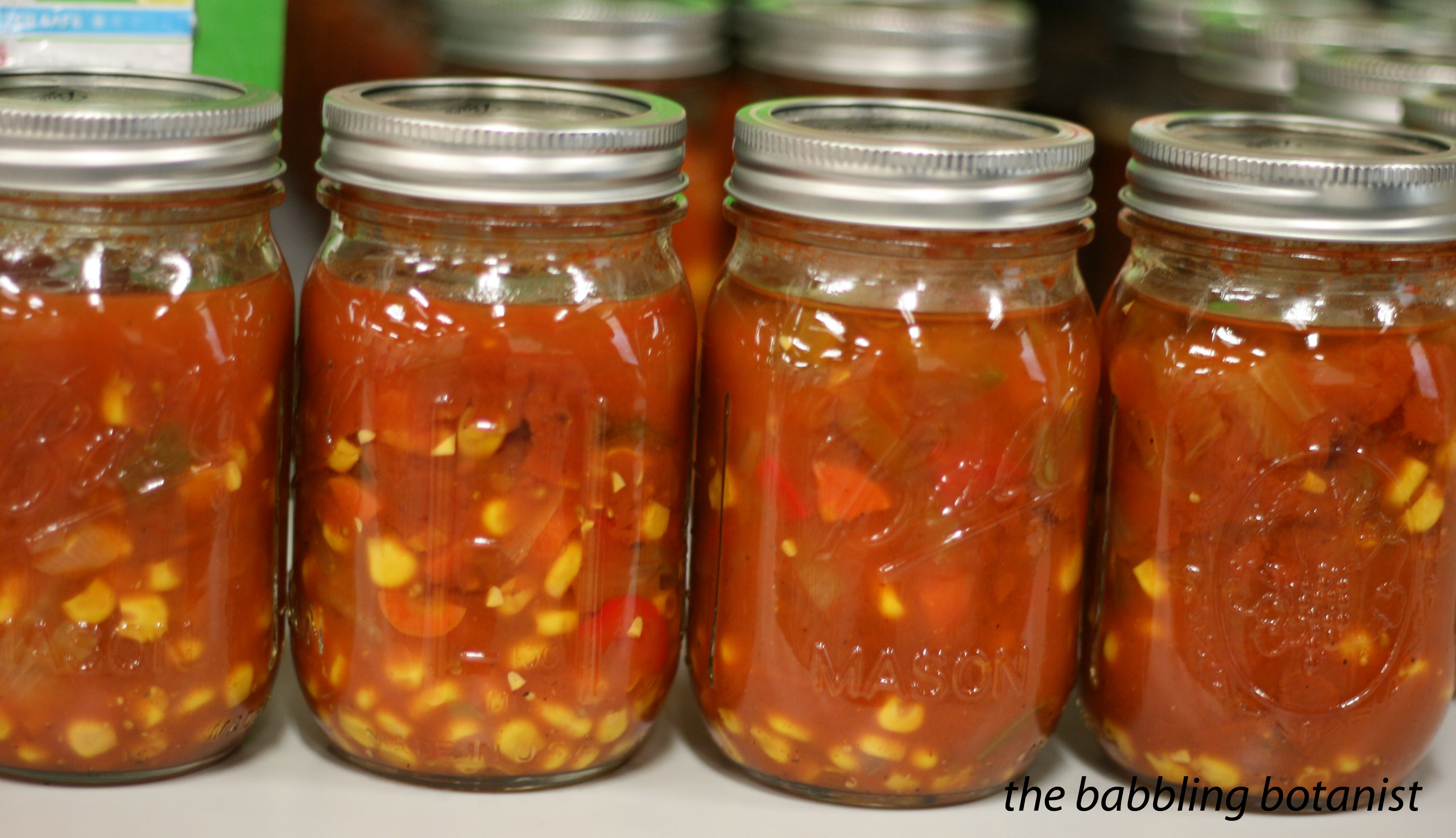
Pressure canning – 82 jars

IMG_2646 copy

22 half pints corn
38 half pints tuna
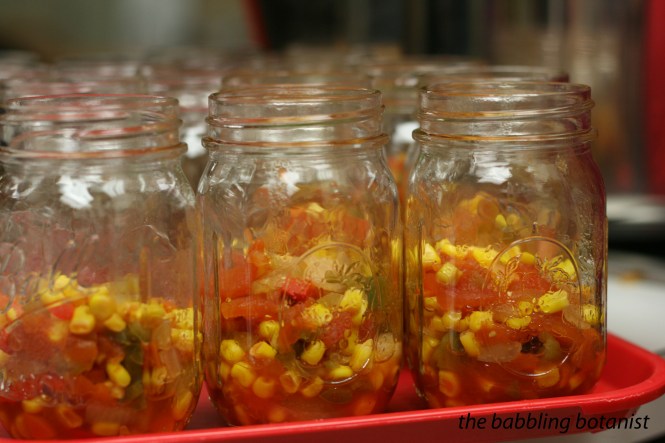
16 jars spicy tomato vegetable soup
6 pints chicken stock

I am pretty happy with my pressure canning additions to my pantry, and actually a little surprised I didn’t do more. But this winter I plan to do some more stock, dried beans, and other things not necessarily season dependent. Winter is a good time to stock up on chicken, beef or ham stock. Ya, very bad pun intended.

Of course this is just canning, I also froze and dehydrated a lot of things. All the berries I froze are already eaten sadly, I need a bigger freezer, but not the freezer jam and dehydrated goods.

How was your 2014 season? Anything you missed out on that you definitely are planning on for next year?

To conclude, I’d like to introduce a new series of posts I’m starting this winter entitled “Eat it!”, which will feature recipe ideas for using all the delicious things we preserve. Like many other preservation bloggers, I have a little less to talk about during the off season, and I think that talking about ways to use the things we preserve is just as important as how to preserve it. There is no point in putting up 500 jars of goodies if you ain’t gonna eat it! I hope to get creative with these and help you use up some of those items lingering in your pantry, and give you some ideas for things you might want to preserve next season.

Gifts from the Kitchen

If you love food preservation as much as I do, you’ve probably given some food related gifts to family and friends in the past. Mostly I’ve given people things like jams, jellies and pickled goods I’ve made, and decorated cutely as below, but there are so many other gifts that we can give from the kitchen! So, with the holiday season coming up, the Master Food Preservers offered a class called “Gifts from the Kitchen” offering some inspiration and ideas for gifts for the various people in your lives. Teaching this class was a blast and people really had a good time so I wanted to share some of the ideas here that we talked about, and hopefully inspire you to get thinking about some gifts you might like to make in the next month. I thought I would get this post up today in honour of “cyber Monday”, so that maybe we can also be thinking of some homemade gifts on this massive shopping day. Maybe you could make something to accompany or replace a purchased gift, and I’ll offer a couple ideas here to pair a purchased gift with a homemade one.

IMG_1510

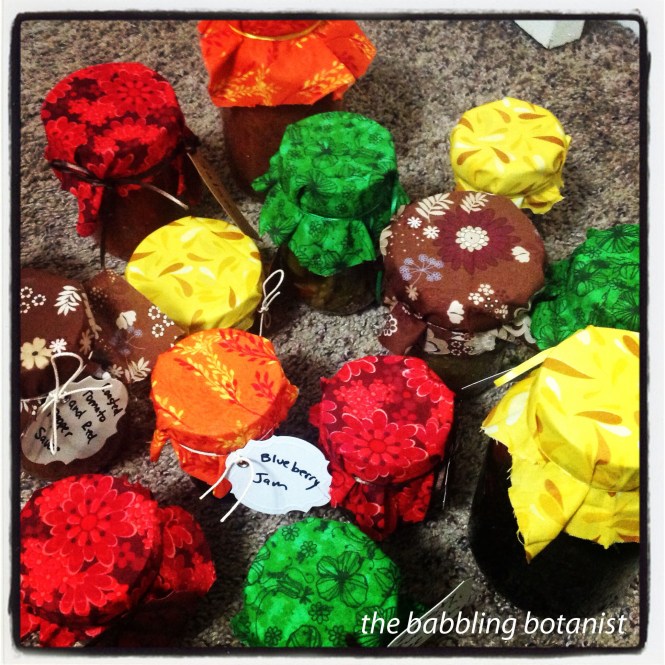
The most common gifts from the kitchen of course are canned goodies that you’ve made with love. I like to decorate them with little pieces of cloth, which are actually just quilting cloth squares or scraps from the craft store. Tie a cute ribbon around it and grab some cute tags, and presto gifto! However, when gifting preserved items there are a few other things you should remember. Of course always make sure you are following safe, tested recipes. If you want to play with things not tested that’s your own business, but always be safe when gifting items. It’s a nice touch to add an ingredient list and any information you think people may be interested in knowing, such as when the food was canned, how it was canned, whether it’s low sugar, things like that. It can be nice to put your initials on there or something too so people remember who it’s from (I know people trust my canned goods but maybe not everyone’s). If you want to give canned gifts but don’t have anything on hand, we talked about a few different things that you can still preserve now, which are pictured below. These include, pepper jellies, citrus jellies, jams or marmalade, cranberry jams or jellies (or check out the cranberry mustard I just posted), apple butters and applesauce. The green tomatoes are probably done for most of you now, but green tomato salsa is also an option if you still have some kicking around. There are also a number of other mustard recipes in the Ball Complete Book of Home Preserving that look really intriguing and can be prepared at basically any time of year, so I plan to try out some more of those soon too. I think it would be really nice to give a couple different ones. The 4 oz jars get harder to find in some areas this time of year, but luckily they are still online here for about the same price.

IMG_4812 copy

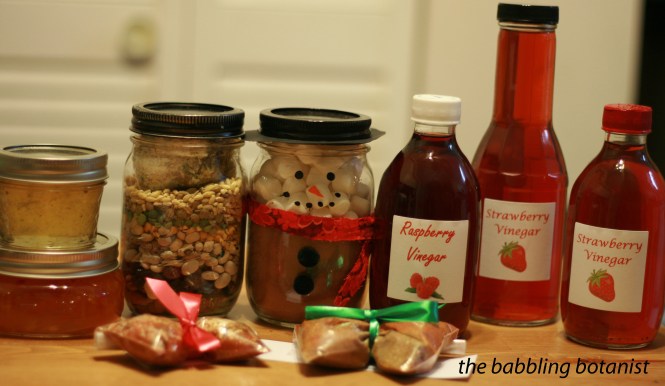
Great! What else can we gift? Here is a sampling of some of the things we talked about or made in class, and I’ll talk in a bit more detail below about each of these. Here we have, from left to right, lime jelly and pepper jelly, a dry bean soup mix, a snowman of hot cocoa, flavoured vinegars and two different spice rubs in the front.

IMG_4791 copy

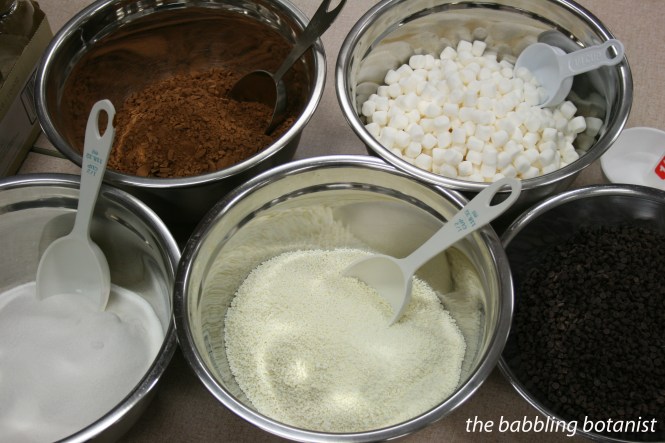
We had a number of stations where people got to make items to take home, and my station was hot cocoa. You had a couple options on how to arrange your cocoa into the jar, but if you search the internet there are a ton of other ways to do it too, and they are so cute and creative!

IMG_4731 copy

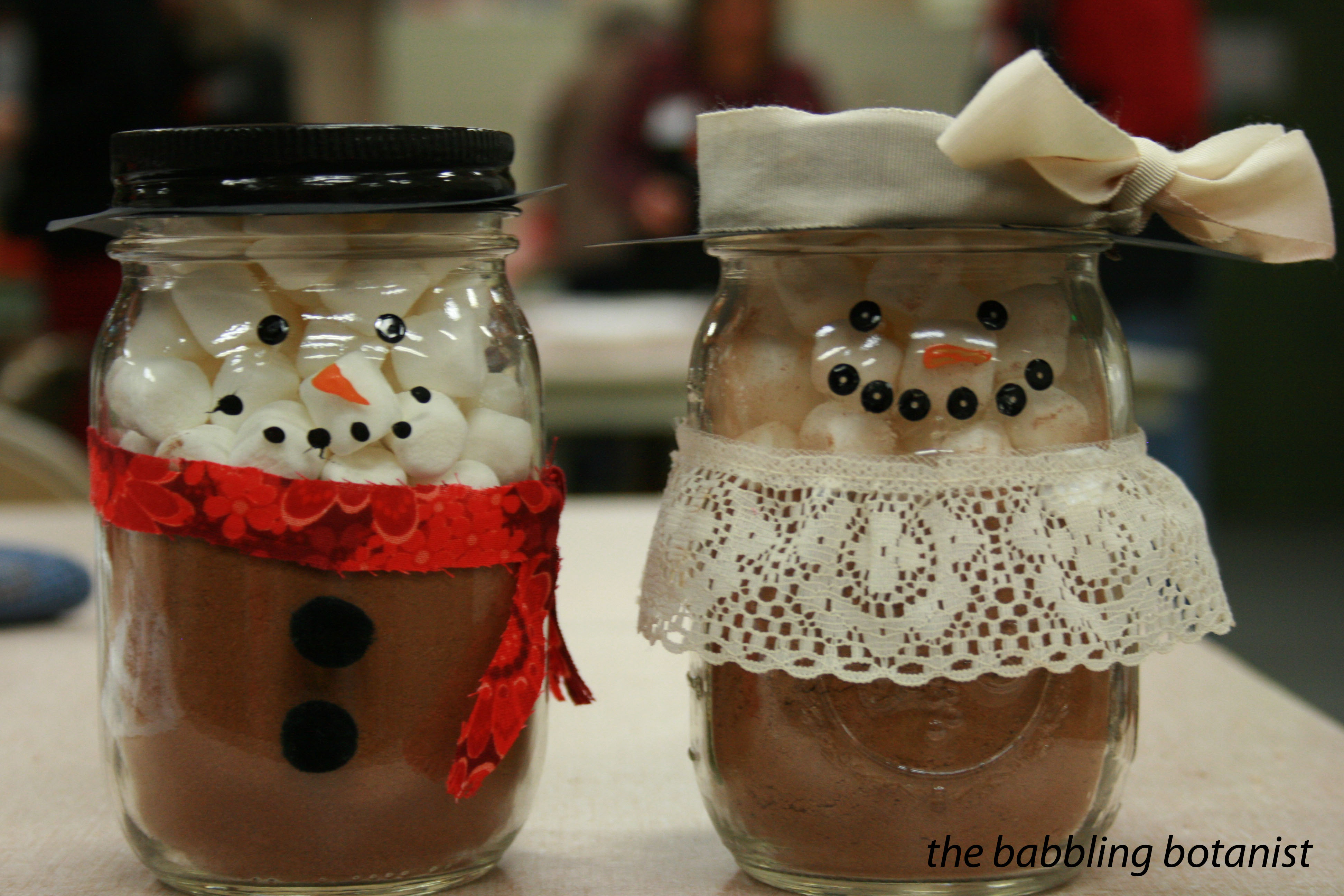
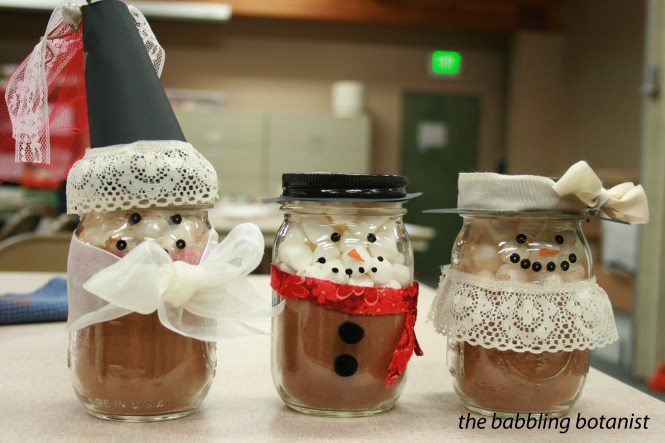
I did mine as a snowman (the guy on the left). I got this idea from my nana, who made them a number of years ago for Christmas gifts, but I made mine a little differently, using just one canning jar. All I did for mine was mix 1 part cocoa powder to 2 parts sugar, but you can also follow other recipes with dried milk in them as well. The one we did in class was 1/2 cup cocoa powder, 1/2 cup dried milk, 1/2 cup sugar, pinch of salt, 1/4 cup chocolate chips and 1/4 cup (or to fill the jar) mini marshmallows. Then, make a head out of marshmallows and decorate the jar with a scarf, face and hat made of cut out construction paper and a painted band and lid. Adorable. One of the girls in the class made this girl snowman who became buddies with mine.

IMG_4762 copy

Get creative and have fun with it! All I did was spray paint lids and bands black, draw on a face and glue on some buttons and a scarf and he turned out adorable.

IMG_4765 copy

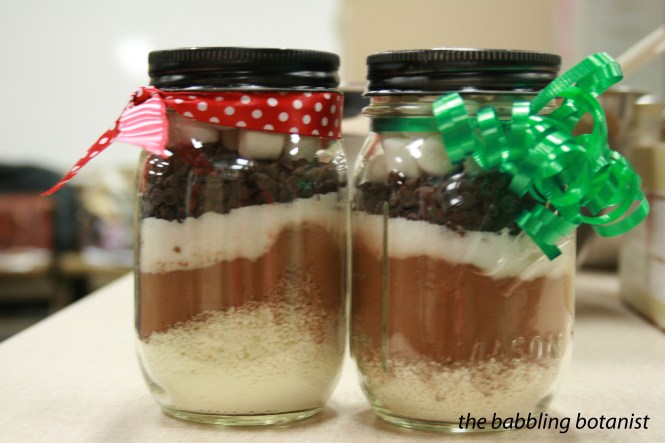
Alternatively, you can make some cute layers in the jar or bag you put it in.

IMG_4740 copy

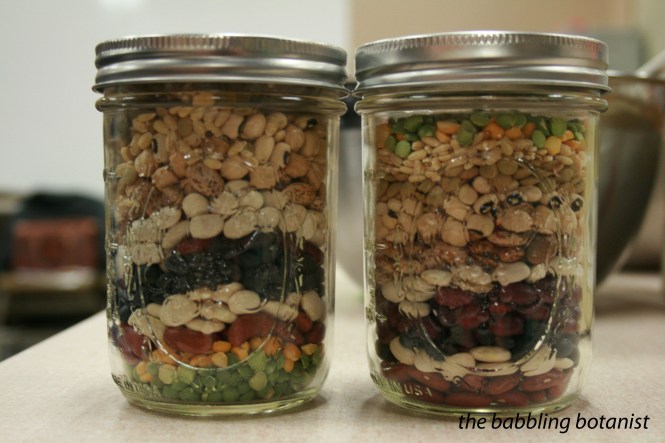
Another station that we did was a dried soup mix. Simply layer a variety of beans in a jar. We did equal parts kidney beans, white lima beans, black beans, garbanzo beans, pinto beans, great northern beans, small red beans, black eyed peas, barley, and then half as much of the split peas and lentils. To fit in one pint jar, you need 1/4 cup of each (about 1/8 for the lentils and split peas). We then also included a spice packet, and here’s an example of what it could contain: 1/4 cup minced dried onion, 2 tbsp dried celery (we dried our own to be even more homemade), 1 tbsp bouillon (vegetable, beef, or chicken), 2 tsp dried basil, 1 tsp dried oregano, 1 tsp ground red pepper, 1 bay leaf, 1 tsp salt, 1/2 tsp black pepper.

IMG_4724

If giving a gift like this, it would also be nice to include some sort of recipe on how you would recommend preparing the soup. Including a recipe such as this one would work great. I prepared the spice packet to match the spices in this soup, but adjust this however you enjoy your bean soup, and share a family recipe or something. Additionally, a nice pairing to a gift like this could be your favourite cookbook. They turn out quite pretty when layered in the jars rather than blended.

IMG_4744 copy

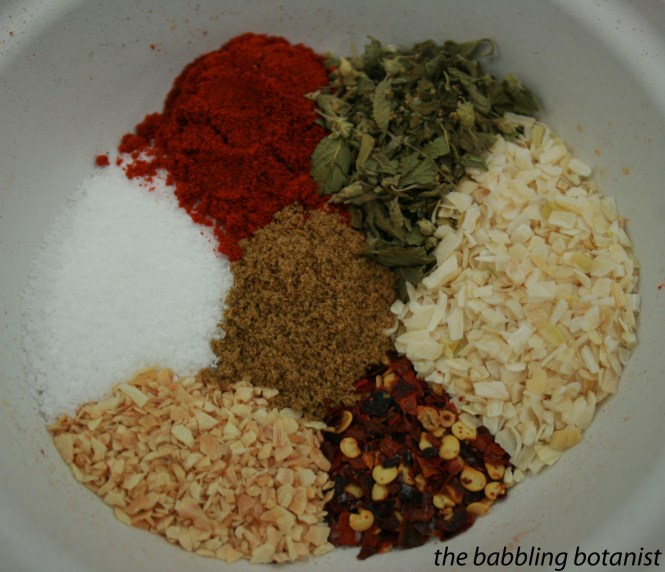
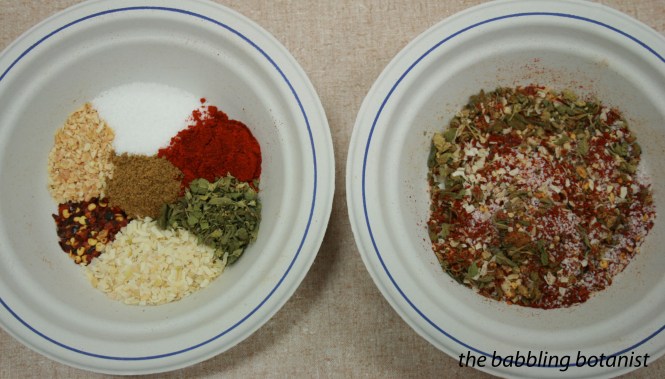
Another station we did was preparing spice rubs. The one pictured is a steak rub adapted from Family Circle Magazine (November 2012). It contains 1 tbsp kosher salt, 2 tsp smoked paprika, 2 tsp dried oregano, 1.5 tsp dried minced onion, 1 tsp dried minced garlic, 1/2 tsp ground cumin, 1/2 tsp red pepper flakes.

IMG_4759

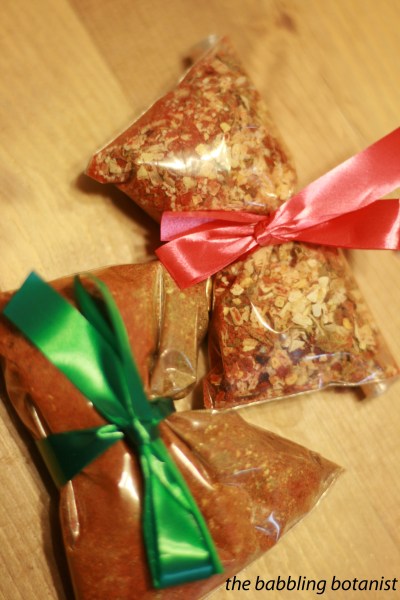
Simply stir all the ingredients together and package it in a cute way, such as in a little baggie or jar with a bow. Be sure to include the ingredient list, and perhaps a suggested usage. For example, Steak rub: rub 1 tsp spice mix onto both sides of a 1.5 pound steak and grill or broil as desired. A great idea for gifting this might be give it to someone who loves grilling, and include a book on grilling along with the homemade spice rubs.

IMG_4757 copy

Another rub that we did that is really delicious is a lemon cumin rub. It contained: 1/4 cup ground cumin, 2 tbsp grated lemon peel, 2 tbsp paprika, 2 tbsp ground cardamom, 1 tbsp ground cinnamon, 1 tbsp coarse ground black pepper, 1 tbsp cayenne pepper and 2 tbsp dried oregano. This rub is great on chicken. To prepare, dip meat in a mixture of 1 tbsp brown sugar to 2 tbsp water, then apply 1 tbsp of the rub. Let it stand in the fridge for 4-6 hours, then grill. If you are going to do spice rubs though, it can get a little spendy, so buying in bulk is always a great idea. Use home dried herbs too where you can for an added homemade touch. Some things you won’t have though, and they can be hard to find cheap (or at all) so I really like to get things from Mountain Rose Herbs. They have a huge herb selection and they also have bulk discounts if you are buying a ton. They also have some really fun salts and peppers which could also by themselves make fun gifts. Fill a few different 4 oz or 8 oz jars with a variety of different salts and peppers and decorate them for someone who loves to cook.

IMG_4797 copy

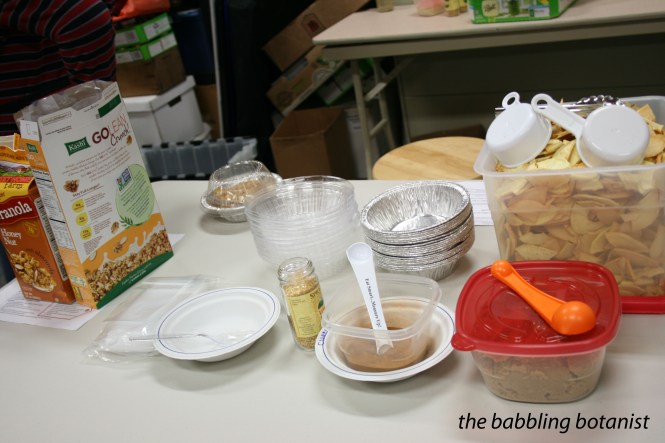
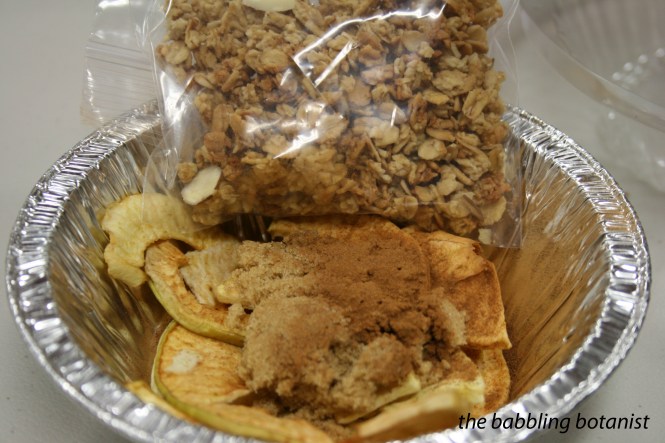
The final station was an apple crumble recipe from The Dehydrator Bible (which itself is a great gift). This is a great gift for a camper and includes 1/2 cup dried apple slices (dry your own at home in your dehydrator), 1 tbsp brown sugar, 1/4 tsp dried lemon zest (optional), 1/4 tsp ground cinnamon, 1/2 cup crumbled oatmeal cookie (or we used granola cereal). Place the oatmeal in one bag and the rest in another, and place in a foil tin for campfire baking. This one only stores well for a month or so, so keep that in mind. To include serving instructions, add a tag that says to serve you will add 3/4 cup of water to the apple mixture, and let stand for 15 minutes. Cook for about 10 minutes over the fire (or on the stove on low) and once apple reach the desired softness, add the cookie crumble and serve. 

IMG_4727 copy

All prepared in its tin.

IMG_4729 copy

Those are all the gifts from the kitchen that we made in class, but there are numerous other things that you could gift. One example I posted earlier was flavoured vinegar. A lovely pairing to this would be a salad dressing mixer. I have a very similar one to the one linked here (couldn’t find the exact one) and I love it. When I try and mix salad dressing by hand I often find I get too much oil onto my salad and not enough vinegar, so this is one of those silly toys I once bought myself. There are also some fun bottles with recipes on them, but I can’t vouch for the recipes so much because I always make my own with a lot less sugar. 

IMG_4798 copy

Another thing I did last year to give some of my favourite things (with a jar theme of course) was to give people my favourite teas in a ball jar. Pick up some different loose leaf teas from Mountain Rose Herbs, or your favourite local tea shop, and perhaps include a little tea ball with it. OK, that’s all I have for now, and I need to get to bed, so I hope you are feeling inspired! I just wanted to end with a couple of final thoughts for purchasable gifts for the culinarily (ya that’s not a word) inclined people in your life. I really enjoy The Flavor Bible, which is a book full of tons of inspiring flavor combinations. It’s not recipes, but basically a fun index of the best flavor combinations for every type of food out there. It’s inspired a number of great recipes for me and was a great birthday gift last year. Of course for the canners in your life I am always a fan of the classics for safe and tested recipes, which are also of course delicious and amazing: The Ball Complete Book of Home Preserving, or the smaller Ball Blue Book. Or the newly released (I just got it finally yay!) So Easy to Preserve. Last but not least, my second favourite way to preserve is dehydrating, so I would recommend both dehydrators and The Dehydrator Bible as excellent gifts. Happy gifting, thanks for reading, and enjoy your cyber Monday! Remember as always if you purchase something from one of my links I’ll receive a small amount of commission in return (see “About the Blogger” for more info), but as always I only link to products I love and truly recommend so I thank you in advance if you decide to invest in any of these items.

Cranberry Mustard

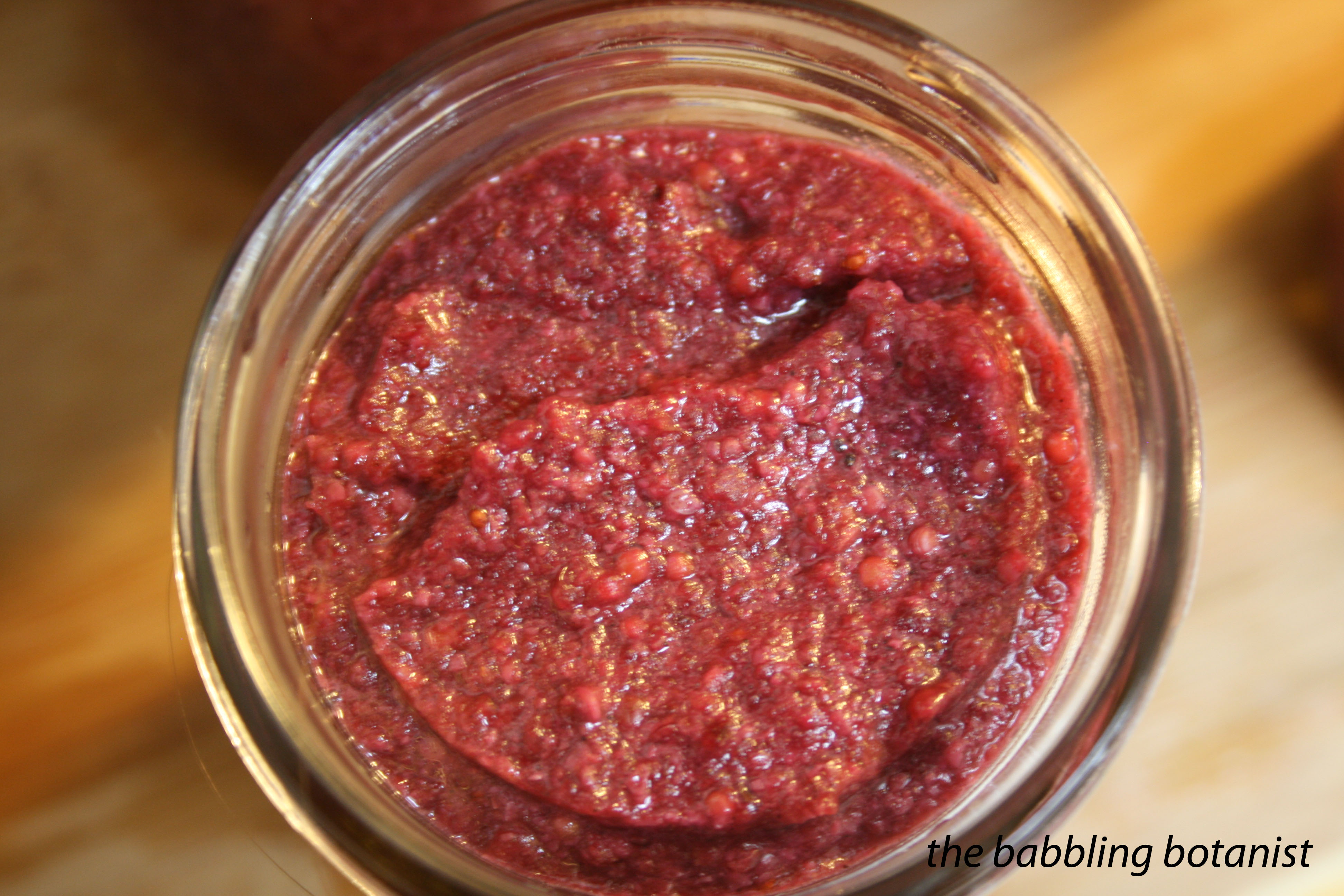
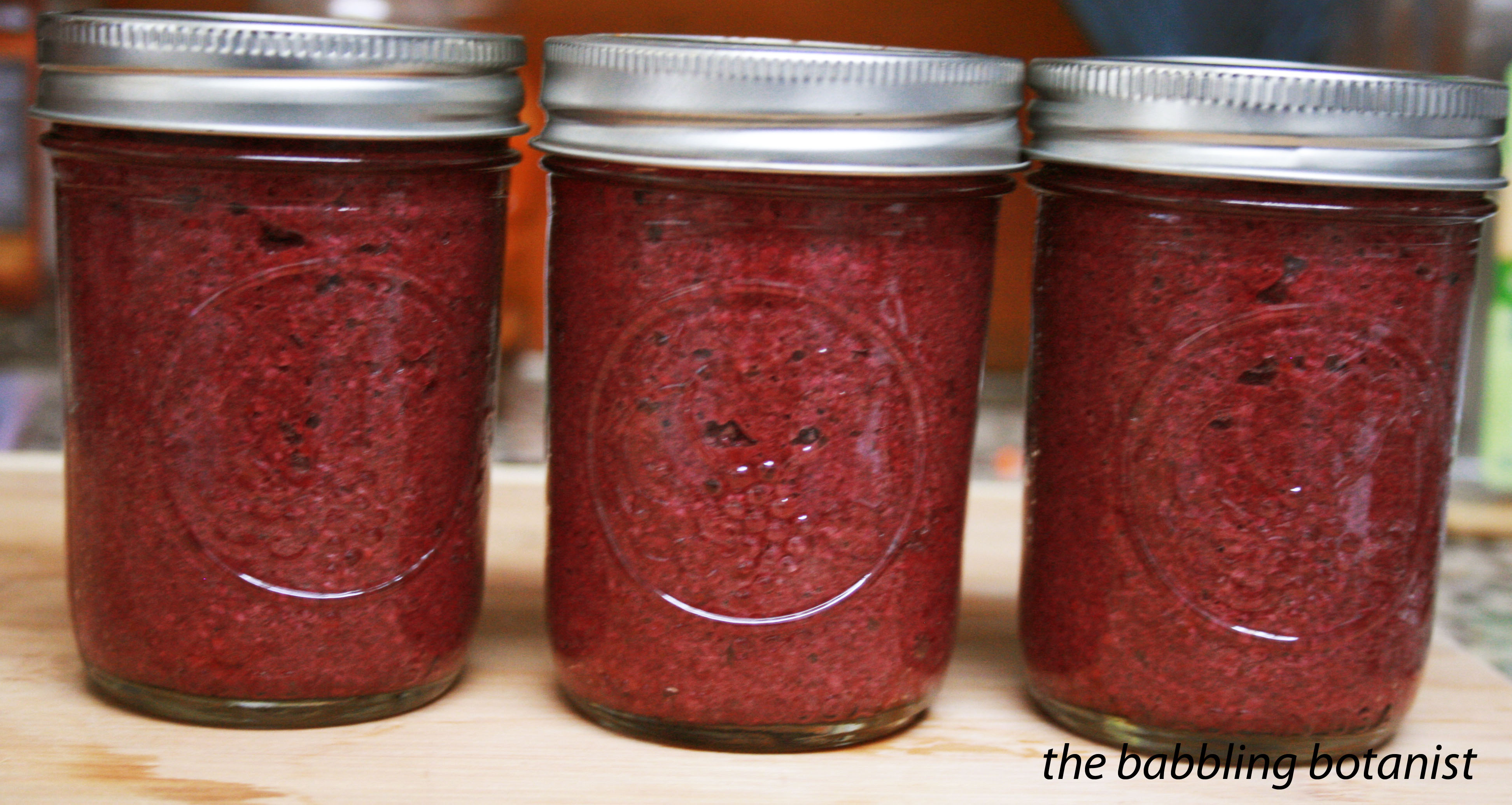
Do you have a bunch of cranberries left over from your thanksgiving feast? This cranberry mustard would be a really simple and tasty way to use them up! I bought a few pounds of local cranberries last week at the final outdoor farmers market of the season, and made a bunch of homemade cranberry juice, but I also wanted to try something new with them. As usual, I popped open my Ball Complete Book of Home Preserving and found this cranberry mustard recipe that looked super intriguing. They also have a cranberry ketchup by the way, if you have the book. Look at how gorgeous it is! Ball recommends it on ham, so that’s my first plan for it.  I also brought it as a little gift to our hostess for thanksgiving (maybe a good idea for Christmas yes? )

IMG_4890 copy

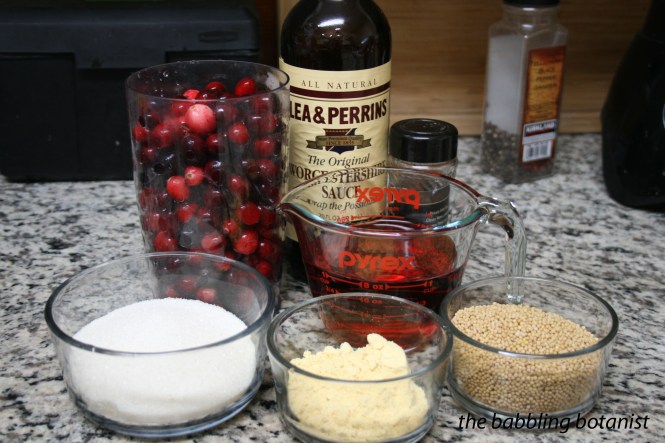
Ingredients:
1 cup red wine vinegar
2/3 cup yellow mustard seeds
1 cup water
1 tbsp Worcestershire sauce
2 3/4 cups cranberries
1/4 cup dry mustard
3/4 cup granulated sugar (or to taste)
2.5 tsp ground allspice

IMG_4856 copy

Here’s how I made it:

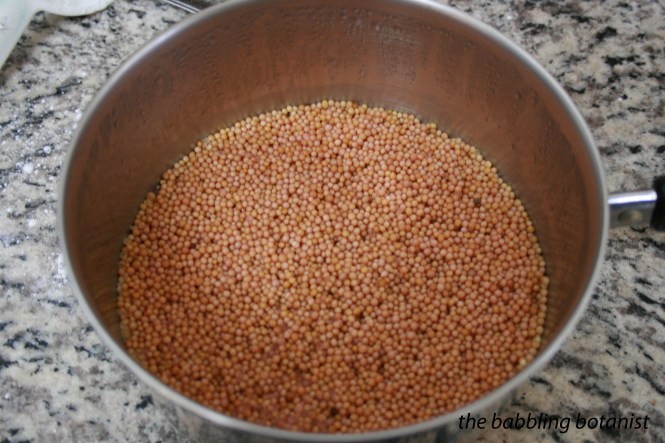
The first thing you need to do is soak the mustard seeds in the vinegar. Bring the vinegar to a boil, remove from heat, add the mustard seeds, cover and let it sit until all the vinegar is absorbed – about an hour and a half.

IMG_4863 copy

Prepare the canner, jars and lids. This yields about 7-8 4 oz jars, or 4 half pints. I ended up with 4 half pints a bit left over.

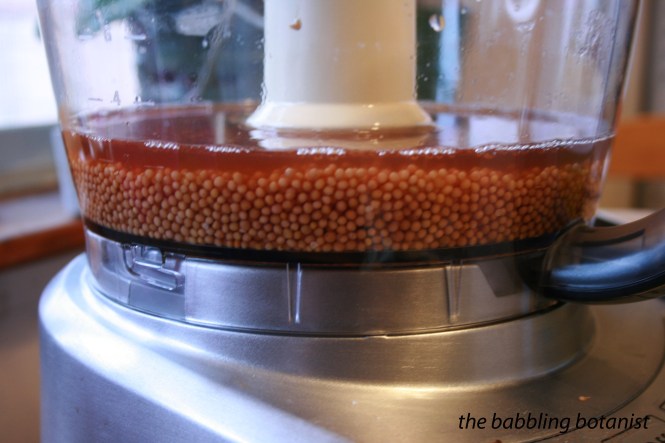
Dump the vinegar/mustard seed mixture into your food processor (I have this one) and add the water and Worcestershire sauce.

IMG_4867 copy

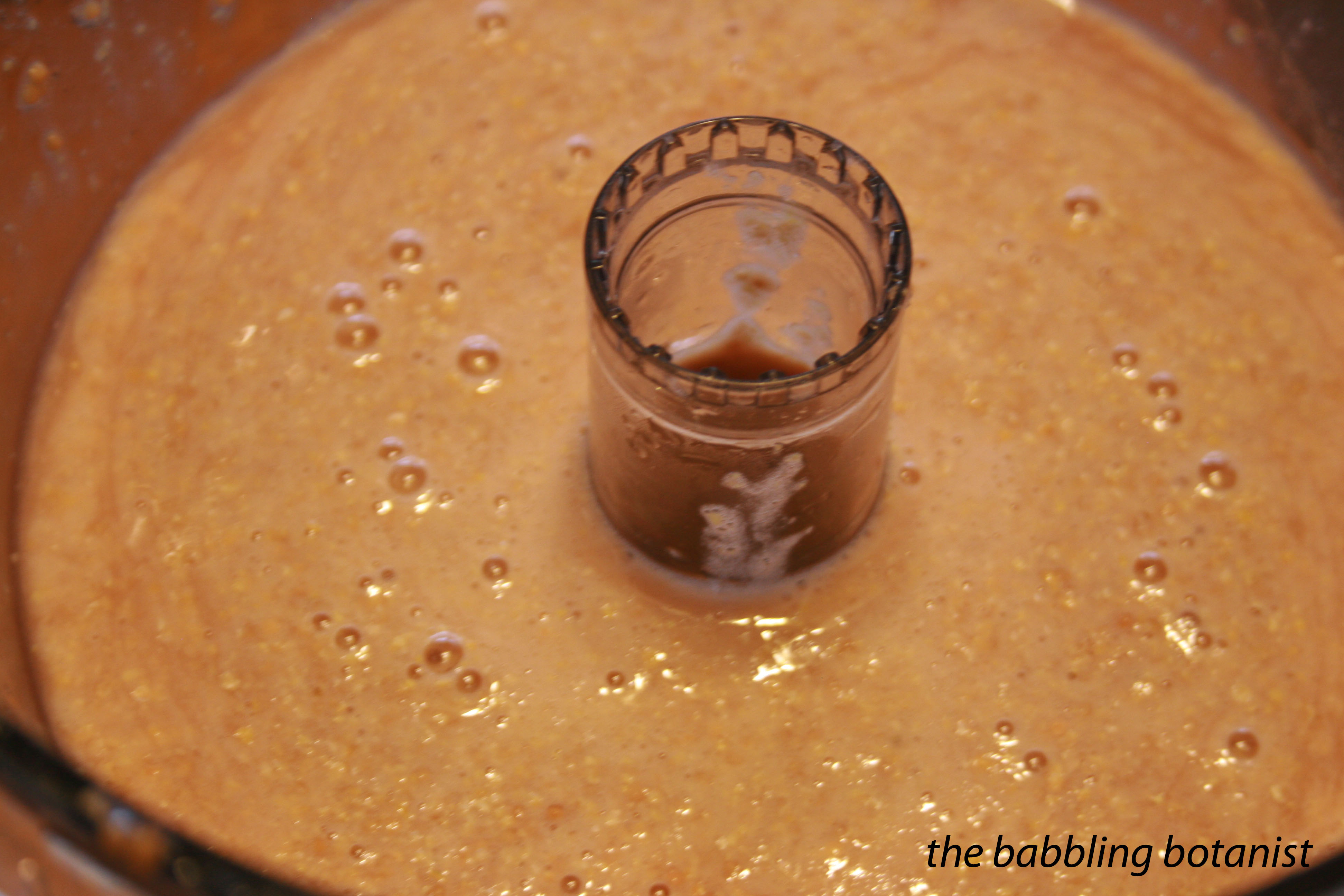
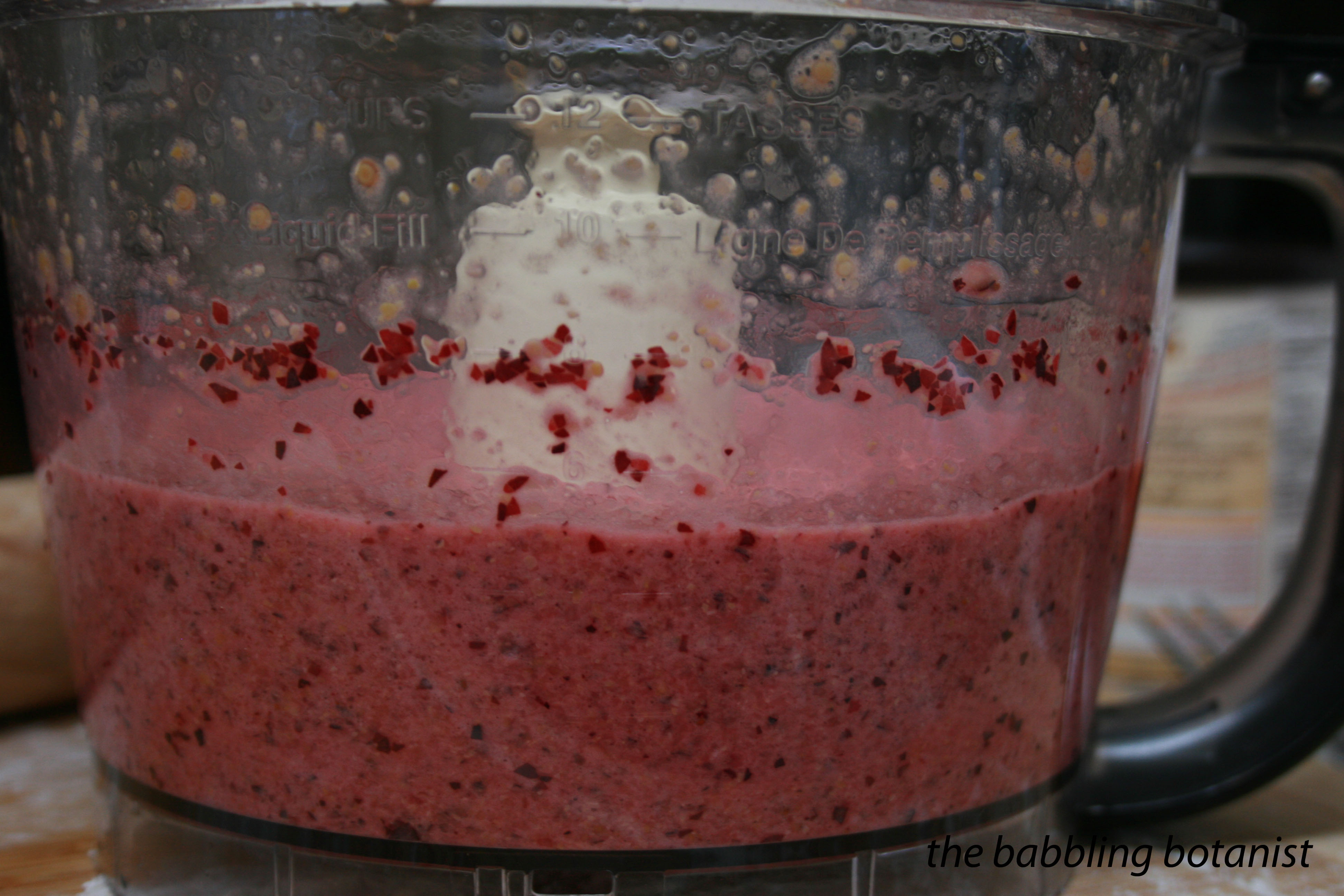
Blend until the seeds are mostly crushed up but still retain a grainy texture. You can adjust the blended-ness to your preference.

IMG_4869 copy

Then add the cranberries and blend again.

IMG_4871 copy

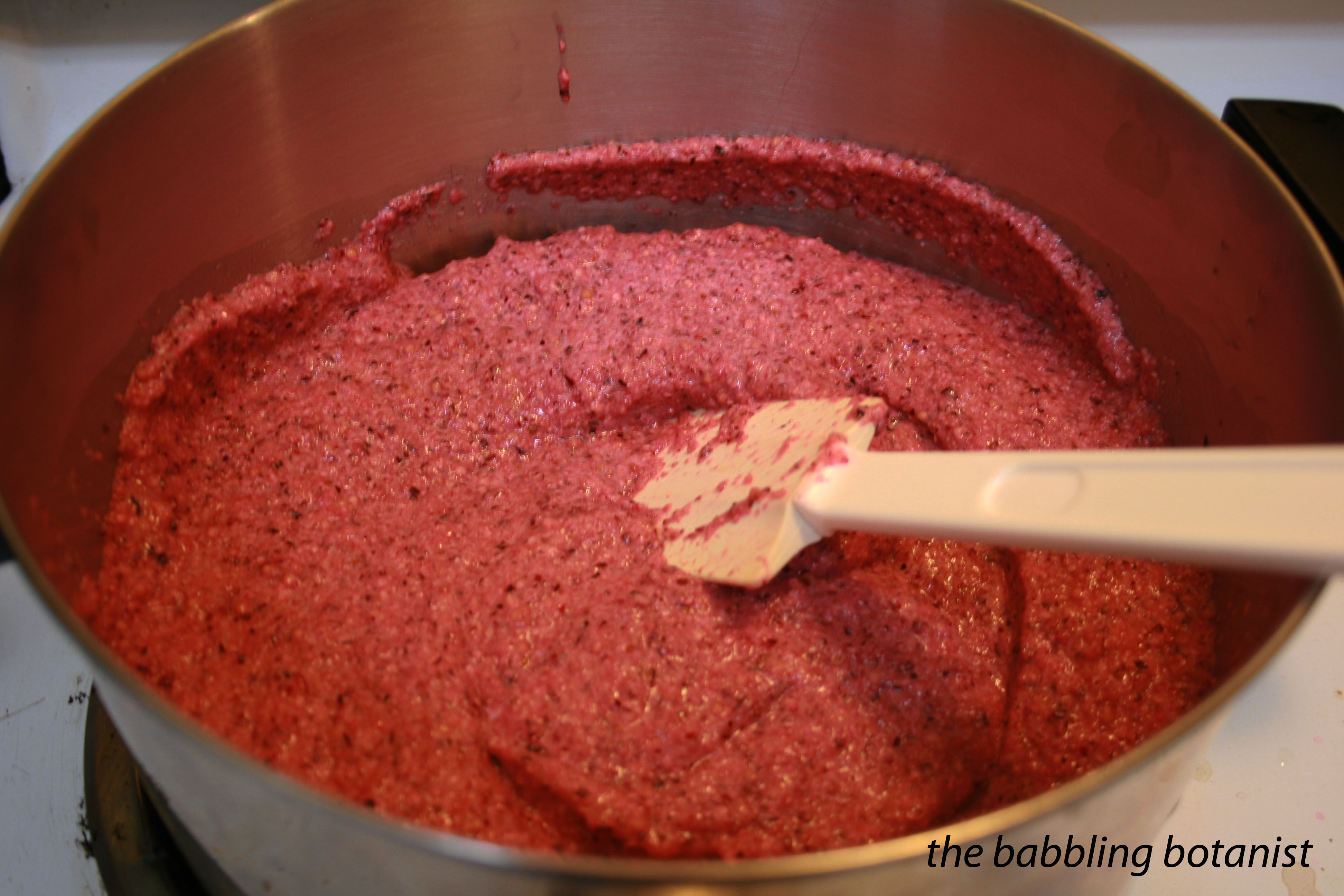
Scoop the mixture into a pot and bring it to a boil over medium heat, stirring constantly. Reduce the heat and boil gently. Add the ground mustard, sugar, and allspice. If you’d like to do less or no sugar, taste it before adding it and see what you think. I actually thought it tasted great before I added the sugar and allspice. At this point Ball said to boil until the mixture is reduced by a third, but mine was already crazy thick so I boiled for about 5 minutes and called it good.

IMG_4877 copy

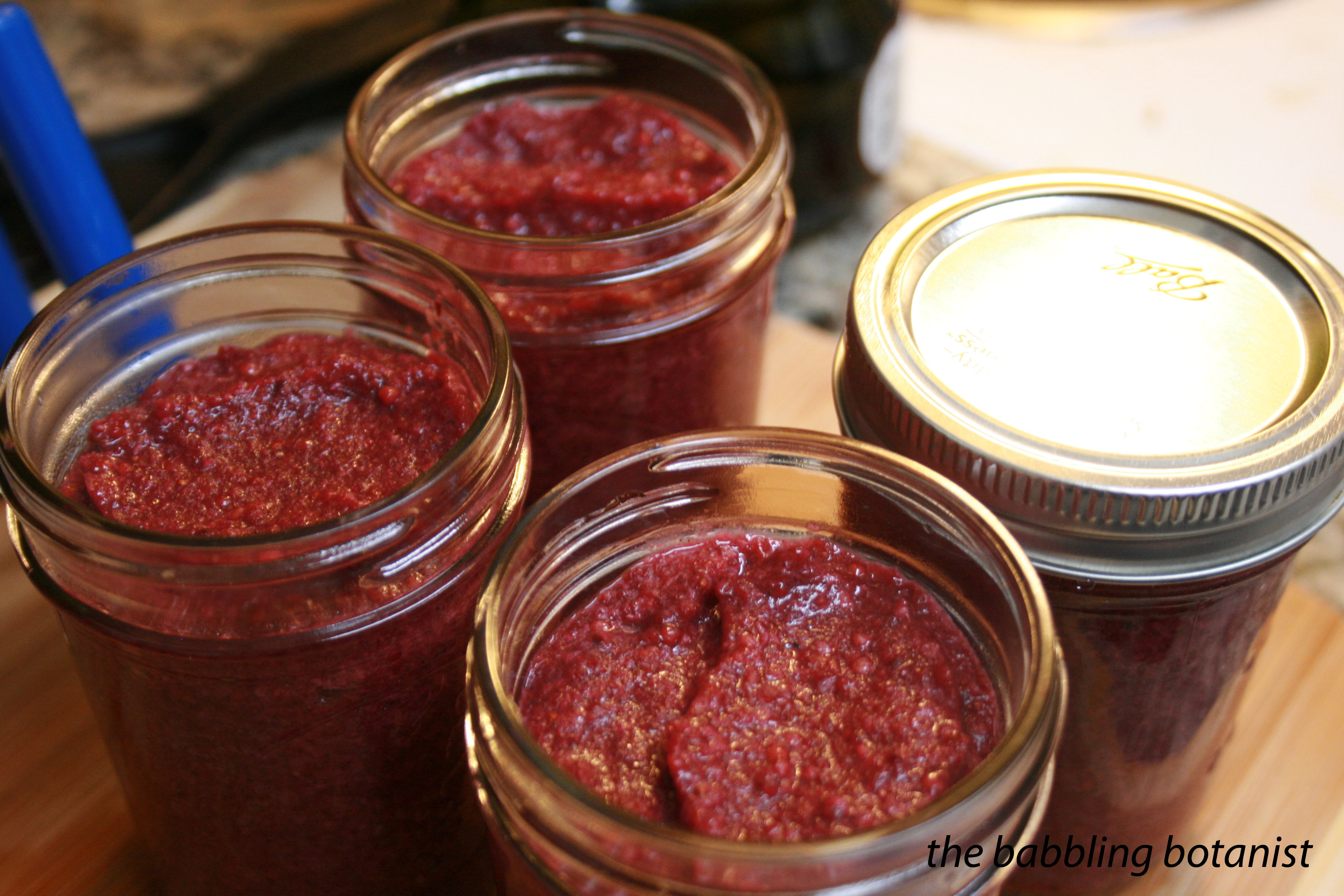
Fill your hot jars with mustard, leaving a quarter inch headspace. Wipe rims, apply lids and tighten finger tip tight. Place the jars in a boiling water bath canner covered by at least 1-2 inches of water. Process for 10 minutes once the water is boiling.

IMG_4899 copy

After the 10 minutes, turn off the heat, remove the canner lid, wait 5 minutes and remove the jars to a hot pad or towel. Cool 12-24 hours, remove bands, wipe, label, and store.

IMG_4907 copy

*this post contains affiliate links, please see the “About the Blogger” page for more information

Flavoured Vinegar

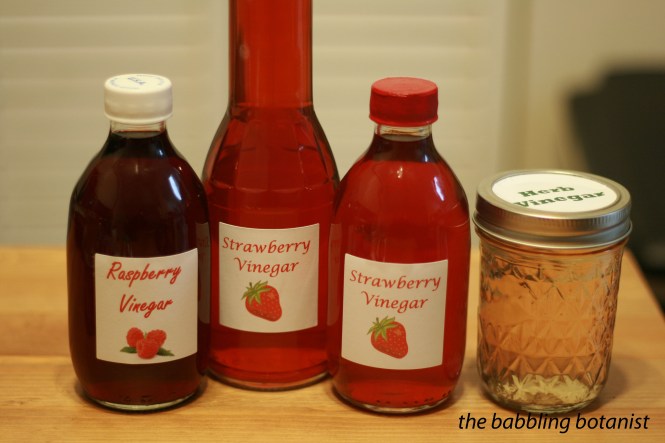
Have you ever bought a flavoured vinegar from the grocery store? A delicious herb vinegar, or perhaps a fruity or berry vinegar? They are crazy expensive compared to buying a gallon jug of vinegar and making your own at home. Perhaps they aren’t even available in the grocery store you typically frequent. Even if this isn’t something you’d necessarily typically buy, I bet you would find many uses for them, and they make a lovely gift. Flavoured vinegars make delicious salad dressings, marinades and sauces and are a great use of excess herbs in the garden too. I just picked a ton of sage, dill, and rosemary because it got way out of hand in my garden and made an herb vinegar from it. It’s really quite nice! I wish I still had oregano and basil too! Flavoured vinegars are simply made from soaking fruit or herbs in vinegar until they reach the desired strength of flavour. The OSU extension publication on this topic is great, SP 50-736, and here I’ll show some pictures of the ones I’ve made so far – herb, strawberry and raspberry. Some of these things are off season, but you can still use frozen fruit, things that are still in season, like citrus and cranberries, garlic and peppers, or perhaps you grow herbs inside, still have some growing, or have some you dried or froze. The options are endless, so let’s get started!

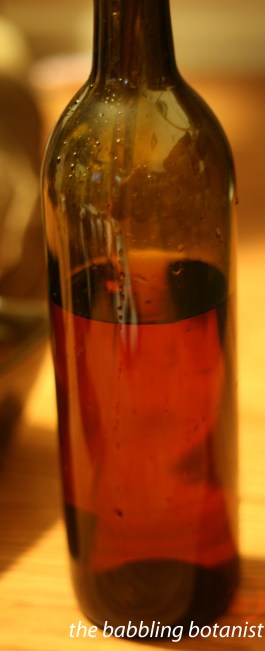
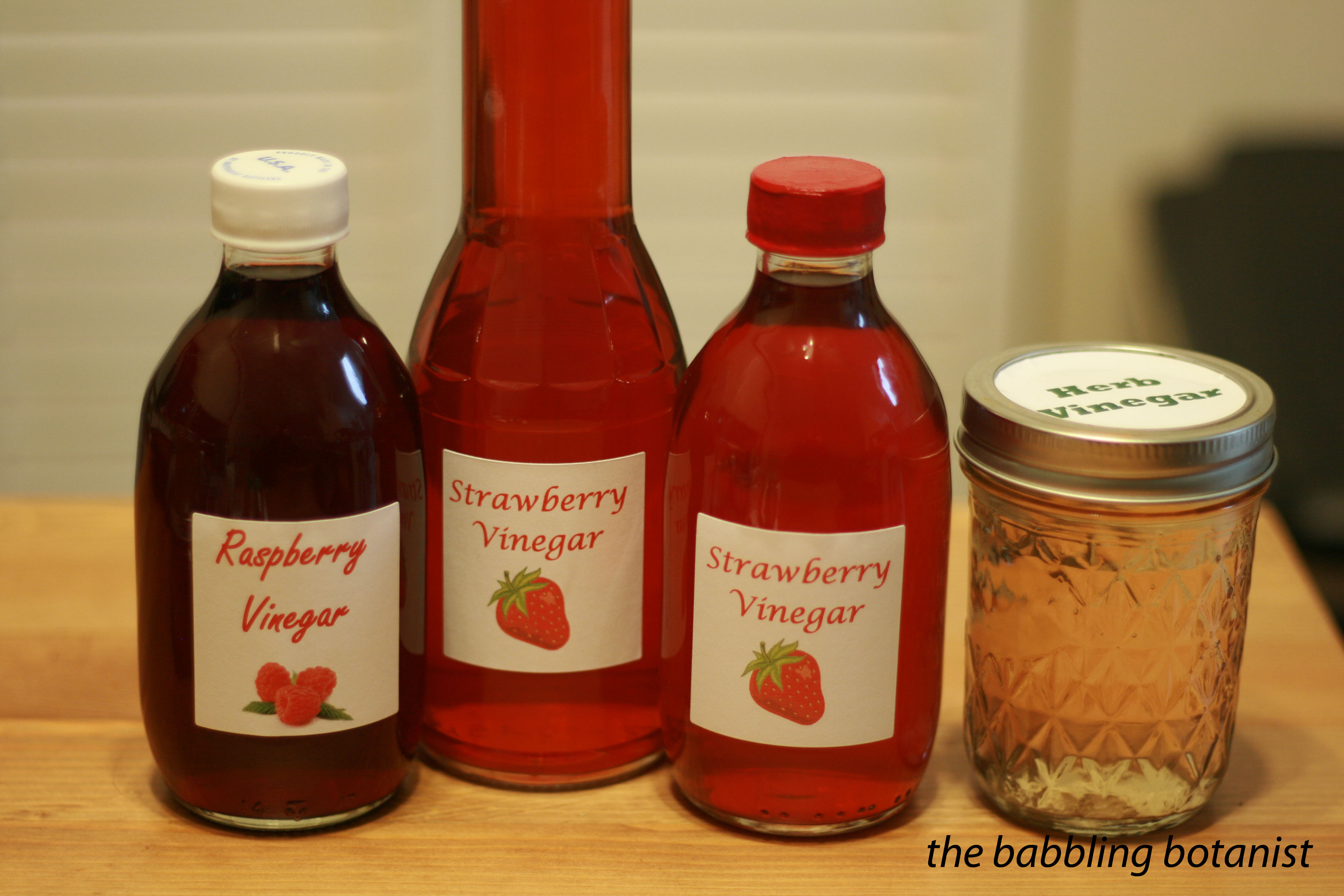
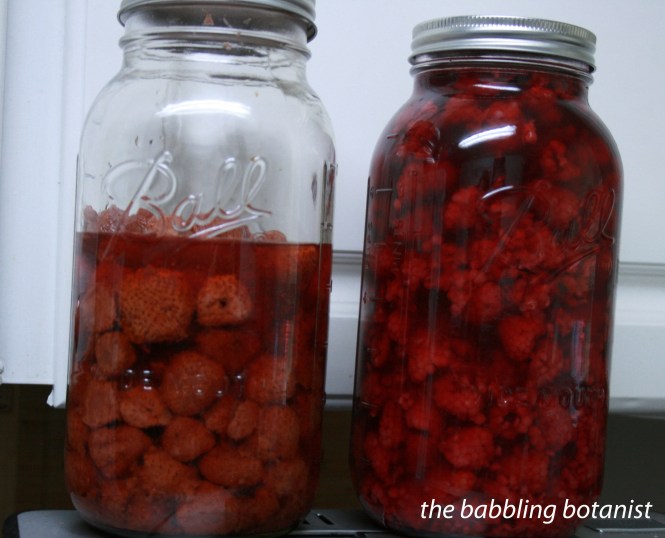
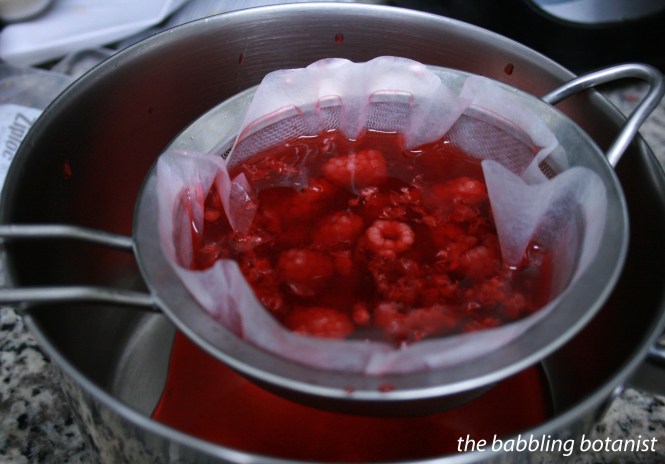
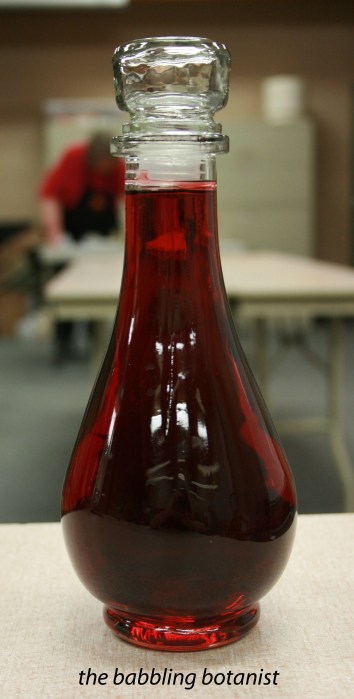
Here are my strawberry and raspberry vinegars on the day I was straining them. Such a beautiful red colour!! Strawberry one is partially poured off to strain.

IMG_4704

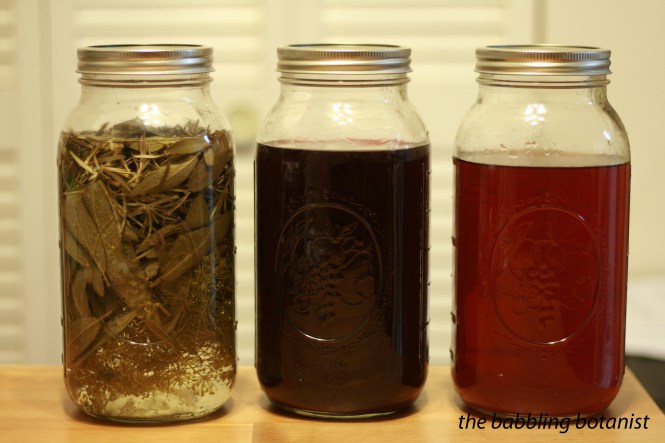
For making flavoured vinegar, the easiest thing to use is just a quart or half gallon canning jar. Any glass or food grade plastic container will do though. Wash the jars and sterilize them by boiling for ten minutes. Select whatever type of vinegar you’d like to use and buy it in bulk by the gallon. I typically just use white vinegar, but white wine vinegar is very nice as well, or apple cider. Or go ahead and get crazy and mix vinegars together. I remember when we made them in Master Food Preserver class Janice saying that flavoured vinegars are awesome because there are basically no rules. It’s certainly much more true than canning. Keep things sanitized and clean but otherwise you can get creative.

For flavouring your vinegar, you’ll use herbs, fruits, or vegetables. For herbs you want a few sprigs of fresh herb per pint. Wash, pat dry, add to the jar and cover with vinegar. If using dried, use 3 tablespoons of herbs per pint of vinegar. For fruits you can use fresh or frozen and basically just fill your jar about 2/3 or so full with rinsed fruit and fill the jar to cover with vinegar. You want about a 1:1 ratio of fruit to the vinegar covering it. Feel free to add extra spices, and get creative. Vegetables, such as peppers, onions and garlic can also be used to flavour vinegar. Get creative and have fun. Basically fill your jar and let them sit.

IMG_4788 copy

Leave your vinegar alone for at least a couple of weeks. Three or four weeks is enough to achieve a nice flavour, but longer isn’t going to hurt anything. I made my strawberry one in May and didn’t get around to straining it until November. It’s dang delicious. Basically you can strain it whenever you taste it and are happy with the flavour. If it gets too strong, simply dilute it down with more of the vinegar you had used to make it in the first place.

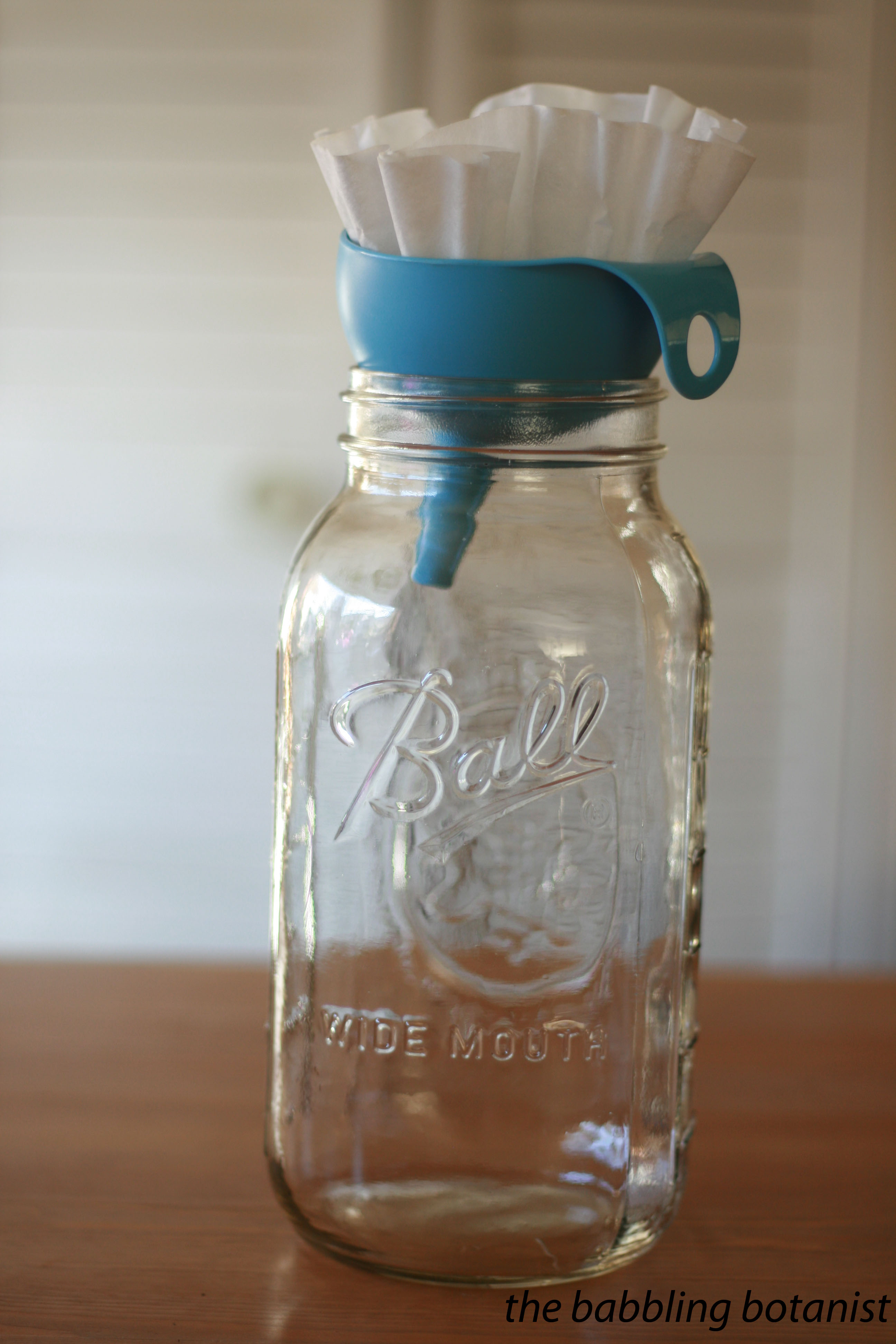
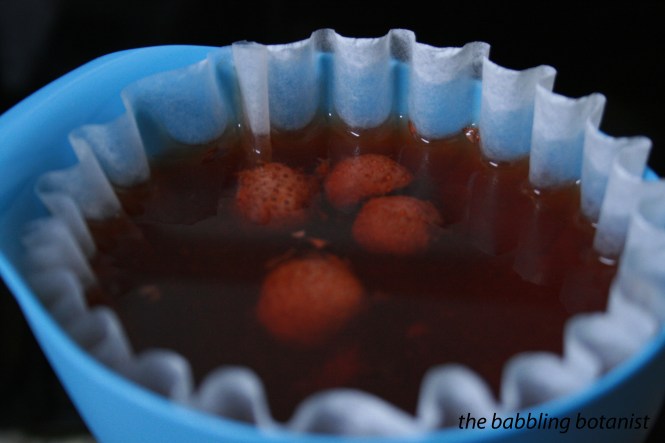
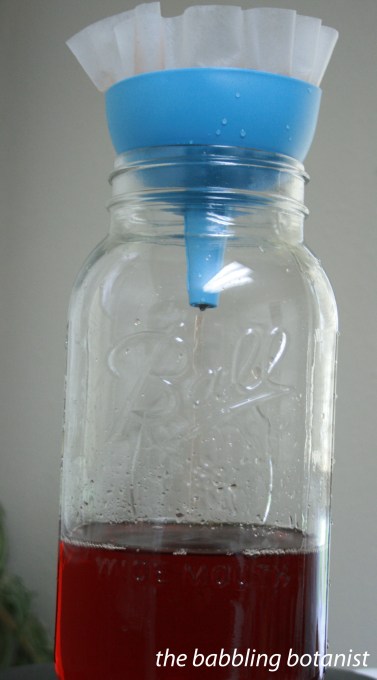
When it’s time to strain, sterilize a jar of the same size that you have your vinegar in, place a funnel in the jar, and add a coffee filter or cheesecloth. Pour the vinegar into the filter.

IMG_4814 copy

It can take a while to strain so be patient and change the filter out a couple of times if you need to. Depending on what type vinegar you made, the filters may get clogged. Herb vinegars just with large leaves tend to drain fast but if you have some fruit that breaks apart it may take a little longer and clog up the filter. Just be patient and swap it for a new filter a couple of times.

IMG_4699 copy

A strainer and a coffee filter will also do just fine.

IMG_4705

Keep going until you get all the vinegar strained. Then store it in whatever cleaned and sanitized containers you would like to.

IMG_4713

These are the jars I’ve used to store my vinegar. The little ones are actually from tonic water and the large one is an old marinade jar. You can also just store them in canning jars of course. I would go for glass over plastic personally. To keep track of what I have, I love adding cute labels to things, and also when giving them as gifts. For these I’ve used the Avery 22922 labels which are 2×2 inches. I love them because you just download the template from their website and print whatever you want on the label. The round ones are Avery 22926. They’ll fit on a regular mouth jar, just barely so you have to be careful applying them, but they are awesome for wide mouth lids. They also sell 2 inch diameter ones rather than the 2.5 inch, Avery 22807. It’s always a good idea to label with all your ingredients as well. Label with your base vinegar, fruits, herbs, vegetables or spices added. This would be cute as a back label. It could also be nice, if giving this as a gift, to include a recipe for what you might use the vinegar for, such as a favourite salad dressing recipe.

IMG_4798 copy

They are also really cute stored in fancy jars. I think I might get a set of these ones. After straining them you can also add another sprig of herb for decoration if you so desire.

To maintain flavour and colour, you can add a small amount of sugar as well, but I don’t generally like to do that or feel it’s that necessary. Store in a cool dark place. You can keep it in the refrigerator if you want, but it is not necessary. You can also actually can it in a boiling water bath canner for 10 minutes, but it’s pretty shelf stable as is so that’s also not mandatory. But of course don’t use it if off flavours, colours or odours develop. Enjoy!

IMG_4768


*this post contains affiliate links, please see the “About the Blogger” page for more information

Small Batch Homemade Fruit Wines

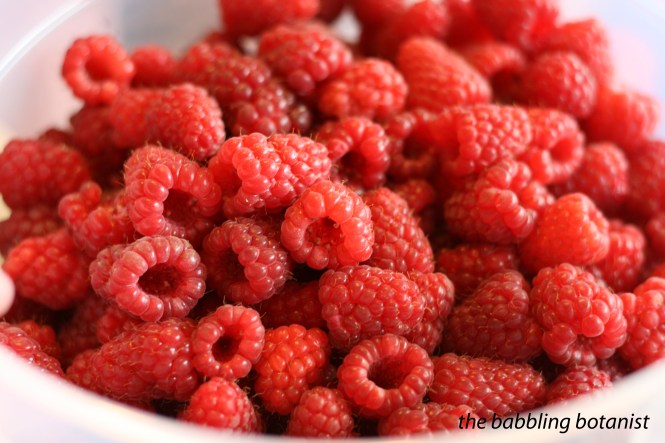
Making homemade fruit wine is such a satisfying experience – watching your fruit transform into something completely new and delicious. The length of this post may make it seem like a difficult process, but it’s really not that hard to make a small, gallon batch. So pour yourself a glass of wine, settle in, and read on. For the printer friendly version, click here.
IMG_3768 copy

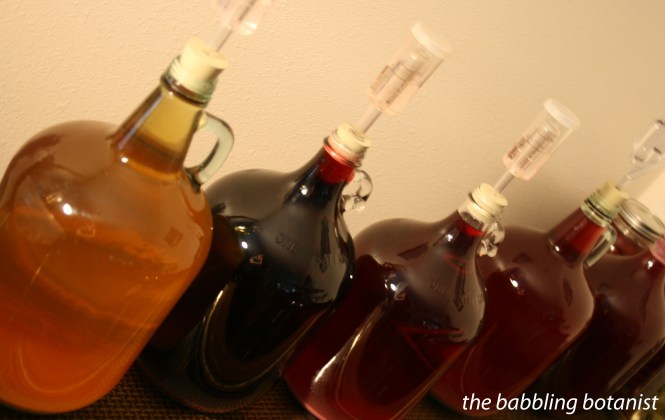
Last winter we decided to try our hand at home brewing. We started with beer, and you can read our first brews adventure here. Then we tried some kit wines which you can read about in this post. The next stage of the adventure was to try some small batches of fruit wines, which we started this spring. They are actually surprisingly delicious! And I say surprising because I normally am not a lover of fruit wines because I find them too sweet. However, these “first wine” recipes, copied with permission from Joel, the owner of our local brew store, Corvallis Brewing Supply, are designed to be dry wines and they are really tasty.
IMG_4660

Before I get into the details of how to get brewing, I just wanted to quickly (ish) list and describe the ingredients that you will be adding to your wine and why. These can all be purchased at your local brew store (if you have one) or by clicking on the links attached to them. Skip ahead if you just want the hows and not the whys.

Fruit! – OK this one is obvious, but the one thing I wanted to point out is that you can use fresh or frozen fruit for this. Use only the best quality fruit. Nasty fruit will make nasty wine.
Yeast – These little guys are what is going to turn the sugars in your fruit into alcohol. There are a large number of yeasts available on the market, but you don’t just want to use bread yeast for making wine. They are cheap, so buy a packet of the kind called for in your recipe. A few common ones for wine are Montrachet, K1V-1116, Cote de Blancs or Lalvin D-47.
Dextrose – Dextrose is fermentable sugar that is added to feed the yeast and produce alcohol. Some fruits don’t have as much sugar content as others, so extra sugar is added to balance the sugar and acidity and produce a good product. Grapes, for example, require a lot less added sugar than cane berries, such as raspberries and blackberries. This is due to the properties of the berries themselves. Table sugar, which is sucrose, can be used instead of dextrose, but it can produce a different quality product. Dextrose is a simpler sugar that can be broken down faster by the yeast, which can lead faster fermentation and to a crisper and cleaner tasting end product. I haven’t personally done a side by side comparison yet, but when I do I will let you know what people preferred. I’ve only so far tasted wines using dextrose. When using table sugar in a recipe that calls for dextrose, use 0.8 pounds for every pound of dextrose that is required.
Pectic Enzyme – This is added to your fruit wines because it will help break the fruits down and make the sugars available to the yeast to ferment. Pectin is a compound found in plants cell walls, and what this enzyme does it help to digest that for the yeast, making more sugars available. You could certainly still make wine without it, but it aids in the process. It also can help produce a clearer product by digesting the pectins.
Yeast Nutrient – This is added to give some other nutrients to your yeast so that they aren’t surviving on sugar alone. It contains vitamins and minerals, think of it as giving your yeast a multivitamin. I like the way Joel put it – think about how you would feel if all you ate was sugar. This is why you add some nutrient.
Diammonium Phosphate – This is another thing that is just a helpful nutrient to give your yeast. It’s a nitrogen source which helps the yeast along. If you are getting a rotten egg type smell from your wine, it could be because you should have added some D.A.P. Some recipes do not call for it, and I think it’s one of those things that’s not always necessary, but it only takes a very small amount so I figure why not use it. Also, as a side note, some of the things labelled “yeast nutrient” on amazon and elsewhere have this in them already, so check the ingredients to see what you’ve got.
Campden Tablets – These tablets are made of Potassium Metabisulfite, and they serve a couple really important purposes. They are not something you want to be leaving out of your recipe. Sulphites in your wine prevent a few things – the growth of bacteria and wild yeasts and oxidation of your wine. All things that you really don’t want to have happen. But as a sad side note, the suphites in wine are often the thing that give people that red wine headache. Fortunately I don’t have that issue.
Acid blend – This is a combination of three acids – citric, tartaric and malic, which come from citrus, grapes and apples. They are used to lower the pH of the wine and give the wine balance.

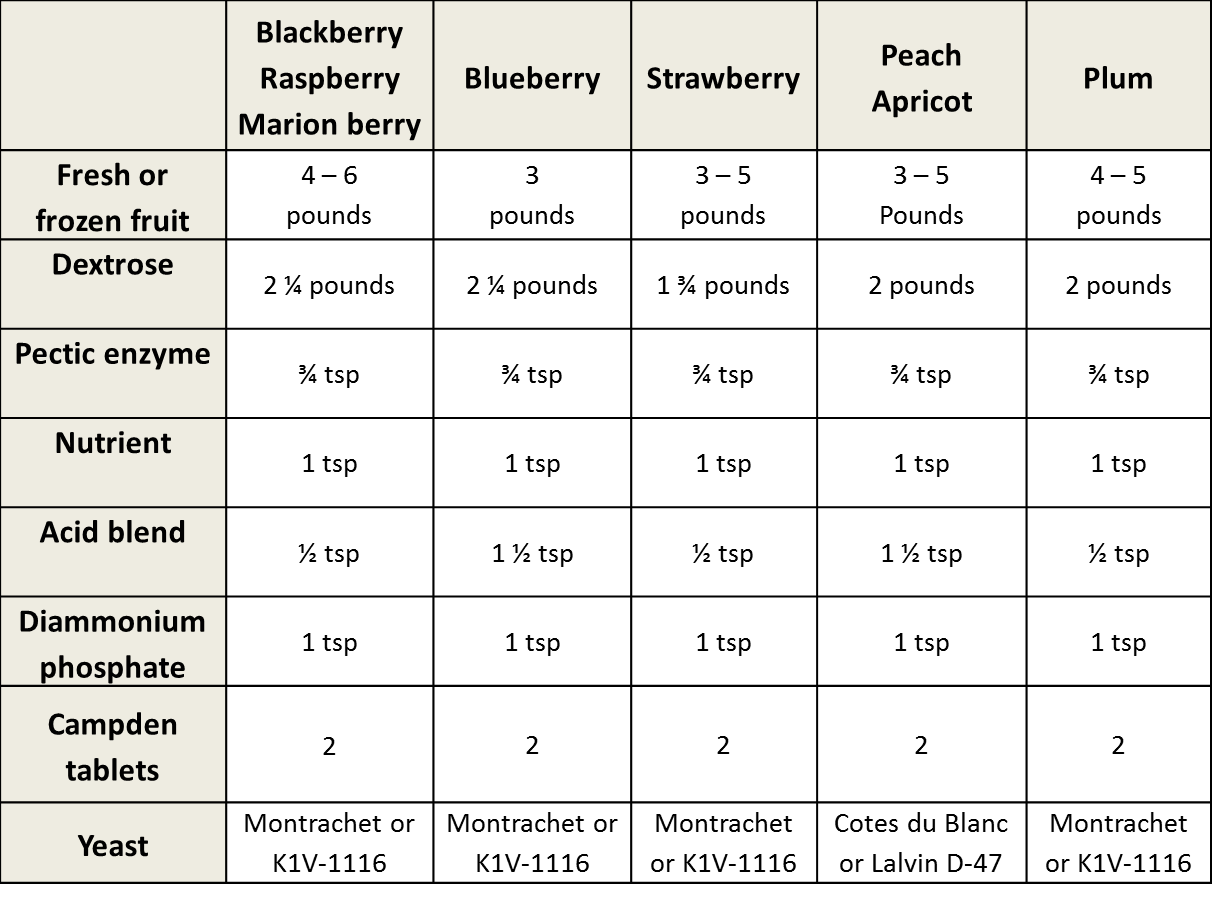
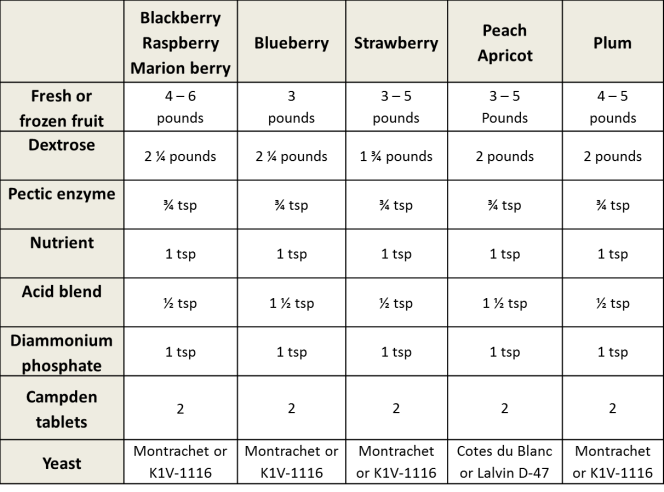
DONE! I know that was a lot of ingredient listing, so I’m sorry if that bored you, but I for one don’t like blindly throwing things into a recipe not knowing what they are for, so I wanted to lay out for you why we need a tiny amount of a bunch of different things. So there we go. Now on to the making of the wine. In the table below are 8 options for good first recipes to try. Already have one of these fruits in the freezer? Awesome! What are you waiting for!?!

Each of the recipes below makes a gallon of wine. They all have the same ingredients, just in slightly different proportions based on how acidic the fruit is, and based on its relative sugar content. The method will be the same for whichever recipe you try. And as a side note, before you begin I highly recommend keeping a brewing journal of dates and ingredients etc. Especially when you are brewing multiple things at a time. I must confess that I am currently not 100% sure which jug is blueberry wine and which is blackberry.
wine table

Home made wine is really not a lot of work, you actually only have a few active days when you are doing something to the wine, and the rest is a waiting game. Considering that the cheapest fruit wines I really ever see are $25 and you can make a pretty good wine at home for far less than that, I think it’s well worth it. So here is how it’s made:

Day 1:

On the first day what you’ll be doing is preparing the fruit and mixing all the ingredients together except for the yeast. Remember, when picking fruit only use the best quality fruit. Crappy fruit will make crappy wine. Also use nice ripe fruit, but not overripe. Think about when you taste a berry that’s not quite ripe. It is less sweet because it does not have as many sugars as when it is fully ripe, so a fully ripe berry will make a better wine.

Step 1: Clean and sanitize your equipment. All you’ll really need day 1 is the primary fermenter and maybe a masher or spoon to stir with. For the dos and don’ts of what to use as a fermenter, head here. I made mine, and the reason for that was because I planned to do a bunch of small one gallon batches, and we own only a huge 8.5 gallon primary fermenter for beer, so it made sense to have a little one too. Anyways, that can be sanitized either by dissolving a campden tablet in a gallon of water and letting it sit for a few minutes, or I like this sanitizer. While the equipment is drying, prepare the fruit.

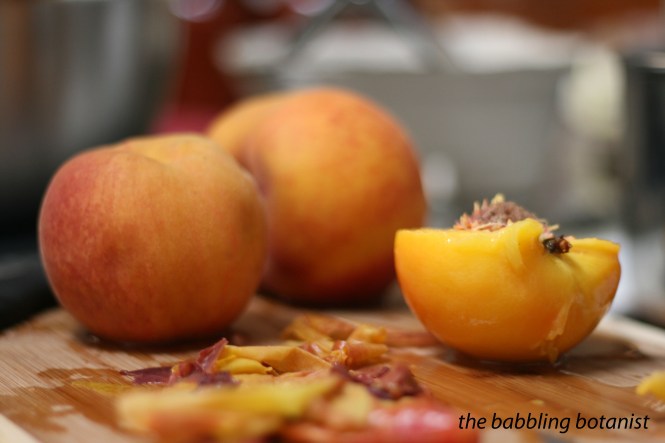
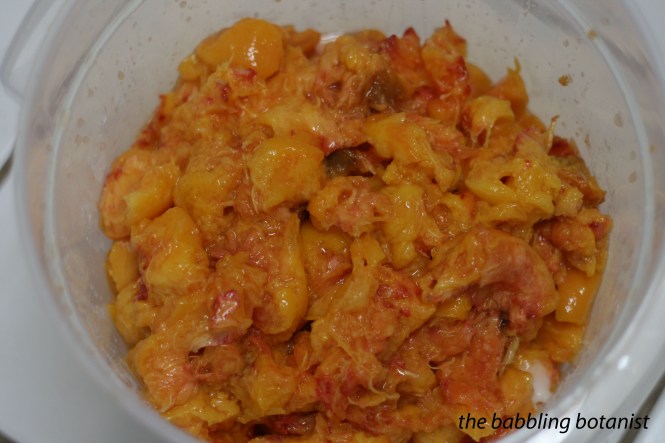
Step 2: Give your fruit a good wash, check for any bad spots and remove them, and remove any stems and pits. Things like strawberries, blueberries and raspberries basically just need a good wash. For the peaches I would blanch and peel them first. Chop and remove the pits and place them in your primary fermenter.
IMG_4221 copy

I like to then give the fruit a light mash to release the juices.
IMG_4225 copy

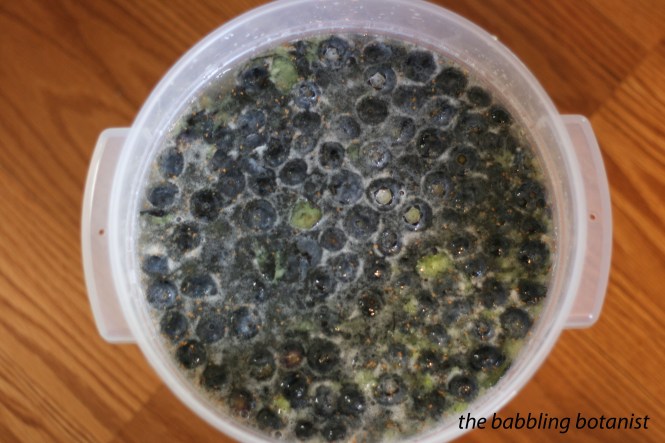
Step 3: The next thing you’ll do combine all the ingredients except for the yeast. I top it off with water to just above 1 gallon in my 1.5 gallon fermenter (4.5-5 quarts), but go ahead and top the water up to 1.25 gallons if you’re using a larger fermenter. Give it a stir to dissolve the powders and cover it. Leave it for 24 hours. This gives the campden tablets time to kill yeasts and bacteria already in there, and the pectic enzyme to start breaking down the fruit for the yeast you’ll add the next day. Don’t wait longer than 24 hours though, or you may have your ingredients spoil. You need to get the fermentation going or other things will colonize your fruit. And that is just plain nasty. And sad.
IMG_3800 copy

Day 2: 

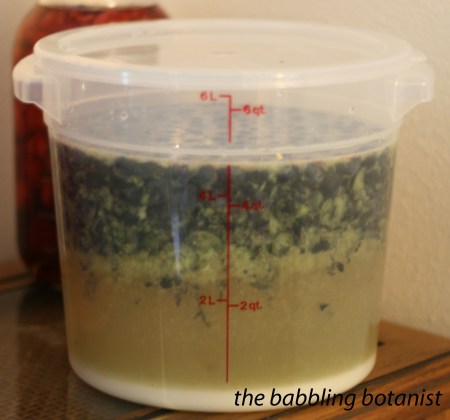
On day 2, you will open up your primary fermenter and pitch the yeast. Half of those 5 g packets is enough, so if you are planning on making another wine with the same yeast in the near future save the other half in the fridge. All you need to do is sprinkle the yeast on and close the lid back up. Make sure you have an airlock on your fermenter, and fill it will sanitizer or alcohol.
IMG_3805

Now we wait for a few days. Within 12-24 hours you will notice bubbles coming from the airlock as fermentation begins. You can probably hear the yeast working too.

Day 2 or 3:

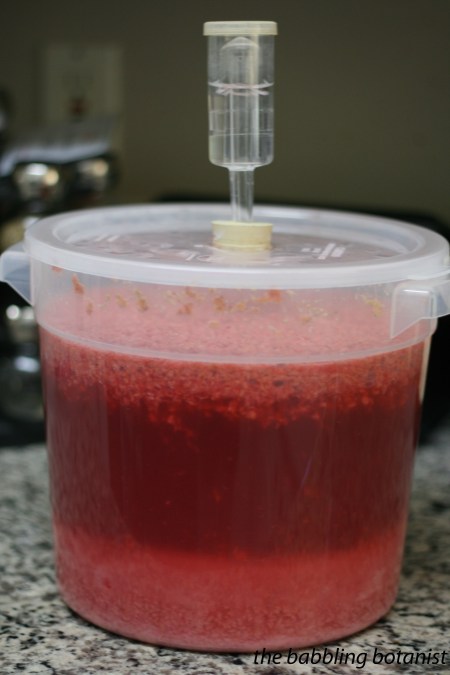
About 12 hours after you add your yeast, you want to give it a little stir. Sanitize a spoon and stir the must (that’s what wine that’s not wine yet is called).
IMG_3950 copy

Days 2-5:

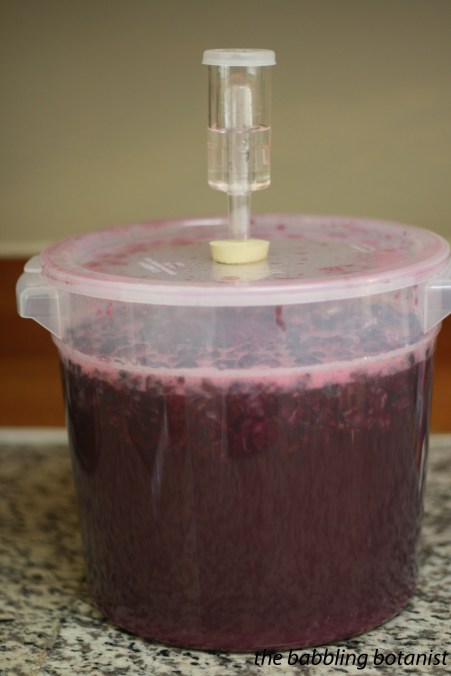
While your wine is fermenting, you will notice that the fruit is constantly floating to the top. To make sure that all the fruit gets fermented, and you don’t get massive air bubbles building up underneath the fruit, you need to break that mass up a couple times a day. This is called “punching the cap.” This is my favourite stage in the process, not only because of its silly name, but also because every day you get to open the lid and smell the fermentation in progress. Using a sanitized spoon or masher, gently punch the cap, then place the lid back on. This is also a great time to make sure you don’t have any weird or nasty smells. It should smell strongly alcoholic but not like acetone, or rotting eggs, or burning rubber, or anything weird. Take note if it has any unappetizing or strange odours.
IMG_3836 copy

 Day 5ish: 

Around the fifth or so day, you’ll notice the cap not floating quite as much, and the bubbles have begun to slow in frequency. At this stage it is time to strain off the solids. There are a couple of ways that you can do this, but this is the setup I have rigged up. If you are only doing one gallon, just straining it without additional equipment is reasonably easy. If you have a full 3-5 gallon batch going, a fruit press or something more suited to 20 or so pounds of fruit may be necessary.

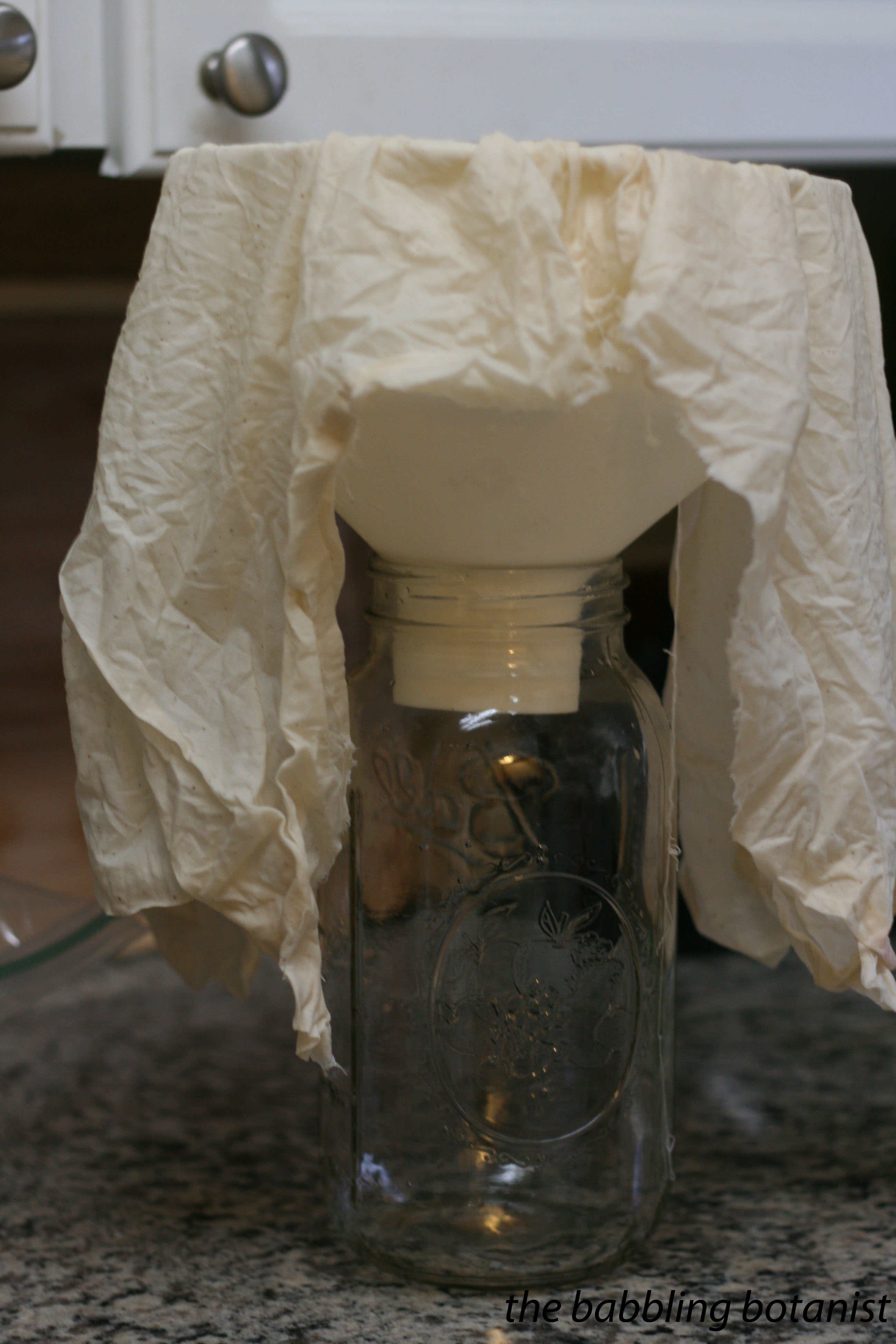
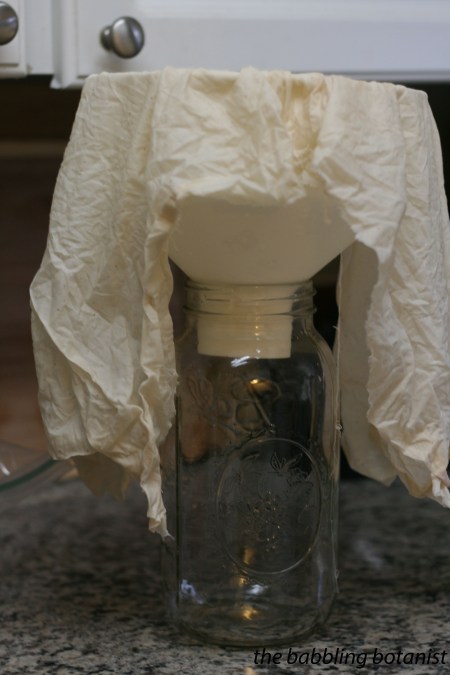
What I do is use a funnel (it’s actually the hopper from my food strainer) covered in a dampened layer of muslin, and strain the wine into a half gallon jar. This funnel happens to fit perfectly into the mouth of the half gallon jar.

Clean and sanitize the funnel, 2 half gallon jars and a one gallon glass jug (this is where your wine is going next). Dampen a section of muslin or cheesecloth and drape it into the funnel. Carefully dump the wine from your primary fermenter into the funnel. It won’t all fit at once of course so let it strain and add some more.
IMG_3639 copy

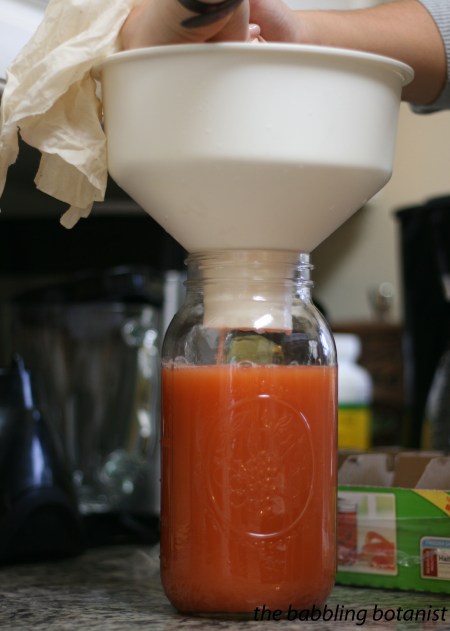
Once one jar it full you will want to transfer the funnel carefully to the other jar. When almost all the liquid is drained through, you can squeeze more out of the fruit if you want. Since I use a cloth that lets very little solids through, I give it a really good squeeze at this point. The cloth I use isn’t linked to here since it’s from a craft store and I was having a difficult time finding exactly what I wanted to show on amazon. Anyway, if you are using a coarser (bigger holes) mesh you probably won’t need or want to squeeze it a ton or you’ll have solids coming through. Now, if you don’t have a funnel set up, you can probably get away with straining it with your kitchen strainer and a layer of cheesecloth, again if you are doing a small batch. A jelly bag would work well too.
IMG_3644 copy

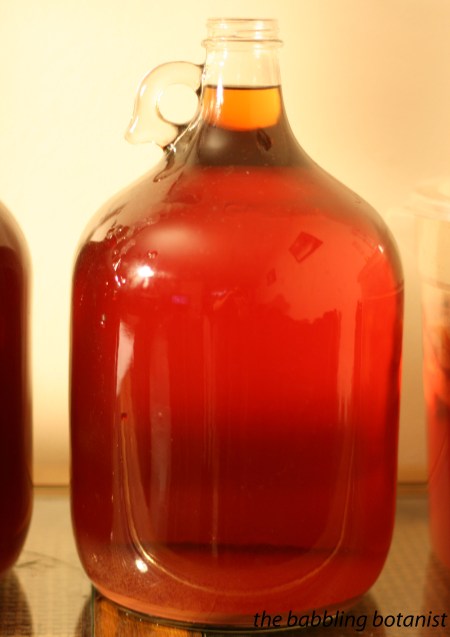
Now you have your wine strained. It’s time to transfer it into the gallon jug where you will finish the fermentation and age the wine. Make sure the jug is cleaned and sanitized. What I do at this point is actually just pour it carefully into the jug using a smaller funnel. This is not necessarily the best way to do it, but I’ll explain why I do it this way. If you just strained the fruit through a much coarser funnel or press, you will have larger particles that need to settle out. These are called the “gross lees.” If you use a coarse strainer, strain all the wine into one container, and allow the gross lees to settle out. I don’t really have any issue with this because I strain it through super fine cloth. However, if you have gross lees, or chunky bits, in your wine, let them settle, then rack the wine into the gallon jug instead of pouring it. You also mix in less oxygen this way, but I figure we’ve already mixed it in when straining it so it’s probably no biggie. Also, in this next waiting stage, any sediment is going to settle out, so if you get a bit it’s OK. Once your wine is in the gallon jug, top it off with a bit of water if you don’t have quite enough. You shouldn’t need to though if you had 1.25 gallons or squeezed the fruit well. Add another campden tablet to the wine. Place the airlock into the jug. You want only a tiny bit of space between the airlock cork and the wine to avoid oxidation of your wine. I would at this point recommend vodka or something in your airlock since at least with my iodine sanitizer, once the iodine evaporates you can get mould growth in your airlock. Mould = BAD. Awesome, now you are done for  a while! Place your jug somewhere cool, out of the sun, where it won’t be disturbed.
IMG_4461 copy

Day 5ish until ???

After the transfer day, wine making is just a waiting game. You will continue to have some fermentation for a while, but eventually the bubbling will slow and cease altogether. Admire your wine and patiently wait. Good wine does not happen over night. At this point, it’s up to you when you want to bottle the wine. At the very minimum, you want to wait until the wine is clear and all the sediment has settled to the bottom. You also don’t want any more fermentation occurring, so if there is any activity in the wine, do not bottle it. You will have to wait at least a couple of months. Joel’s instructions suggest between one and nine months. Yes, that’s a huge range. One is probably not going to be enough in many cases for it to be crystal clear, and in nine it’s probably drinkable (aged enough to be tasty and ready). I think 3 or 4 is probably plenty. Remember, as long as it’s clear, and done fermenting you can bottle it because it will still age and mature in the bottle. But wine that is bottled without good clarity isn’t going to clear anymore in the bottle.

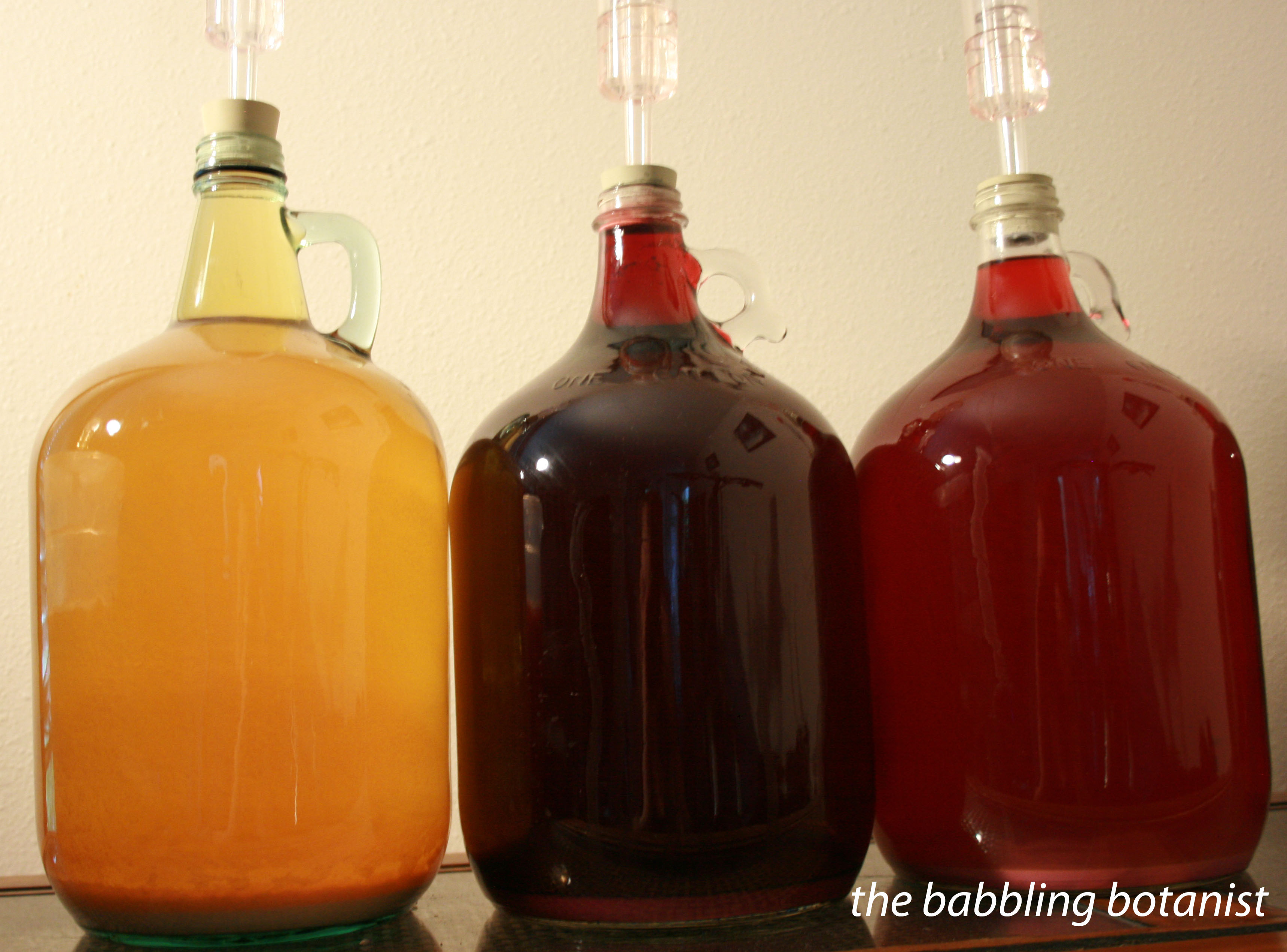
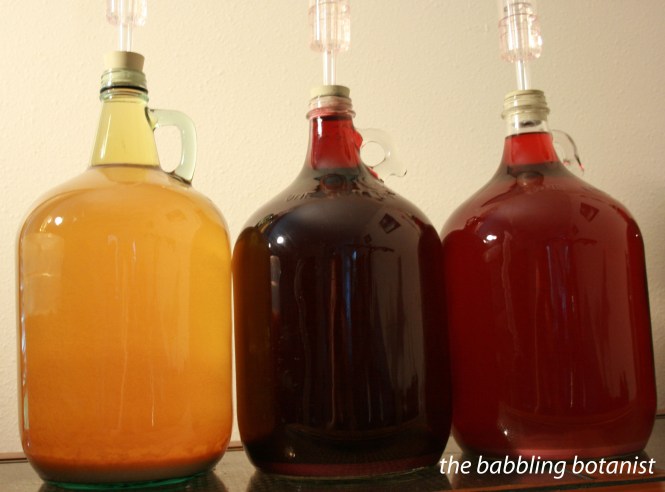
From left to right, peach, blueberry, and raspberry wine during the aging process.
IMG_4673

Day 100 ish

Wow, has it really been 95 days? Time flew by! It is time to bottle our wine. We haven’t seen a bubble in 2 months and the wine is crystal clear! Today what you will need is 5 regular sized wine bottles (750 ml). I don’t buy these because I think that would be insane when I already drink wine. Just save your bottles and rinse them out. You will also need 5 corks (number 8 or 9), a corker (they make two main kinds of basic ones – this round compression one, these double level ones and these floor ones), a racking cane with tubing or mini auto siphon and preferably a bottle filler.

Sanitize all your equipment and your bottles and let them air dry. Very gently rack your wine into each bottle. Don’t disturb any of the sediment on the bottom of the jug. Fill your bottle up enough that you will only have a very small amount of space between the wine and the cork. I like to actually hold a cork up to the side of the bottle and see where it will sit so I can adjust the level of the wine. Once you fill all five bottles, cork them up and you are done! Store the wine in a cool dark place and enjoy your wine whenever you desire.

IMG_4470

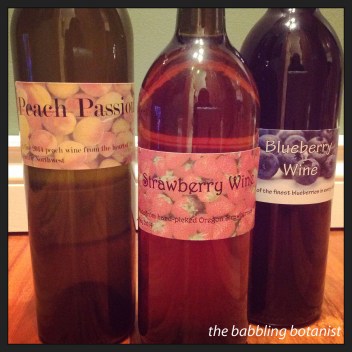
If you are going to gift them, it’s super fun to make adorable labels for them (shipping labels actually work great – you can design any decorative label you want using the template in word) and add the fancy shrink wrap to the tops
IMG_2510

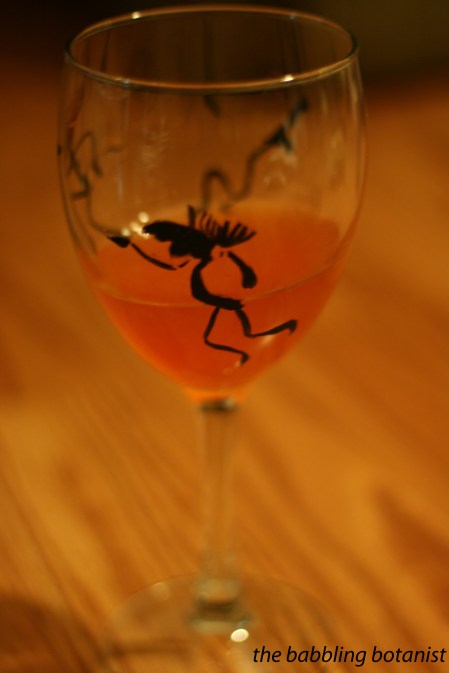
Unfortunately, a gallon of wine just barely fills five bottles, so you don’t have much left over, but be sure to sample the wee bit that remains, even if it is the sediment filled stuff at the bottom of the jug. Happy brewing!
IMG_4475 copy

*this post contains affiliate links, please see the “About the Blogger” page for more information
Inferno Wine Jelly

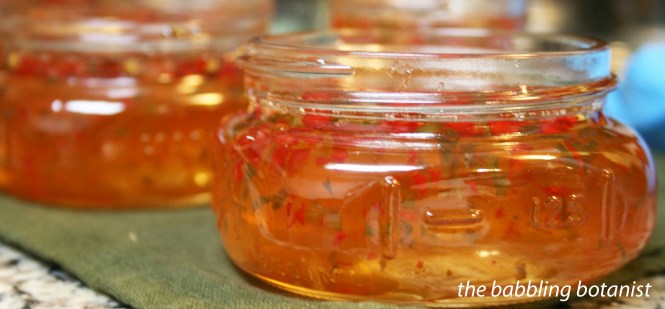
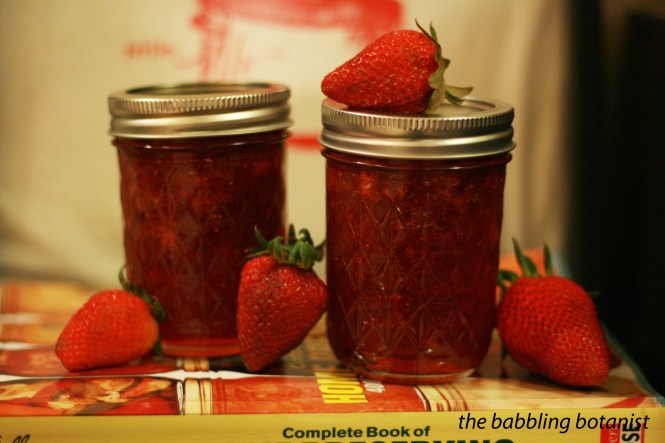
The other pepper jelly we tried out from Ball the same night as the habanero jelly was this inferno wine jelly. I think with the combo of jalapeno peppers and red bell peppers in it, it will make a perfect jelly to have a a Christmas wine and cheese party. So pretty.

IMG_4641b

Ingredients:
1/2 cup finely chopped seeded red bell pepper
2 tbsp finely chopped jalapeno pepper
2 dried chopped hot chili peppers
1.5 cups sweet white wine (ball suggests Sauternes but anything will work)
3 tbsp lemon juice
3.5 cups granulated sugar
1 pouch of liquid pectin

And here’s how we made it:

Prepare the canner, jars and lids. This recipe yields about 7 4oz. jars.

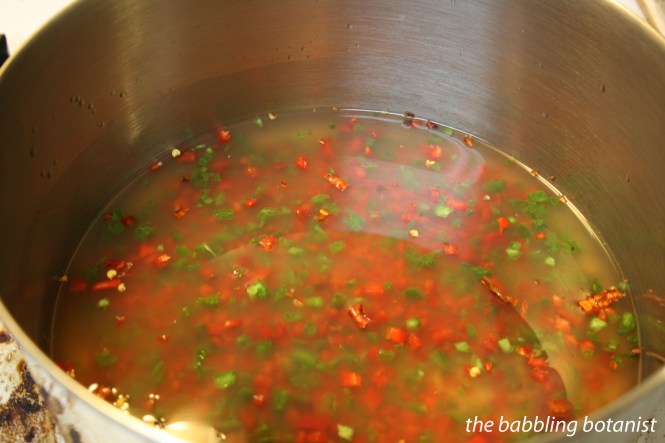
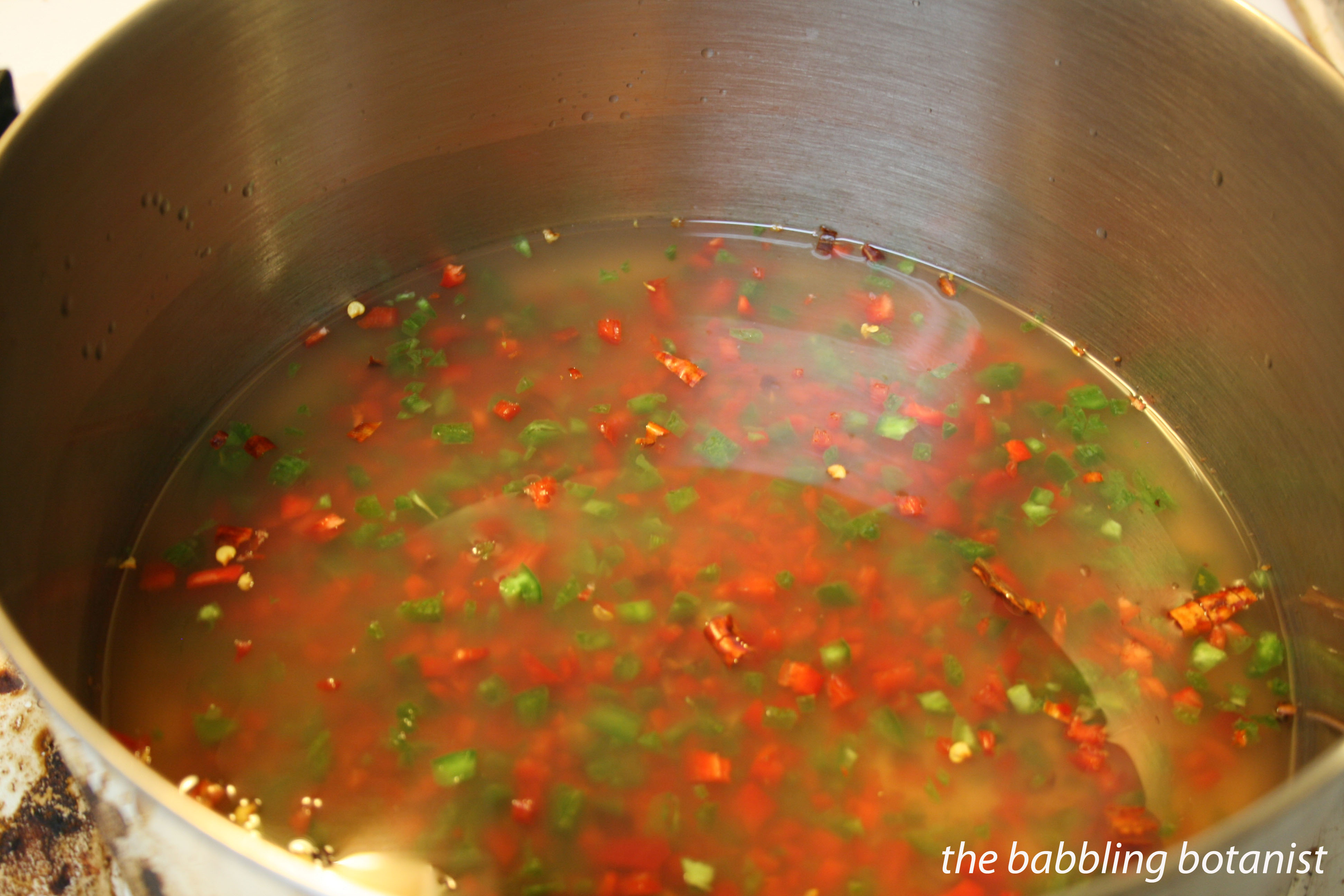
Combine the peppers, wine and lemon juice. Feel free to use milder peppers if you don’t want an “inferno.” You can also decide whether to seeded the dried chilies, or omit them altogether. Make sure you use a deep pot for this. This pot barely cuts it because the jelly boils very vigorously and can easily boil over if your pot is too shallow.

IMG_4553 copy

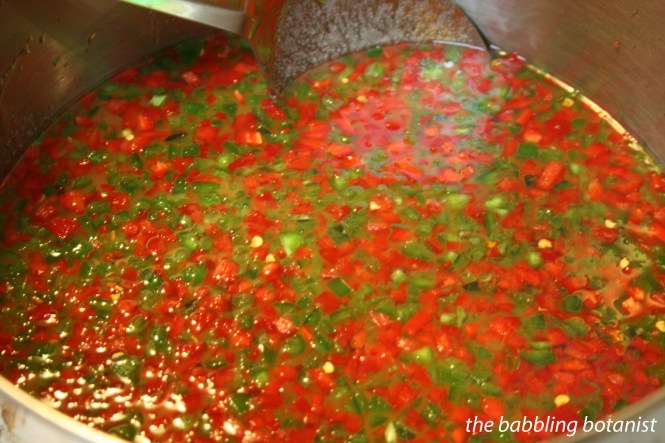
Stir in the sugar. So lovely! Bring the jelly to a boil over high heat, stirring constantly. If you have a fan, have it on. If you have an assistant, have them ready to fan. Boy does this go crazy. Once at the rolling boil stir in the pectin. Boil hard for another 2 minutes, then remove from the heat.

IMG_4558 copy

Quickly skim off any foam and fill your hot jars, leaving a quarter inch head space. Wipe the rims, apply the lids and tighten the bands finger tip tight. Process the jars for 10 minutes in a boiling water bath canner, covered by at least an inch of water. After the 10 minutes, turn off the heat, remove the canner lid, wait 5 minutes and remove the jars to a hot pad or towel.

IMG_4562

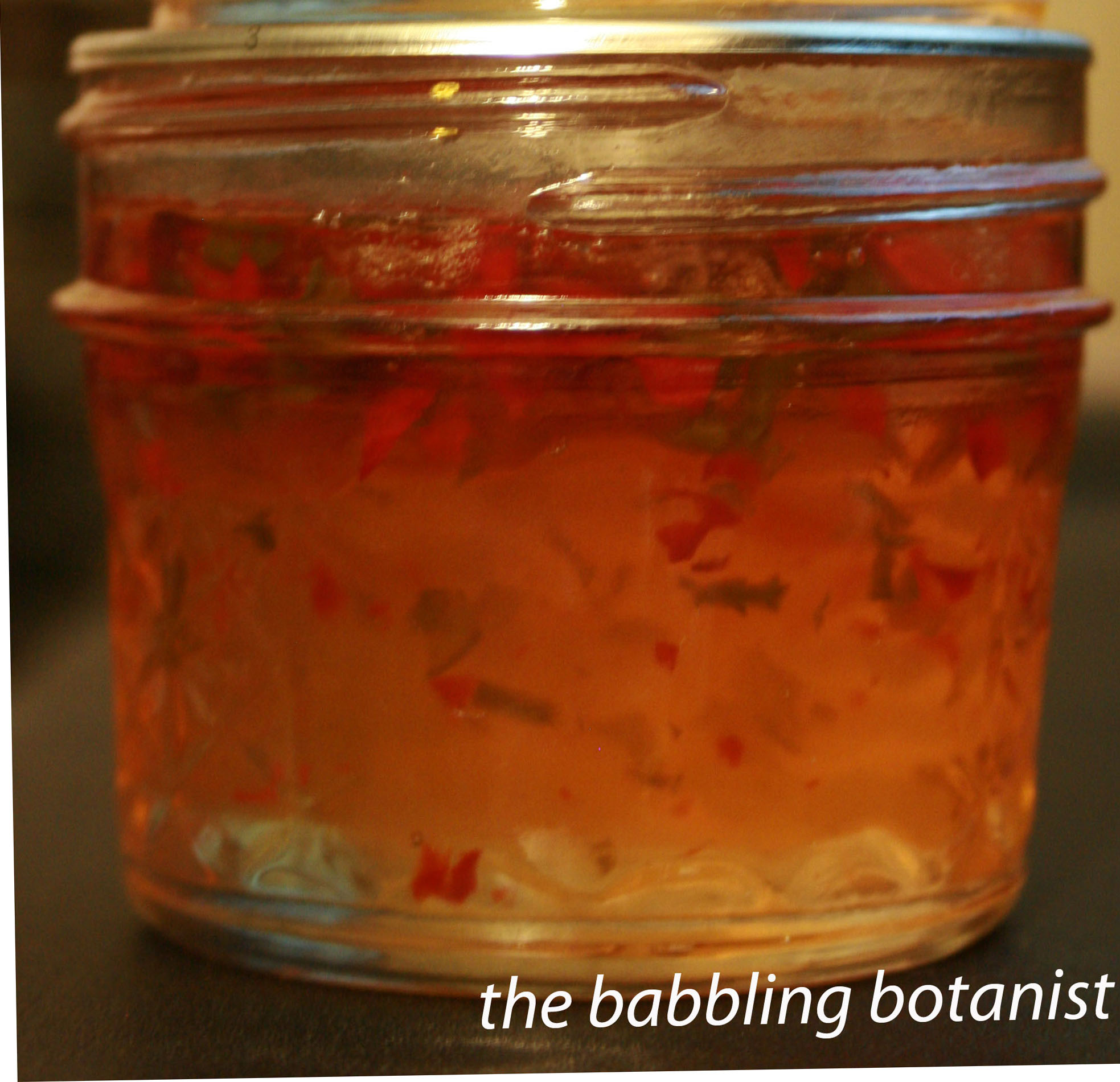
As with the habanero jelly, you can gently twist or tilt the jars after they are sealed to get a nice particle suspension. Just no shaking or inverting the jars, that can affect your seal, so just be very gentle. I didn’t do as nice of a job here, but oh well, still a lovely jelly. Cool the jars 12-24 hours, remove the bands, check the seals, wipe, label and store.

IMG_4641


*this post contains affiliate links, please see the “About the Blogger” page for more information
 

Habanero Jelly

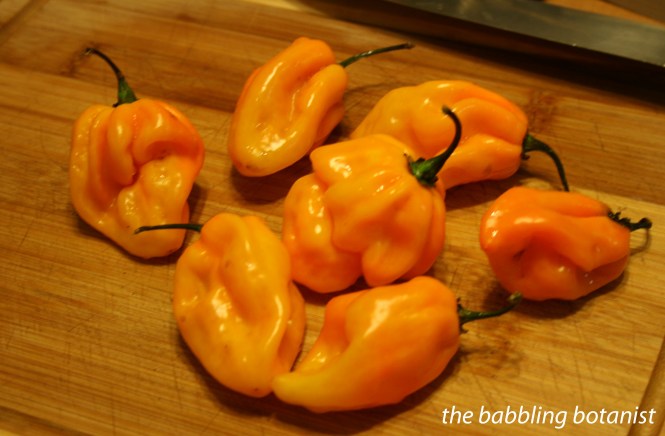
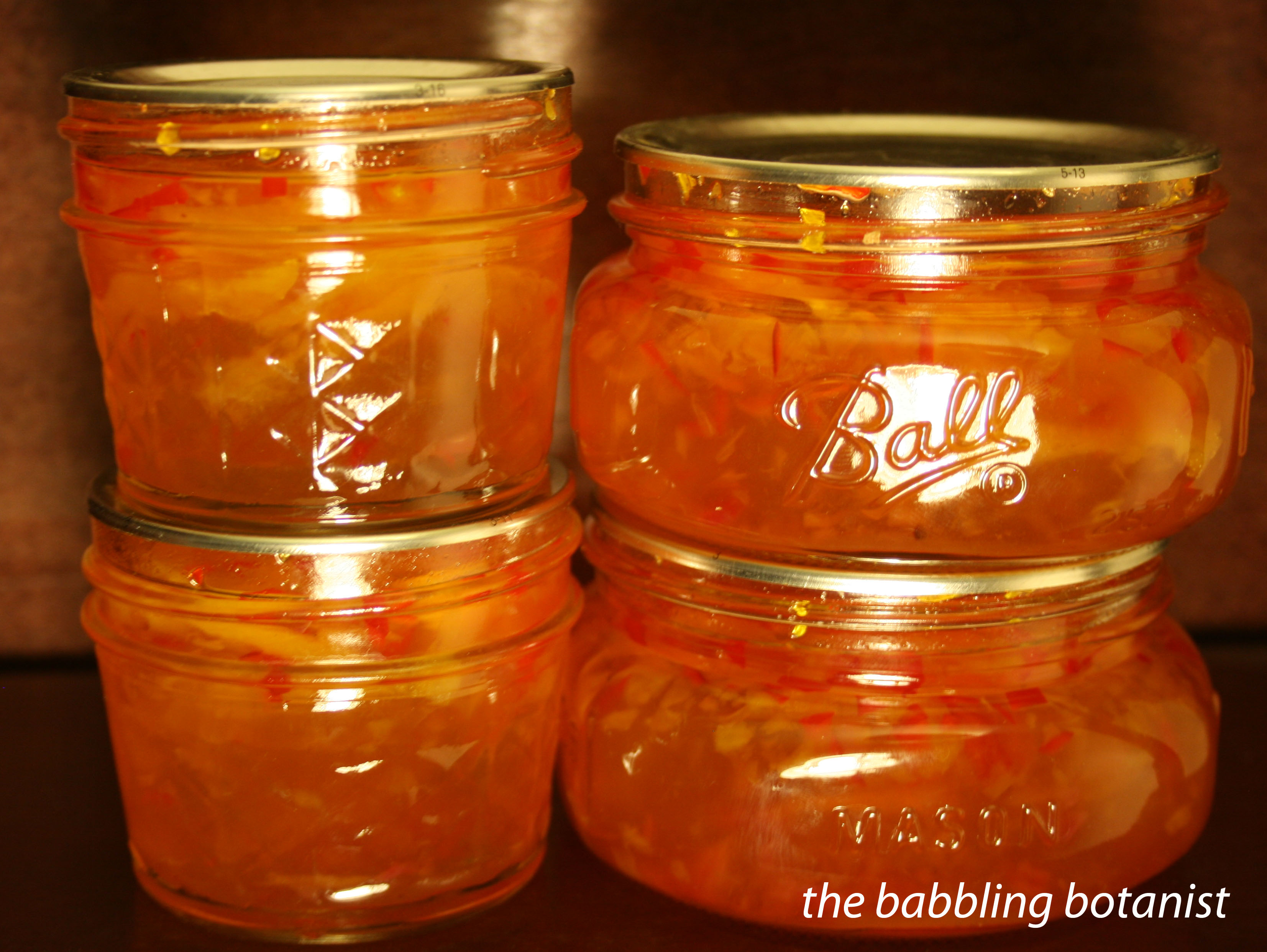
Pepper jellies are an awesome addition to any pantry, adding the savory to the sweet in your jam and jelly collection. Lately, I’ve been delving into a few of the intriguing ones in the Ball Complete Book of Home Preserving, and I am quite happy with them so far. This habanero jelly is gorgeous and dangerously hot! But oh so delicious. Sub in milder peppers if you’re scared of the heat.

IMG_4539

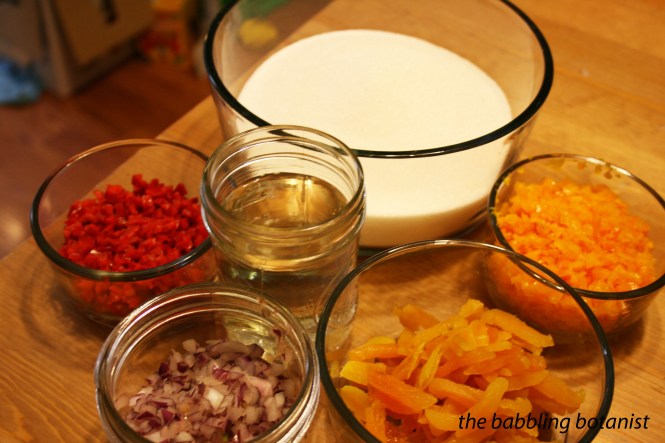
Ingredients:
1/3 cup finely sliced dried apricots
3/4 cup white vinegar
1/4 cup finely chopped red onion
1/4 cup finely chopped seeded red bell pepper
1/4 cup finely chopped seeded habanero pepper
3 cups granulated sugar
1 pouch liquid pectin

IMG_4551 copy

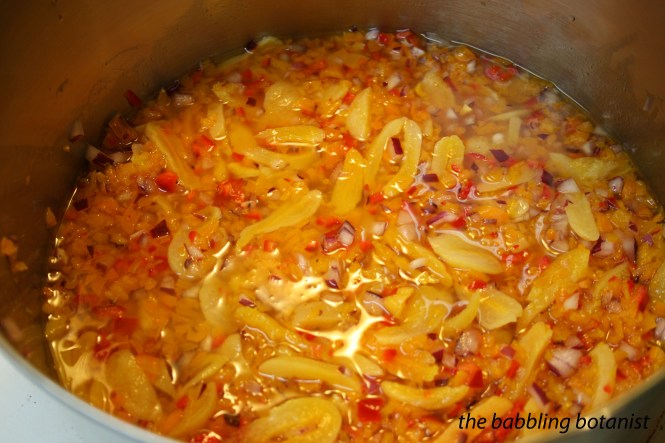
Combine the apricots and vinegar and let them sit to rehydrate the apricots. Ball suggests a minimum of 4 hours to overnight but I think as long as they are plumped up a couple hours is sufficient. Can something else in the meantime while you wait. Chop the rest of the ingredients finely, and in nice even pieces for an attractive jelly. Wear gloves for the habaneros! Then prepare the canner, jars and lids. This yields about 3 half pints.

IMG_4576 copy

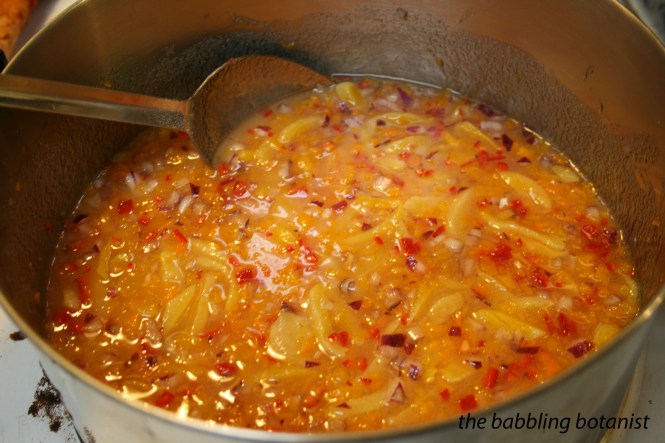
Most pepper jellies are chocked full of sugar, which is probably not that bad since you really don’t eat very much of it when you really consider it, but I still wanted to attempt reducing it and see if I could still get it to set. So I reduced it to two cups from three and added 3 tablespoons of low sugar pectin in addition to the liquid to compensate. Good news – it still set! Anyways, tangent… at this point add the sugar and stir to dissolve it. Bring the jelly to a rolling boil over high heat, stirring constantly. Add the pectin, return to a boil, and boil hard for one minute. Remove from heat, skim off any foam, and fill your jars.

IMG_4578 copy

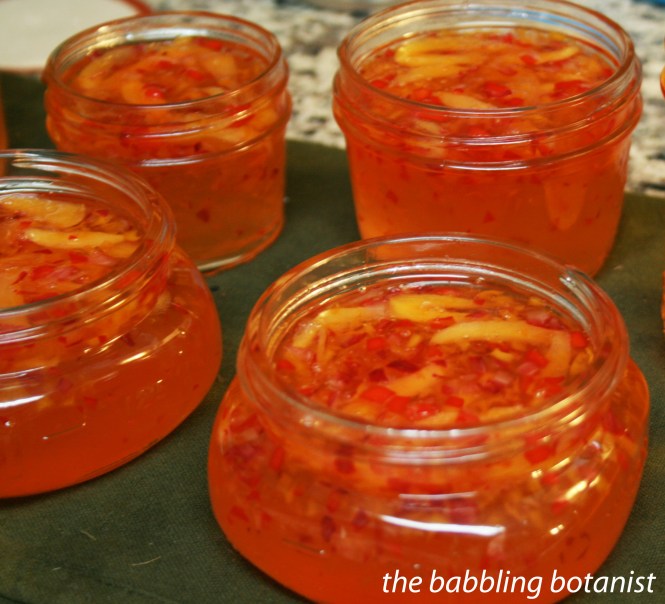
Quickly fill the jars, leaving a quarter inch head space. Wipe the rims, place the lids on the jars and tighten the bands finger tip tight. Place the jars in the canner covered by at least an inch of water. Process at a full rolling boil for 10 minutes. After 10 minutes, turn off the heat ,remove the canner lid, wait 5 minutes, and remove the jars to a hot pad or towel. Ball offers a fun tip at this stage. In order to get a beautiful suspension of the chunks in the jelly, you can carefully swirl the jar around as it’s setting, once the jar is sealed. Don’t invert it, but you can gently tilt it or try to swirl it.

IMG_4587

Cool the jars for 12-24 hours, remove bands, wipe, label, and store. Deeeeelish. Serve at a classy dinner party, with some real classy cheeses and crackers and wow your guests when you tell them that it’s all home made.

IMG_4622

*this post contains affiliate links, please see the “About the Blogger” page for more information
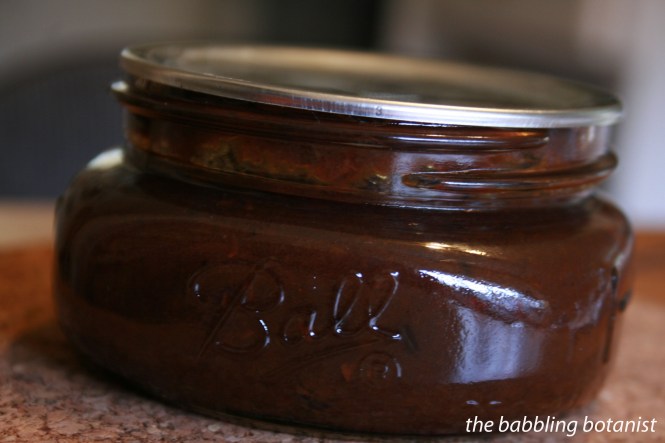
Asian Plum Sauce

Plum sauce has a lot of great uses, and home made is so much better than anything you can buy in the store. This sauce makes a delicious dipping sauce, is great for meat, such as pork, and is also great as a stir-fry sauce. I hope plums are still in season in your area so you can whip up a batch!

IMG_4518 copy

This recipe comes from this small-batch preserving book. We only made a couple modifications, including using dates instead of raisins, and doing a larger batch (3 cup yield – I think not!!), so as written here this will yield 6-7 half pints.

Ingredients:
18 – 20 plums (about 3 pounds)
3 cups brown sugar
3 cups finely chopped onion
2 cups cider vinegar
1/2 cup dates
1 tbsp soy sauce
6 cloves of garlic
1 tbsp salt
1/2 tsp chili powder
1/4 tsp ground cloves
1/4 tsp cinnamon
1/4 tsp ginger
1/4 tsp allspice

Here’s how we made it.

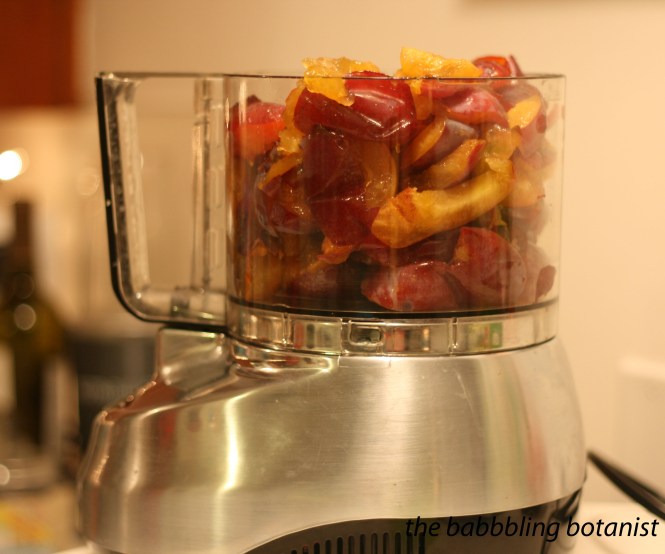
Chop or food process the plums. The one pictured is actually at a friend’s house, but I just got this one and am l loving it so far. Soup and sauces galore! And I just used it to slice a ton of carrots into coins to make pickled carrots and it was aweeesome! But I digress, back to the sauce.

IMG_4422

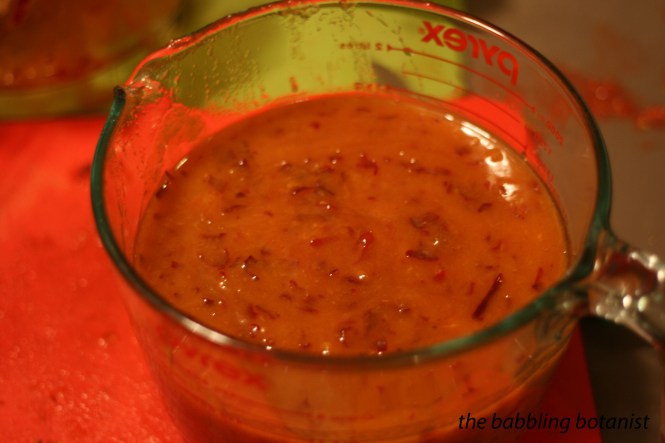
You should end up with about 3.5 cups of plum puree. Chop or food process the onions and dates as well and set them aside. I like a pretty fine chop for this sauce.

IMG_4431 copy

Combine the plums, sugar, vinegar and salt. Bring to a boil over high heat, stirring constantly. If you’d rather not use sugar, I bet that honey to taste would be super delicious in this recipe as well. Boil the mixture for a few minutes, then add the remaining ingredients.

IMG_4440 copy

Look at those adorable little cups!

IMG_4435 copy

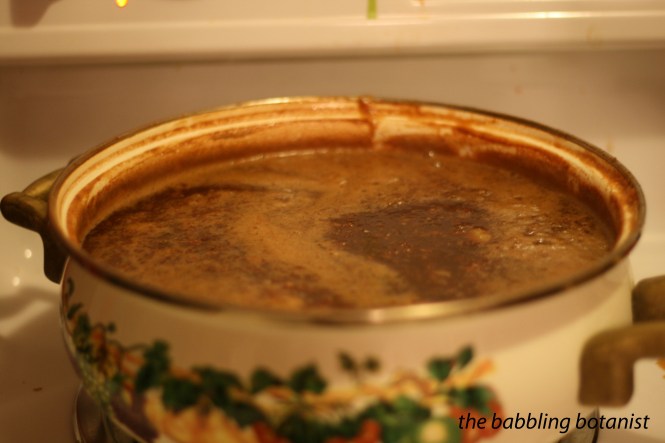
Return to a boil and reduce the heat. Allow the mixture to simmer, uncovered, until the desired thickness is achieved. Continue to stir occasionally, and prepare the canner, jars, and lids when you are approaching a nice consistency. 45 minutes to an hour is probably good.

IMG_4446 copy

Fill the hot jars with the sauce, leaving a half inch head space. Wipe rims, apply lids, and tighten bands finger tip tight. Process the jars in a boiling water bath canner, covered by at least 1 inch of boiling water, for 15 minutes for half pints. After the 15 minutes, turn off the heat, remove the canner lid, wait 5 minutes, and remove the jar to a hot pad or towel. Cool 12-24 hours, remove bands, check seals, wipe, label, and store.

IMG_4518 copy

Enjoy this delicious sauce as a stir fry sauce, dipping sauce or however else you desire.

IMG_4500 copy


*this post contains affiliate links, please see the “About the Blogger” page for more information
Choice Salsa

In this year’s new edition of the salsa recipes for canning publication, PNW 395, our lovely extension friends added an awesome new recipe for those of us who love a little more choice in our lives – “choice salsa”! For this recipe, what you get to choose is the proportion of peppers to onions. Want a ton of peppers in your salsa? Or an equal mix of onions to peppers? Whatever your preference, you get to choose! Pretty great eh!?
IMG_4481[1]

Ingredients:
6 cups cored, peeled, chopped tomatoes
9 cups chopped onions or peppers (of any variety)
1.5 cups bottled lemon or lime juice
1 tablespoon canning or pickling salt

Here’s how we made it:
Blanch, peel and chop your tomatoes. My favourite way to deal with all the tomatoes is to core them, dip them in boiling water for 30 or so seconds, dip them in ice water, peel and chop them. Next chop up all the onions and peppers – you choose how much! But it has to total to 9 cups of onions and peppers, for 6 cups of tomatoes. This worked out really well for us because we made a big batch of Chile salsa, and then with the remaining tomatoes we made the choice salsa. It worked out well because I always have trouble buying the correct amount of peppers for a recipe. I grow my tomatoes, but buy the peppers and onions, so when I have 40 pounds of tomatoes, I have to figure out the right number of peppers to buy. This is HARD. So it worked super well that we used up all the rest of the peppers we had, then topped it off with the onions, since if you buy extra onions they store way better than peppers! So great! We ended up with a recipe fairly heavy on the peppers, but I think it turned out really well. I do find the lemon juice flavour to be quite strong though, so I think next time I might try half lemon, half lime.

IMG_4325 copy

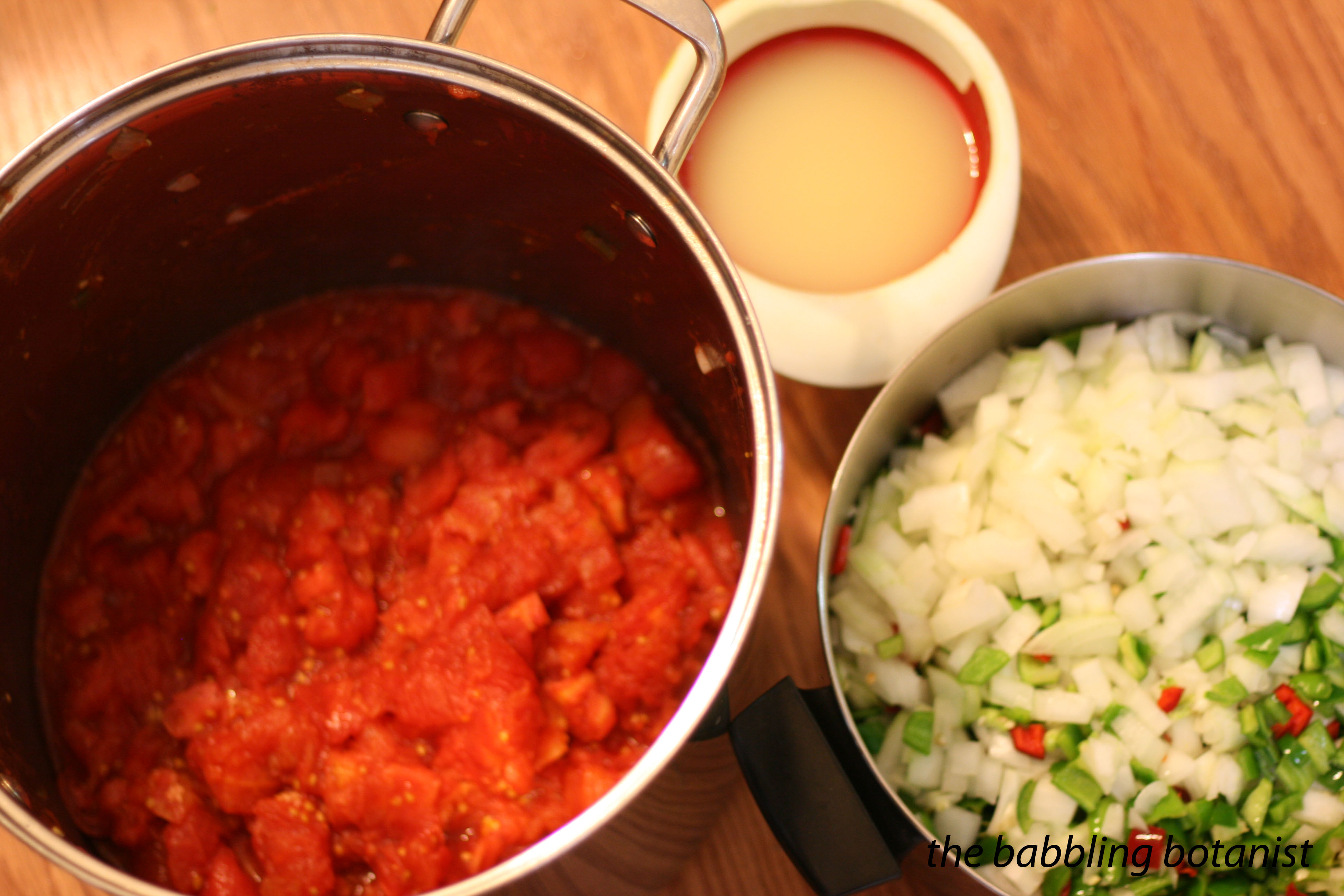
Prepare the canner, jars and lids. This recipe yields about 6 pints. Mix all the ingredients in a large stainless steel pot. Remember, do not alter the ratios of anything. You get 6 cups of tomatoes, 9 cups peppers/onions, and 1.5 cups of lemon juice. No reducing the lemon or adding extra veggies OK! Adding other dry spices is ok though, so if you want cumin, oregano or something else, add that now too. Heat all the ingredients to a boil over medium high, stirring occasionally. Simmer for at least 3 minutes, then fill your hot jars, leaving a half inch head space. Process for 15 minutes in a boiling water bath canner (sea level), covered by at least 1-2 inches of boiling water.

IMG_4337 copy

After the 15 minutes turn off the heat, remove the canner lid, wait 5 minutes and remove the jars to a hot pad or towel. Cool 12-24 hours, remove bands, check seals, clean, label and store.

This salsa is a great one because it’s super chunky – here it is compared to my other favourite salsa. Chile salsa on the left, choice salsa on the right.

IMG_4494[1]

Spicy Tomato Vegetable Soup

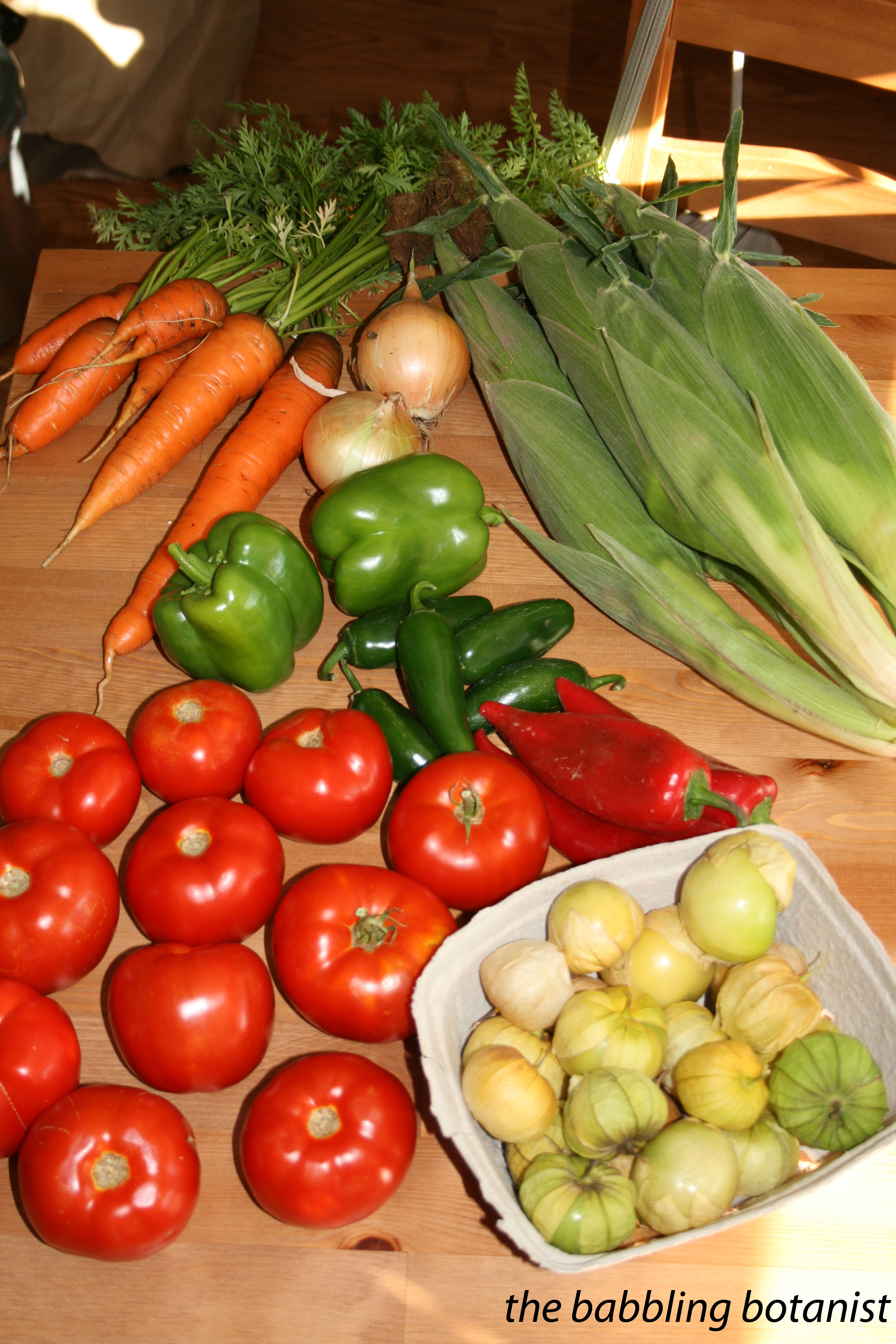
I first made this soup back in the pressure canning week of my Master Food Preserver class, and I could not wait until tomato season rolled around so I could stock up on this deliciousness. This soup is so good, and I just love that every ingredient is in season right now, which means every ingredient I either grew or picked within 10 miles of my house. That’s the best! This recipe is from So Easy to Preserve, which by the way is now out with its newest edition if you’re looking to get your hands on that. I just ordered a couple copies for myself and others. 🙂

IMG_4342 copy

Ingredients:
6 cups chopped tomatoes
2 cups chopped tomatillos
1 cup chopped onion
1 cup chopped carrots
1 cup chopped red bell pepper
1 cup chopped green pepper
1/2 cup chopped and seeded hot pepper
6 cups whole kernel corn, uncooked
2 tsp chili powder
1 tsp cayenne pepper
1 tsp black pepper
1 tsp salt
1 tbsp hot pepper sauce
5 cups tomato juice
2 cups water

Here’s how we made it:

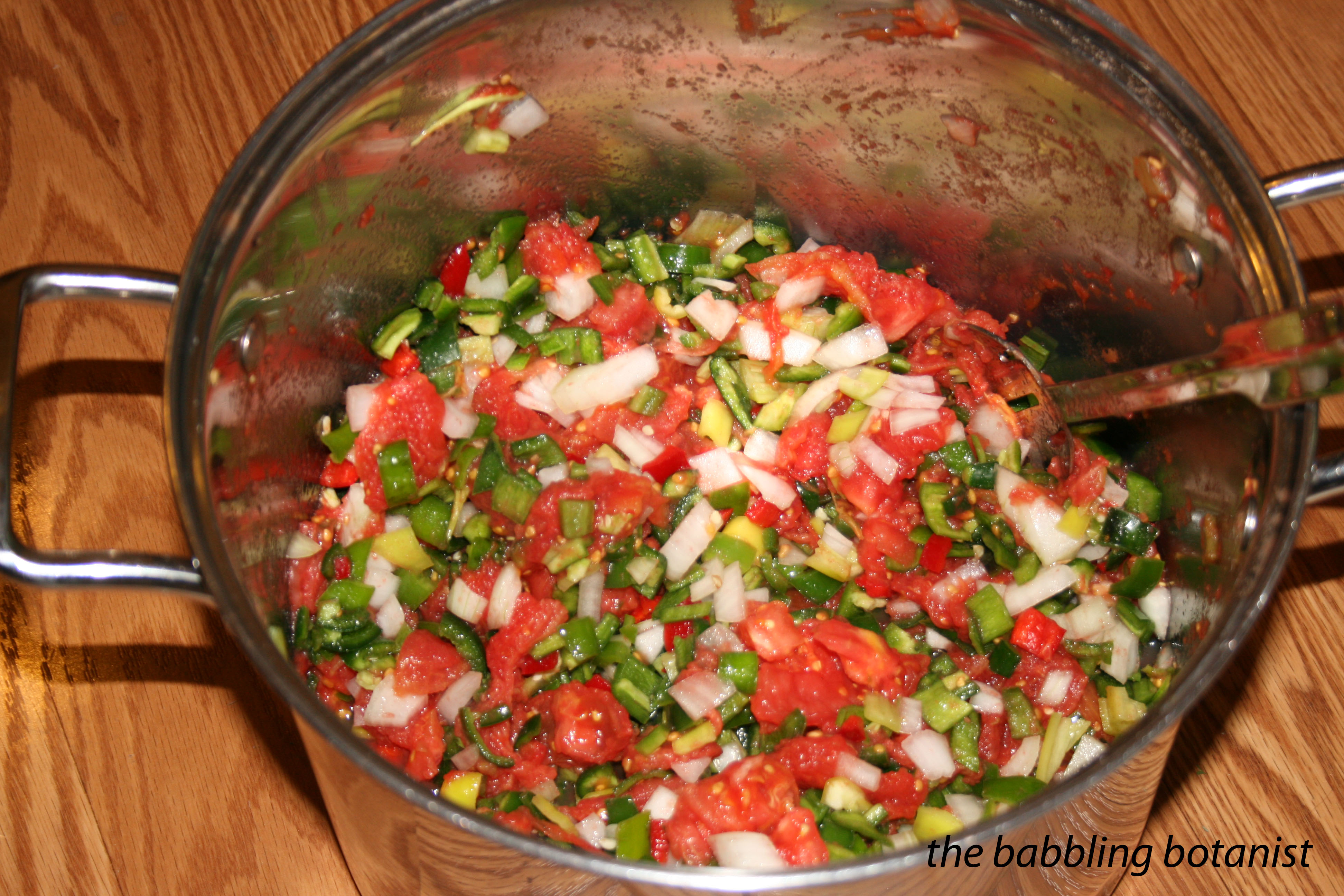
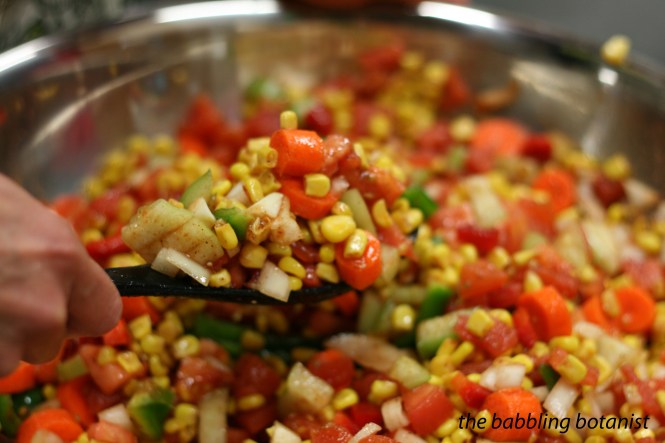
Chop, chop, chop, and chop some more. But really, that’s basically all there is to it. When I made this recipe at home by myself I got a hand cramp from too much chopping, so invite a friend over for goodness sake. For the tomatoes, core, blanch and peel them before chopping. For the tomatillos, remove them from the husk, wash and chop them without peeling. For the onions and carrots just peel and wash them and chop them into soup sized pieces. Wash and seed the peppers and use gloves to cut up the hot ones. For the corn, either cut it off the cob and measure 6 cups, or use frozen corn.

IMG_2576 copy

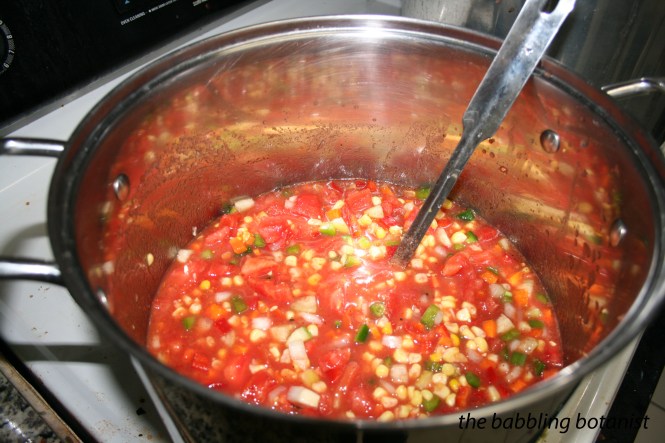
Combine all the veggies in a large stockpot. Add in the tomato juice, water, and all the seasonings. For the tomato juice, you can either make juice by pressing some tomatoes through a food strainer, or use store bought. I bet you can guess which one I prefer. I think that the ratio of solids to liquids in this soup is a bit off, so it could probably use more like 6 or 7 cups of tomato juice. And just to justify this, the reason I think it’s OK to adjust the recipe in this way is because these are the National Center’s soup recommendations. The processing is the same with whatever combo of foods you have, unless you add seafood, and they just say to cover with liquid. Plus, tomato juice is the most liquidy and most acidic ingredient in this recipe. Anyways, bring the soup to a boil, then reduce the heat and simmer for 15 minutes. While the soup is simmering, prepare your canner, jars and lids. This yields about 9 -10 pints of soup.

IMG_4346 copy

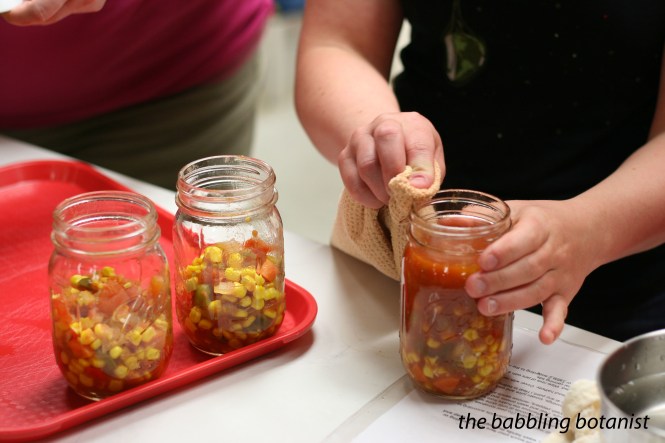
When it comes time to fill the hot jars, it’s important to follow these instructions for filling them to ensure safe processing. Using a slotted spoon, fill the jars about half full with solids. The head space for the soup is going to need to be a full inch, so when filling halfway, keep in mind that you should be filling it halfway to that point. After the jars are half full with solids, fill them with liquid, leaving an inch head space.

IMG_2621 copy

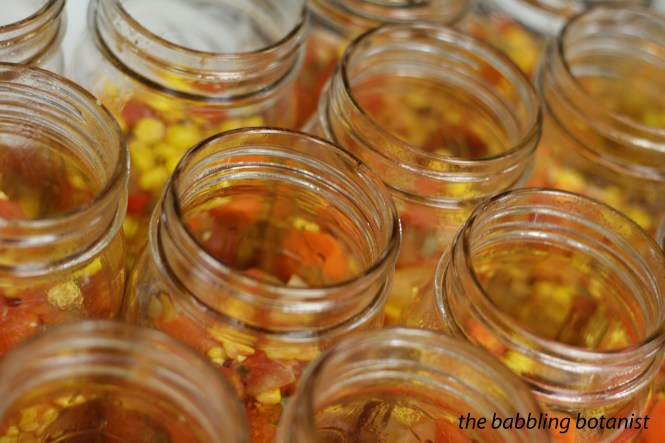
Such pretty jars.

IMG_2624 copy

Remove air bubbles, adjust head space, wipe rims, and apply the lids and bands, tightening to finger tip tight.  Place the jars in your pressure canner with 3 quarts of water and begin heating the canner. Once all the jars are in the canner, close and lock the lid and get the canner heated up. Once your canner starts to vent a steady stream of steam, continue to vent for 10 minutes. After the 10 minutes, apply the weight. Bring the canner up to 11 pounds of pressure (10 for weighted gauge; sea level). The processing time for this recipe is 60 minutes for pints or 75 minutes for quarts. Begin the timer once at or above the correct pressure, and maintain that pressure throughout the canning time. After the processing time is complete, turn off the burner and carefully remove the canner from the heat. Wait until the pressure is completely returned to zero and the safety nubbin thing drops. Remove the weight, wait 10 more minutes, and then remove the lid of the canner and remove your jars to a hot pad or towel.

IMG_2626 copy

While the jars can, eat any leftovers that you had.

IMG_2631 copy

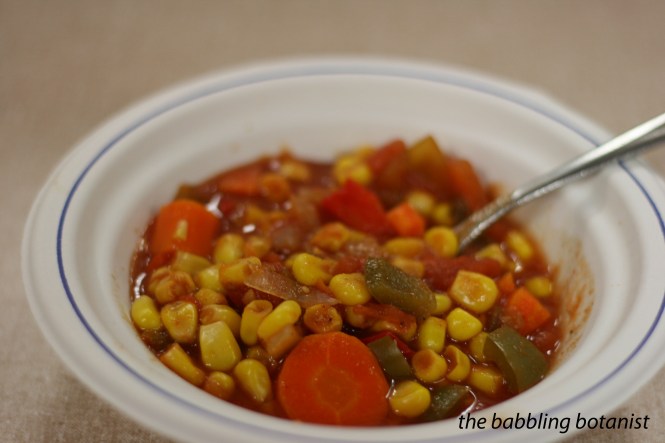
Ta-da! Gorgeous soup. And so damn delicious. After 12-24 hours, remove the bands, check the seals, wipe clean, label and store. Then repeat a week later because this soup is super good.

IMG_2646 copy


*this post contains affiliate links, please see the “About the Blogger” page for more information